UK surveillance plan must be watched carefully
When journalists make enemies in high places, they become vulnerable to the powers those figures wield. One such power is the state’s capacity to wiretap and obtain personal records from communications companies. From Colombia’s phone-tapping scandal to last year’s case of Gerard Davet–a Le Monde reporter whose phone records were obtained by the French intelligence…
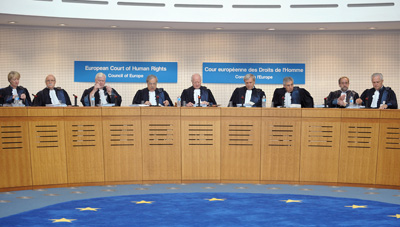
Defending the European Court of Human Rights
The European Court of Human Rights is a victim of its success. In 2011, more than 60,000 people sought its help after exhausting all judicial remedies before national courts. But now, some member states of the Strasbourg-based Council of Europe are pushing for reforms of the prestigious institution and are pointing at the number of…
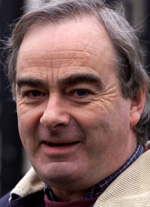
In Boston, journalist Moloney battles to protect sources
In December 2002, the U.N. Tribunal charged with prosecuting war crimes in the former Yugoslavia ruled that Washington Post reporter Jonathan Randal could not be compelled to provide testimony in the case of a Bosnian Serb official accused of carrying out a campaign of ethnic cleansing.”If war correspondents were to be perceived as potential witnesses…
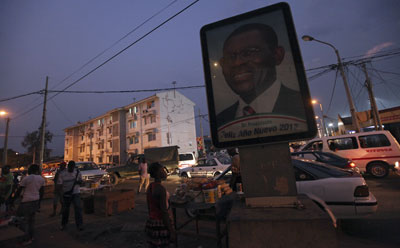
Equatorial Guinea’s press silent on unrest in Mali, Syria
While Mali remains in global headlines with a March 22 military coup and rebel claims of an independent state, citizens in Equatorial Guinea are kept in the dark about the crisis unless they have access to international media, CPJ has gathered from interviews with journalists and a government spokesman.
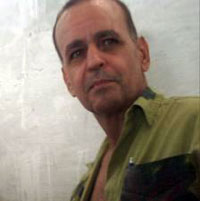
Remembering Cuba’s Du Bouchet Hernández
On Wednesday morning, exiled Cuban journalist Albert Santiago Du Bouchet Hernández took his own life, according to reports in the Cuban exiled media. He was the last of more than 20 Cuban journalists to be released from prison and sent to Spain following July 2010 talks between the government of Cuban President Raúl Castro and…
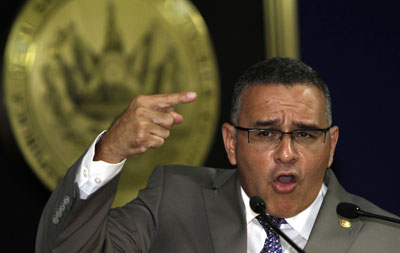
El Salvador government pledges to protect El Faro
“El Salvador is committed to guaranteeing the safety of El Faro and its staff so they can continue their investigative work,” David Rivas, spokesman for President Mauricio Funes Cartagena, told CPJ in a recent phone conversation. The government’s pledge came after groundbreaking reporting by the digital newspaper about secret negotiations in which local gangs, known…
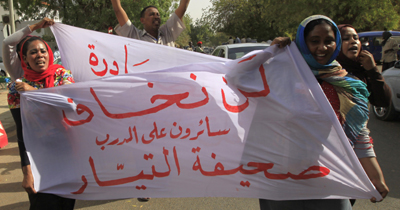
In Sudan, a new strategy to censor the press
Sudanese authorities have a long history of closing newspapers and silencing journalists. But the government security agents who carry out official censorship have launched a new strategy this year that focuses on economic impoverishment–leaving newspapers more vulnerable than ever.
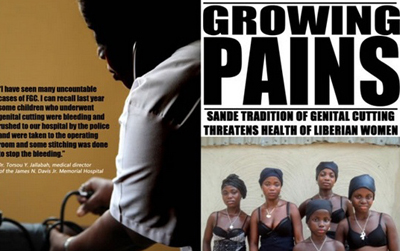
In Liberia, journalist Mae Azango moves a nation
Liberian journalist Mae Azango’s courageous reporting on female genital mutilation, which made her the target of threats and ignited international controversy, has forced her government to finally take a public position on the dangerous ritual. For the first time, Liberian officials have declared they want to stop female genital mutilation, a traditional practice passed down…
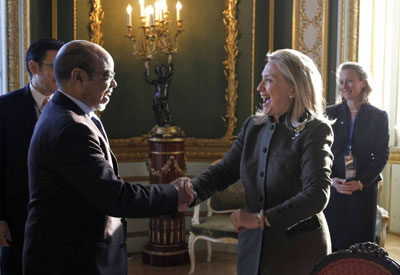
Blogger fights terror charges as Ethiopian leader praised
Last week in the Ethiopian capital, Addis Ababa, while Prime Minister Meles Zenawi was making a speech about Africa’s growth potential at an African Union forum, a journalist who his administration has locked away since September on bogus terrorism charges was presenting his defense before a judge. Eskinder Nega has been one of the most…
A Pakistani ‘sword of Damocles’ in the making?
Given that it is usually punishable by death, “treason” is a dangerous word to bandy about. When it is applied to journalists, it is even more worrisome. We’ve seen that in Sri Lanka, which is in the throes of a backlash against a U.N. resolution on past human rights abuses. (See “Amid Sri Lankan denial,…