
Safer mobile use is key issue for journalists
As the Internet and mobile communications become more integrated into reporters’ work, the digital threats to journalists’ work and safety have increased as well. While many press reports have documented Internet surveillance and censorship–and the efforts to combat them–mobile communications are the new frontline for journalist security.
As Eurovision host, Azerbaijan must promote free press
Today in its report on the Most Censored Countries in the world, CPJ singled out Azerbaijan for its lack of foreign or independent broadcasters and because the handful of journalists there who manage to work on independent newspapers or websites are subjected to intimidation, harassment, physical attacks that occur with impunity for those responsible, and…
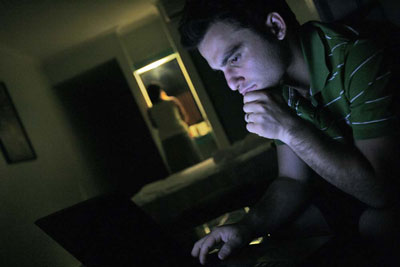
Assisting journalists forced to flee censorship
CPJ’s Journalist Assistance Program supports journalists who cannot be helped by advocacy alone. In 2011, we assisted 171 journalists worldwide. Almost a fourth came from countries that made CPJ’s Most Censored list. Eight journalists from Eritrea, five from Syria, six from Cuba, and a whopping 20 from Iran sought our help after being forced to…

New film “High Tech, Low Life” on Chinese bloggers
“High Tech, Low Life,” a new documentary about Chinese bloggers directed by Stephen Maing, debuted at the 2012 Tribeca Film Festival in New York on April 19. It documents the lives of Zola (Zhou Shuguang) and Tiger Temple (Zhang Shihe), as they blur the lines of citizen journalism and activism though their reporting on evictions,…
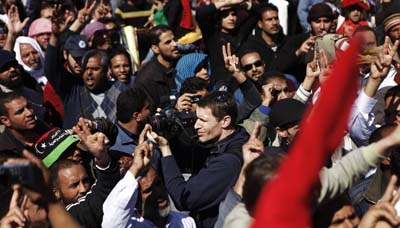
For conflict journalists, a need for first-aid training
Stop the bleeding. It’s a critical and fundamental step in aiding a journalist or anyone wounded in conflict. Hemorrhage is the number one preventable death on the battlefield. And yet large numbers of journalists covering wars and political unrest all across the world are untrained in this life-saving skill. It doesn’t need to be that…
Blind lawyer spurs news blackout in China
News of blind legal activist Chen Guangcheng has been censored for months. International news reports of his escape last week from incarceration in his home in Linyi, Shandong–apparently to U.S. protection, although his whereabouts remain unclear–has only intensified that censorship. That is unlikely to stop discussion among those familiar with Chen’s case.
Verdict postponed in landmark Thai Internet freedom case
Earlier today, press and human rights groups from around the world heard that the decision in the case of Chiranuch “Jiew” Premchaiporn, the manager of Thai online news site Prachatai, was being delayed yet another month. Chiranuch is charged under Thailand’s Computer Crime Act for 10 counts of not deleting apparently anti-monarchy comments on Prachatai’s…

Liberian journalist Mae Azango on cold threats, hot stories
Mae Azango was not surprised when the Liberian police failed to help when she began receiving threats of violence in response to an article she had written about female genital cutting that was published on in FrontPage Africa on March 8. She had previously reported critically on the police, including a case of police brutality…
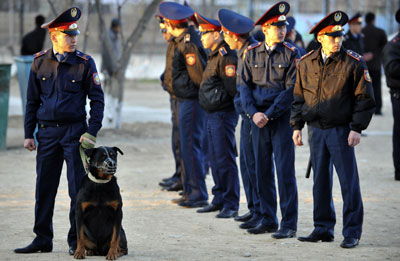
Journalist as a threat to Kazakhstan’s national security
In a reply to CPJ’s protest letter regarding the politicized imprisonment of journalist Igor Vinyavsky, Kazakhstan’s General Prosecutor’s Office said the prosecution wasn’t retaliatory nor related to his journalism. CPJ publicly appealed to Kazakh President Nursultan Nazarbayev after his country’s security service, the KNB, raided Vinyavsky’s newsroom and apartment, confiscated reporting equipment, and imprisoned the…

Why journalists need new ways to stay safe
After the Salvadoran online newsmagazine El Faro exposed a secret government deal with criminal gangs last month, its staff faced repercussions that illustrate the new and complicated risks facing journalists worldwide. El Faro’s report, which said the government provided more lenient treatment of imprisoned gangsters in exchange for the groups’ agreement to slow down their…