Rising violence in Pakistan’s warring Baluchistan
The murder of a part-time journalist and a gunfire attack on the house of the president of the Turbat Press Club, both on May 28, underscore the nature of the escalating violence in Baluchistan. According to the Delhi-based Institute for Conflict Management, which monitors violence across South Asia, at least 10 people were killed in…

Sina ‘information credit score’ restricts Weibo users
Sina’s Twitter-like microblog service Weibo has released new guidelines to restrict users who share banned content, according to international news reports. It’s the first time such guidelines target users who adopt puns, homonyms, and other veiled references to discuss censored news stories without using keywords on the propaganda department’s blacklist, the reports said.
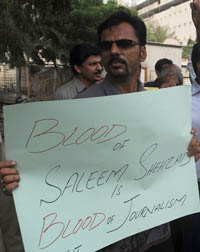
One year later: Saleem Shahzad’s case is buried
On May 21 this year, a military court convicted three Pakistani naval officers of negligence and dereliction of duty for their actions during an attack on the main naval airbase in the heart of Karachi on May 22, 2011. After the incident had ended, the military said 10 security guards were killed, two aircraft were…
Liberia university suspends student journalist over article
A private university in Liberia has suspended a journalist studying there for publishing a newspaper story critical of the institution’s management. On May 8, private Cuttington University in Suacoco in central Liberia suspended Selma Lomax, a reporter with independent newspaper FrontPage Africa and a third-year student in agriculture at the institution, for four months over an April 26…
Solidarity, a key to security, eludes Salvadoran press
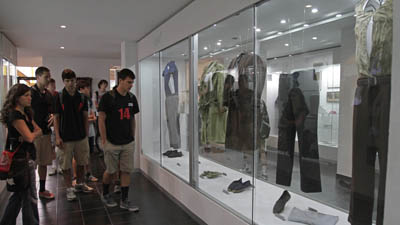
No other journalists are remembered quite like this. Visitors looking through the glass display at the Monsignor Romero Center & Martyrs Museum in San Salvador see the pajamas and other clothes that three Jesuit university priests were wearing when they were shot down by automatic rifle fire. A series of clear containers are filled with…

At CPJ Debrief, Gettleman cites Somalia danger, reward
Jeffrey Gettleman, the Pulitzer Prize-winning New York Times correspondent, says he travels with “a small militia” whenever he reports from Somalia, the East African country afflicted by armed insurgency, poverty, and hunger. As intrusive as the security detail might be, he feels far more fortunate than the local reporters who face sustained and often deadly…
Even by Pakistani standards, a terrible month for press
May has been a terrible month for journalists in Pakistan, a country that has ranked as the world’s deadliest place for the press for two consecutive years. Two journalists have been killed, two more shot and wounded, and one attacked while in police custody, all in less than a month, according to news reports.

Nations urge Ecuador to guarantee freedom of expression
Stressing concerns of human rights groups about the deterioration of press conditions under the administration of President Rafael Correa, 17 members of the United Nations submitted recommendations to Ecuador on freedom of expression issues before the U.N. Human Rights Council this week. While Ecuador tried to pass off the criticism as resulting from ignorance, the…
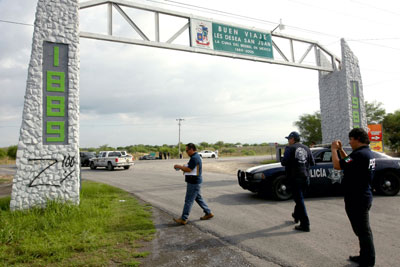
El Mañana cedes battle to report on Mexican violence
They would tell you that the killers haven’t let them cover real news for several years–if you call news serious information that’s important to the public, like why the police didn’t investigate so many murders or kidnappings or extortions. Or why drugs were sold so openly. Or that three former governors are being investigated for…

No joke: Moves to squelch Pakistani media, again
With general elections approaching, the landscape is again bearing eerie resemblance to the final days of General Pervez Musharraf’s reign. In November 2007 he banned selected TV channels for 88 days to stifle what he saw as “irresponsible journalism.” Now, Pakistani electronic media might be chained again, this time for violating cultural and ethical values…