Signs of change in North Korea
CPJ may have raised some eyebrows with this year’s list of the world’s 10 most censored countries. North Korea was relegated to the number two slot, behind Eritrea. In our last ranking, in 2006, we ranked North Korea as the worst, and many other organizations continue to do that.
Sri Lanka Supreme Court slams door on websites
On Wednesday, Sri Lanka’s Supreme Court slammed the door on a case about the shutdown of four websites that had failed to register with the government. In handing down its decision, the Court appeared to rule that freedom of expression in Sri Lanka is not an absolute right and can be restricted–and you don’t need…
CPJ calls for release of jailed reporters in Central Asia
World leaders must hold Central Asian regimes responsible for denying global access to information by throwing critical reporters behind bars, CPJ Eurasia researcher Muzaffar Suleymanov told the U.S. Commission on Security and Cooperation in Europe at a briefing Tuesday on political prisoners in Central Asia.
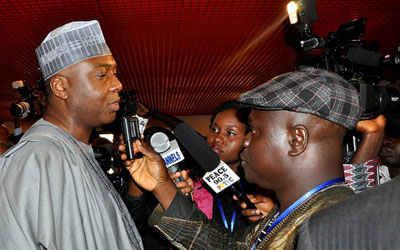
Nigeria journalists obstructed on World Press Freedom Day
On World Press Freedom Day last week, Nigeria’s Information Minister, Labaran Maku, publicly asserted that the country’s media “is one of the freest in the universe.” On paper, Nigeria’s 1999 Constitution guarantees the freedom of the press to “uphold…the responsibility and accountability of the government to the people.” But seven journalists who attempted to put…
Chinese microblog regulates, suspends users–again
Pity those of us who monitor the ups and downs of China’s popular microblog platform, Sina Weibo. For every story its users spread in defiance of local censorship, there follows a clampdown. Whether it’s the latest strike against rumors, or real name registration, or newly banned keywords, there’s always another restriction in the works as…
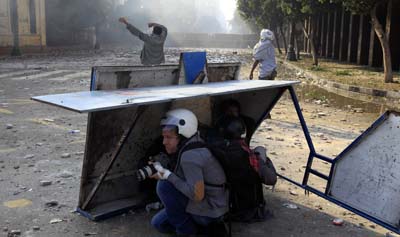
Should J-School grads just get up and go overseas?
The guidance is hardly clear. At a Columbia University event last week pegged to the release of the new CPJ Journalist Security Guide, one journalism student said he and his classmates are getting contradictory advice. Many J-school professors, he said, have encouraged him and others to just get up, go overseas, and try to make…
Greek far-right party casts shadow on Europe press freedom
The celebration Tuesday of the 50th anniversary of the Association of European Journalists (AEJ) should have been a joyful and lighthearted affair. Dozens of journalists from all parts of the European Union had traveled to Brussels to share memories, new projects, champagne, and petits fours.
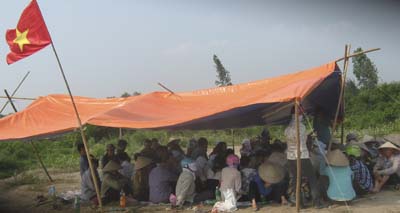
Attack shows all reporters at risk in Vietnam
Recent physical assault on two state media reporters in Vietnam underscores the risks of reporting on increasingly sensitive land issues in the communist-ruled country. The attack on the reporters signals a potential extension of the media crackdown that until now has targeted mainly unsanctioned journalists and bloggers.