Don’t punish Chinese restrictions with more restrictions
The Committee to Protect Journalists is watching with concern the progress of H.R. 2899, the Chinese Media Reciprocity Act of 2011, which is under discussion Wednesday in front of the Subcommittee on Immigration Policy and Enforcement. The bill seeks to reduce the number of visas available to journalists (and their families) working in the United…
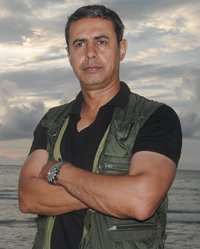
Al-Arabiya news team missing in the Philippines
CPJ is monitoring with concern the news coverage of Baker Abdulla Atyani, a Pakistan-based Jordanian Al-Arabiya TV journalist, and his two Philippine crew members, Rolando Letrero and Ramelito Vela, who have been unaccounted for since June 12. Atyani, Letrero, and Vela left their hotel in Jolo, in the southern Philippines, to interview a commander for…
Video: Journalists in exile
Four East African journalists who were forced to flee their countries tell about their experiences, difficulties, and hopes for the future. (3:43)Read CPJ’s report, “Journalists in exile: Crisis in East Africa,” for more information about journalists forced to go into exile.

Displaced by threats, old life gives way to new
For seven years I lived in Panajachel, a tourist town on the beautiful Atitlán Lake in Guatemala. There, my husband, Juan Miguel Arrivillaga, and I started a family and the independent news outlet Anti Magazine. We also hosted a radio program on the local station Radio Ati.

For exiled Eritreans in Sudan, fear greater than most
With the launch of CPJ’s most recent exile report, I will have worked exactly three years for our Journalist Assistance program. More than 500 cases later, I have helped journalists who have gone into hiding or exile to escape threats; those in need of medicine and other support while in prison, and journalists injured after…
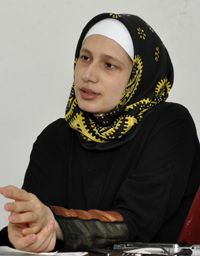
Q&A: Nadira Isayeva on exile from Dagestan, in US
Nadira Isayeva, a 2010 CPJ International Press Freedom Award winner, has been living in exile since she left her native Dagestan, in Russia’s volatile North Caucasus, in November 2011. Isayeva, the editor-in-chief of the independent weekly Chernovik, had been harassed by security forces for her relentless, critical coverage of their heavy-handed anti-terrorism operations in the…
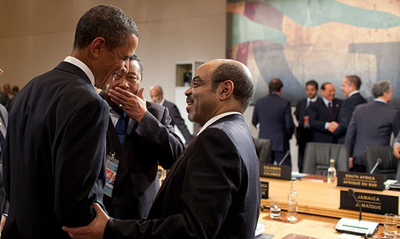
US senator condemns Ethiopia’s persecution of the press
On Wednesday, the same day the White House announced a strategic plan committing the United States to elevating its efforts in “challenging leaders whose actions threaten the credibility of democratic processes” in sub-Saharan Africa, a senior member of the U.S. Congress challenged the erosion of press freedom in a key U.S. strategic partner in the…
Spreading the security message
Video streaming by UstreamOn the frontlines of global reporting, knowledge is safety. CPJ’s event series to promote our new Journalist Security Guide continued Wednesday in Washington, D.C. where we teamed up with Internews for a panel discussion on journalist security on-site and online.