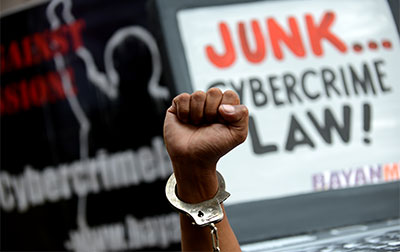
Quick rethink on cybercrime law in Philippines
On Tuesday, the Philippines Supreme Court issued a temporary restraining order stopping the government from enforcing the Cybercrime Prevention Act of 2012 which President Benigno Aquino III signed into law last month. The court, in full session, ordered that oral arguments for and against will start January 15. And it gave the government 10 days to…
In Pakistan, a murderous exercise in democracy
Covering political rallies in Pakistan must be considered a dangerous assignment. One journalist was killed and three others injured on Sunday when gunmen opened fire on a Pakistan People’s Party (PPP) rally in Khairpur in Sindh province. All told, at least six died and 10 were wounded critically.

Q&A: Nedim Șener, a Turkish journalist under fire
For the past several months, CPJ staff has been investigating pervasive press freedom problems in Turkey, including the widespread jailing of journalists. This month, CPJ will release an in-depth report on press conditions in Turkey. In advance of our report, we are publishing this interview with Nedim Șener, an investigative reporter who was jailed for…
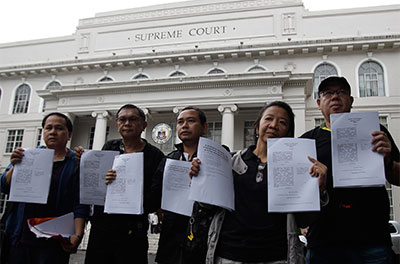
Online in Philippines? Check out #notocybercrimelaw
In a notoriously litigious country like the Philippines, it’s bewildering that the government coupled a law targeting so-called cybercrimes like cybersex, child pornography, identity theft, and spamming with the hoary and over-used concept of libel. And no matter how abusive those crimes may be, it’s an even bigger mystery why the government felt it should suspend…
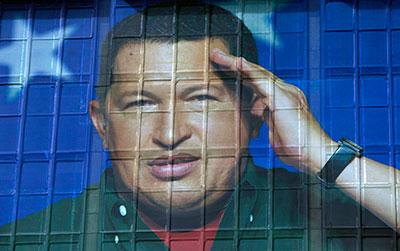
Latin American press faces violence, legal harassment
Violence and legal harassment: the two greatest obstacles to press freedom in Latin America today. That’s the message that CPJ Executive Director Joel Simon is delivering this morning in Washington, D.C., at a briefing hosted by Congressman Sam Farr. Farr, a California Democrat, hosts a monthly series looking at emerging trends in the Western Hemisphere.…

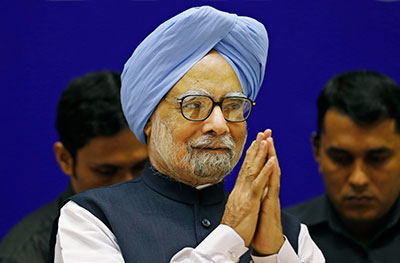
For India, celebrations not in order on Singh’s birthday
This week, Indian Prime Minister Manmohan Singh marked his 80th birthday. He spent the day, Wednesday, in the company of family and at public events, according to news reports. “There are no celebrations. He prefers to be with his family in the morning–then work as usual,” Singh’s spokesman told the media.
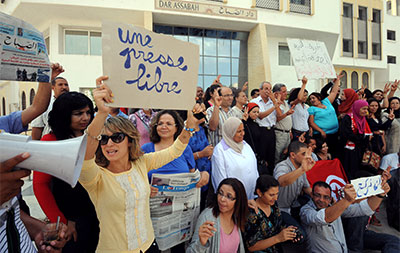
Receding hopes for press freedom in Tunisia
These days, press freedom in Tunisia feels ever more distant. Many journalists believed that media freedoms, which were virtually nonexistent under former President Zine el-Abidine Ben Ali, would grow after his ouster. During the aftermath of the December 2010 uprising, an independent press blossomed and special commissions were set up to reform the media sector.…
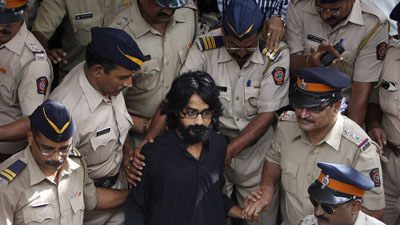
With new focus on sedition law, India poised at juncture
Although it is the world’s largest democracy, India has retained its colonial-era sedition law. But with a national debate ensuing after the arrest of 25-year-old political cartoonist Aseem Trivedi on the antiquated sedition charge and others, members of the Indian government have been forced to do some soul-searching.