
China’s name registration will only aid cybercriminals
China’s mounting crackdown on online news dissemination took an extra step today, when the country’s Standing Committee of the National People’s Congress, its de facto legislative body, announced new requirements on Internet service providers and mobile phone companies to identify their users. The new rules would potentially allow ISPs and the authorities to more closely…
Reuters Institute focuses on Sri Lankan journalism
The most recent paper produced by the Reuters Institute for the Study of Journalism at Oxford, “Media Freedom in post-war Sri Lanka and its impact on the reconciliation process<,” does a great job of cataloging the abuse Sri Lankan journalists continue to face after the decades-long civil conflict with Tamil secessionists ended in May 2009.

Where is Eritrean Information Minister Ali Abdu?
Eritrean Information Minister Ali Abdu Ahmed, government spokesman and censor-in-chief of the Red Sea nation, has been invisible in the past few weeks. The total absence of any independent press in Eritrea has allowed the government to maintain complete silence in the face of mounting questions and surging Internet rumors of his defection. It was…
In Djibouti, journalist defiant despite revolving jail door
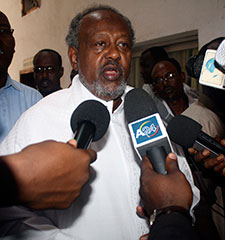
Online journalist Houssein Ahmed Farah spent more than three months in jail in Djibouti before an appeals court finally released him in November–after his defense requested bail three times, Houssein said. His crime? Officially nothing. “It appears to have been an arbitrary arrest because there is still no evidence on file,” Houssein told me. He…
Amid deadly demonstrations, focus on India police
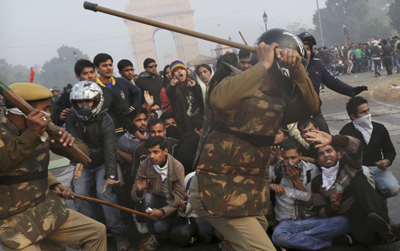
For the safety of journalists and other people on the streets protesting injustice, Indian police must begin in earnest to address how they respond to demonstrations. One journalist died covering protests that have been taking place across the country following the gang rape of a 23-year old female medical student on a Delhi bus on…
Somalis in Kenya hounded by security forces, refugee policy
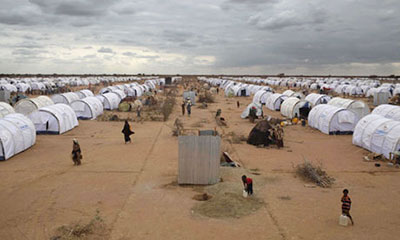
Exiled Somali journalists living in Nairobi were struck with disbelief this week when daily newspapers published a statement by the Department of Refugee Affairs ordering all Somali refugees to move to refugee camps. “The refugees, particularly those living in urban centers, are contributing to insecurity in the country,” the statement read. The acting commissioner for…

Members of European Parliament call to free Eskinder
On December 18, 16 members of the European Parliament (MEPs) wrote an open letter to Ethiopian Prime Minister Hailemariam Desalegn calling for the immediate release of the independent journalist and blogger Eskinder Nega, who was condemned in July to 18 years in prison under the country’s tough 2009 anti-terrorism legislation.

Worrying trends at South Africa’s public broadcaster
South Africa is in the midst of one of its most important political events–the ruling African National Congress’s Mangaung elective conference, which takes place once every five years to shape policy and elect new leadership. Because of the power of the ANC as South Africa’s leading political party, the conference holds not only the future…

Combat deaths at a high, risks shift for journalists
Murder is the leading cause of work-related deaths among journalists worldwide–and this year was no exception. But the death toll in 2012 continued a recent shift in the nature of journalist fatalities worldwide. More journalists were killed in combat situations in 2012 than in any year since 1992, when CPJ began keeping detailed records.

Journalists still murdered where impunity reigns
Almost half of the 67 journalists killed worldwide in 2012 were targeted and murdered for their work, research by the Committee to Protect Journalists shows. The vast majority covered politics. Many also reported on war, human rights, and crime. In almost half of these cases, political groups are the suspected source of fire. There has…