Russia intensifies restrictions on blogs, social media
On August 1, Russia will significantly tighten its grip on blogging and social media conversations and will acquire expanded powers to block Internet services originating abroad. The new authorities, approved by Russia’s parliament in April, buttress existing regulations that have already been used to block several independent news sites, some of which reported on the…
Despite recent convictions, Anna Politkovskaya’s murder remains unsolved
Nearly eight years after Russian journalist Anna Politkovskaya was gunned down in an elevator near her apartment, authorities appear to have made little progress identifying the mastermind behind her murder. Although five men were sentenced to lengthy prison terms on June 9 for their roles in the slaying of the Novaya Gazeta journalist, her family…
In Singapore, blogger under pressure, CPF under scrutiny
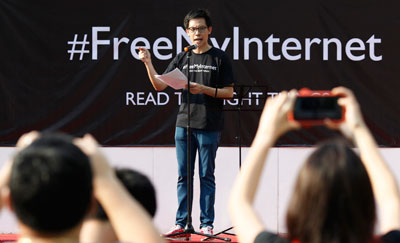
A critical Singaporean blogger continues to suffer financial and legal pressure because of a blog post that allegedly accused the city-state’s prime minister, Lee Hsien Loong, of corruption. The episode is part of a disturbing pattern of government legal and financial pressure on critics, but it is also a lesson in how censorship can backfire.
Sri Lanka must end media restrictions to facilitate reconciliation
This month, in the wake of anti-Muslim sectarian riots in the southwest, the Sri Lankan government pressured local journalists to hide the truth by not covering the violence. Those brave enough to report it had their equipment destroyed and were threatened or physically attacked, according to media reports. Since the government stifled coverage of these…
Worrisome curbs on free speech emerge since Modi’s election
Earlier this month, Indian authorities arrested seven people for publishing a photo of India’s new prime minister, Narendra Modi, alongside figures such as George W. Bush, Osama bin Laden, and Adolf Hitler, under the headline, “Negative Faces.” The seven, who could face lengthy prison terms if convicted, are but the latest Indians facing criminal proceedings…
Egypt’s Shame
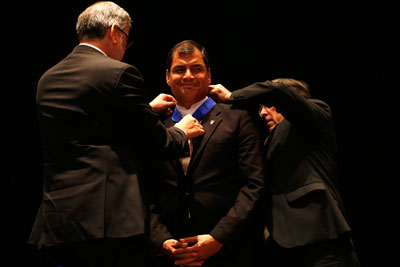
This morning a judge in Egypt convicted journalists Mohamed Fadel Fahmy, Peter Greste, and Baher Mohamed of conspiring with the Muslim Brotherhood and sentenced them to between seven and 10 years in prison. All three were working for Al-Jazeera when they were arrested six months ago, but have a wide range of professional experience, including…
Conditions for international reporters deteriorating in China
The Foreign Correspondents’ Club of China released at the end of May its annual report on conditions for international journalists working in the country. As we have done in the past, we’re posting this year’s report as a PDF. The takeaway is that conditions have certainly not gotten better and many feel they have gotten…
A year after Snowden revelations, damage persists to freedom of expression in Pakistan
In Pakistan, where freedom of expression is largely perceived as a Western notion, the Snowden revelations have had a damaging effect. The deeply polarized narrative has become starker as the corridors of power push back on attempts to curb government surveillance. “If the citizens of the United States of America cannot have these rights, how…