Bolivia’s president and state-run TV skip presidential election debate
President Evo Morales wasn’t the only no show at Bolivia’s lone presidential debate in the run-up to this Sunday’s election. State-run Bolivia TV, which has provided live coverage of every presidential debate since the late 1980s, also ignored the September 28 candidate forum.
Big businesses attempt to muzzle critical reporting in India
This month Keya Acharya is responding to a nine-page legal notice demanding she pay 1 billion rupees ($16.3 million) over her article on India’s rose industry. Her legal troubles are a window on to a pattern of how big businesses are using India’s outdated defamation laws to silence criticism of their operations.
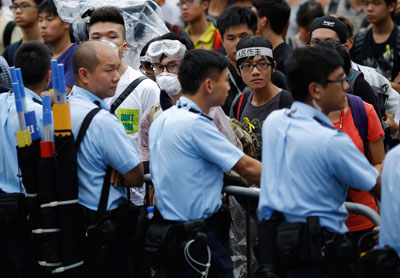
Journalist in Hong Kong? These tips will keep you safer and help you do your best job
We have been receiving reports of harassment and the use of force directed toward journalists covering the demonstrations in Hong Kong. Most of the incidents came over the weekend with the government’s ill-advised attempt to end the protests with police force. But with tensions building today, more clashes with police seem possible.
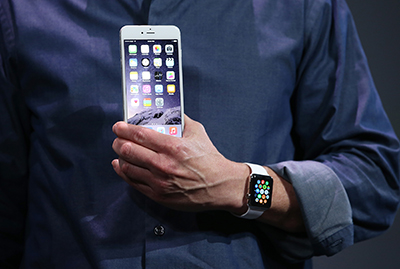
How automatic encryption ensures safety by default
The year is 1991, the month April. EMF is playing on the radio. The term “cyberspace” has existed for only half a decade. The world wide web won’t exist for another four months. The software engineer Linus Torvalds has only just started work on the Linux operating system. The fastest computer you can own has…
Holder resignation presents U.S. with opportunity for reform
Last week’s announcement by Eric Holder that he will resign as Attorney General marks what will hopefully be the beginning of the end of a perplexingly dark period for press freedom in the U.S. As Holder seeks to solidify his legacy, in part based on important civil rights reforms that he helped realize, the aggression…
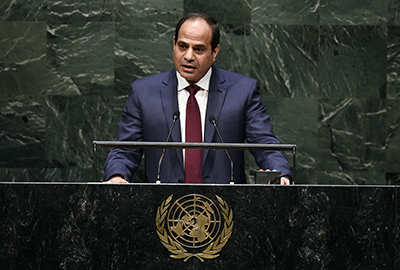
As al-Sisi promises freedom of speech, TV host Youssef is put under investigation
The Egyptian President Abdel Fattah al-Sisi was given a great platform for his country last week, with a speech at the United Nation’s General Assembly in which he said that his “new Egypt” would “guarantee freedom of speech,” and his first ever meeting with U.S. President Barack Obama.
‘We are journalists’: Delegation in Turkey to discuss press freedom
Reuters editor-at-large Harry Evans had a question for Turkish President Recep Tayyip Erdoğan: Would he be willing to meet with a delegation from the Committee to Protect Journalists and the International Press Institute (IPI) when it visited Turkey?

Amid Hong Kong protests, journalists battle misperceptions of press freedom
EDITOR’S NOTE: As pro-democracy protests in Hong Kong intensify ahead of China’s National Day on Wednesday, some reporters have been caught in the melee. But for Hong Kong’s journalists, there is more at stake than run-ins with the riot police.
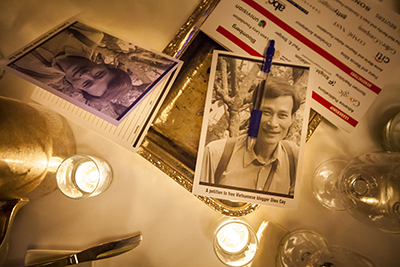
Undercover in Vietnam: Room for debate frees up but bloggers remain imprisoned
In the final part of CPJ’s “Undercover in Vietnam” series on press freedom in Vietnam, Southeast Asia Representative Shawn Crispin reveals how prominent blogger Nguyen Van Hai remains behind bars for his critical writing despite the margin for debate opening. The series concludes with recommendations for the Vietnamese government and international bodies. Incarcerated for the…
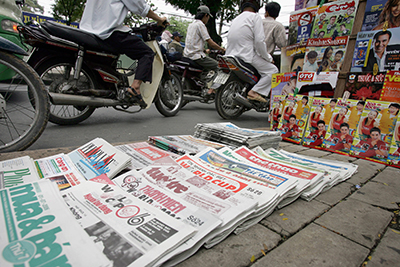
Undercover in Vietnam: Exile is high price reporters pay for press freedom
In the third of CPJ’s four-part “Undercover in Vietnam” series on press freedom in Vietnam, CPJ Southeast Asia Representative Shawn Crispin interviews a reporter living in exile after challenging the censorship imposed in newsrooms. The final part, to be published Tuesday, reveals how prominent bloggers remain behind bars despite the margin for critical debate opening.…