2006
New judge in Klebnikov trial rejects appeal for open hearing
New York, February 15, 2006—A new judge in the trial of Chechens charged with killing Forbes-Russia Editor Paul Klebnikov rejected a defense appeal today to open the hearing to the public. A spokesman for the Klebnikov family told The Associated Press that the judge at the Moscow City Court ruled the decision to close the…
Journalists in Yemen and Algeria arrested over prophet cartoons
New York, February 13, 2006—The Committee to Protect Journalists is alarmed by the arrest of three journalists in Yemen and two in Algeria for publishing controversial cartoons depicting the Prophet Muhammad. Their newspapers have all been ordered closed. Mohammed Al-Asadi, editor-in-chief of the Yemen Observer, has been detained by the office of the print and…
Journalist remains in preventive detention in Niger on defamation charge
Editor’s note: On February 6, CPJ erroneously reported that journalist Ibrahim Manzo had been sentenced to two months in prison in Niger. No verdict has been given yet in the case against Manzo, and he remains in preventive detention in the capital, Niamey. New York, February 14, 2006—The Committee to Protect Journalists today condemned the…
Cpj Urges Internet Companies to Put Principles Before Profits in Chinaread the Full Text of Cooper’s Testimony.CPJ urges Internet companies to put principles before profits in China
New York, February 14, 2006 —The Committee to Protect Journalists has told a U.S. Congressional committee that Western Internet companies should use the leverage afforded them by superior technology and market dominance to resist demands made by governments such as China seeking to censor information or identify and persecute those who exercise their right to…
Newspaper director sentenced to six months for defamation
FEBRUARY 10, 2006 Moustapha Sow, L’Office LEGAL ACTION Sow, director of the private newspaper L’Office, was sentenced to six months in prison for defaming businessman Bara Tall in articles about a high-profile corruption scandal. Sow, who was not immediately taken into custody, told CPJ that he planned to appeal.
In the wake of murder, safety concerns arise
Your Excellency: The Committee to Protect Journalists is deeply troubled by recent threats against the Congolese press freedom group Journaliste en Danger (JED) after the Kinshasa newspaper Le Soft reported findings from JED’s investigations into the November murder of journalist Franck Ngycke Kangundu and his wife, Hélène Mpaka. JED President Donat M’baya Tshimanga, who is quoted in Le Soft’s February 7 article, and JED Secretary-General Tshivis Tshivuadi went into hiding after receiving an anonymous threatening phone call. JED legal adviser Charles Mushizi also received a threatening phone call.
In Indonesia, Tempo editor cleared in criminal libel case
New York, February 10, 2006—The Committee to Protect Journalists praises the Indonesian Supreme Court’s decision on Thursday to overturn the September 2004 criminal libel conviction of Tempo magazine’s top editor, Bambang Harymurti. The three-judge panel ruled unanimously that civil, and not criminal, laws should apply. Lower courts had applied criminal law to convict and sentence…
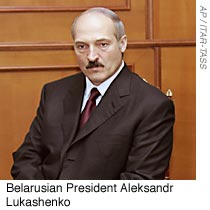
Belarusian election undermined by state abuses against media
Moscow, February 10, 2006—The Belarusian government’s persecution of the country’s few independent newspapers undermines the integrity of the March 19 presidential election in which Aleksandr Lukashenko seeks a third term, the Committee to Protect Journalists and two regional press freedom organizations said today. The groups called on the Russian Federation, the European Union, and the…
Court hits PEN with hefty tax bill, freezes its bank account
New York, February 10, 2006—The Committee to Protect Journalists is alarmed by a Moscow court’s decision to impose hefty property taxes on the Russian branch of International PEN, an association of writers that promotes artistic exchange and defends free expression. The ruling against PEN comes against the backdrop of a government crackdown on nongovernmental organizations…
New rules limit foreign broadcasts
Your Excellency: The Committee to Protect Journalists urges you to rescind four new broadcasting regulations that went into effect on Monday. As a nongovernmental organization dedicated to defending press freedom worldwide, we are concerned that these regulations will limit foreign broadcasts in a way that will hamper the free flow of information necessary for Indonesia’s growing democracy. The new regulations confine broadcasts from international sources to shortwave radio and cable television networks, shutting off a large portion of Indonesia’s listeners and viewers from news sources outside of the country. Your government should be working to broaden the numerous voices of information available on the country’s 160 radio and television stations rather than reining them in.