Can Pakistan’s corrupt media be checked?
With ratings driving the profits of media channels, journalists and political talk show hosts are being motivated to stir up controversy at any cost. Meanwhile, the professionals who believe in credibility, objectivity, and honesty as essential parts of ethical journalism are becoming sidelined.
In Pakistan, UN human rights chief meets with Jahangir
U.N. High Commissioner for Human Rights Navi Pillay, in opening remarks at her press conference in Islamabad on Thursday, addressed a wide range of problems in Pakistan, including those faced by journalists. (The full statement is on the website of the Office of the High Commissioner for Human Rights.) What was especially gratifying was her…
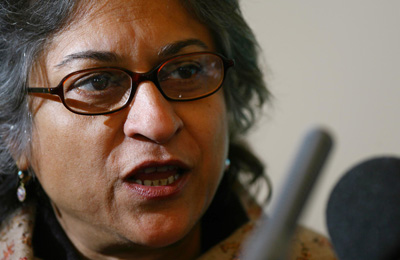
EU, UN officials in Pakistan must make time for Jahangir
There is no better time than now for U.N. High Commissioner for Human Rights Navi Pillay and EU Foreign Policy Chief Catherine Ashton to step out of their tightly planned schedule of meetings in Pakistan and make a trip to the home of human rights activist Asma Jahangir.
Rising violence in Pakistan’s warring Baluchistan
The murder of a part-time journalist and a gunfire attack on the house of the president of the Turbat Press Club, both on May 28, underscore the nature of the escalating violence in Baluchistan. According to the Delhi-based Institute for Conflict Management, which monitors violence across South Asia, at least 10 people were killed in…
Even by Pakistani standards, a terrible month for press
May has been a terrible month for journalists in Pakistan, a country that has ranked as the world’s deadliest place for the press for two consecutive years. Two journalists have been killed, two more shot and wounded, and one attacked while in police custody, all in less than a month, according to news reports.

No joke: Moves to squelch Pakistani media, again
With general elections approaching, the landscape is again bearing eerie resemblance to the final days of General Pervez Musharraf’s reign. In November 2007 he banned selected TV channels for 88 days to stifle what he saw as “irresponsible journalism.” Now, Pakistani electronic media might be chained again, this time for violating cultural and ethical values…
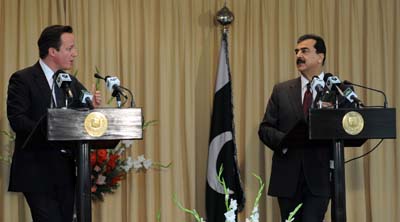
In UK talks, some practical solutions for Pakistani press
Amid political tumult in Islamabad, Pakistani Prime Minister Yousuf Raza Gilani and a team of six ministers are in London for far-ranging meetings today through May 13. The Pakistan-U.K. Enhanced Strategic Dialogue will review education, health, defense, security, and cultural cooperation. CPJ has written a letter to Prime Minister David Cameron to urge that press…
Another Pakistan attack, this one online
The Friday Times in Lahore has come under cyberattack. Earlier Friday, its website could not be accessed. Najam Sethi, the paper’s editor, told CPJ that someone has “launched an attack on the websites of both The Friday Times and Vanguard Books [the book publishing and distribution company that owns the Times]. A tsunami of killer…