
Exiled Eritrean editor reunites with family
Eight years ago, Aaron Berhane left his wife and three children behind as he fled his native Eritrea, a fugitive wanted by authorities because his newspaper had dared criticize the government of revered independence leader Isaias Afewerki. In May 2009, Berhane’s family managed to escape to Sudan. This month, at last, they joined him in…
Veteran journalists seek justice in Iraqi Kurdistan
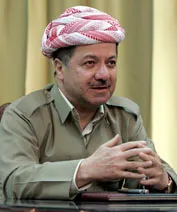
Last week, a number of prominent journalists who cover Iraqi Kurdistan wrote an open letter to the president of the Kurdish Regional Government, Massoud Barzani, and the president of Iraq, Talal Talabani, calling on them to bring to an end a sharp rise in violations of press freedom. A journalist was abducted and murdered in the country as…
Local Pakistani reporter’s murder reflects global issue
The murder of a journalist such as Ghulam Rasool Birhamani might tend to be quickly forgotten. After all, he was a local reporter for a small newspaper, the Daily Sindhu Hyderabad, in a country where violence is routine. But hundreds of his fellow journalists turned out on Wednesday for a march to protest his killing…
Suppressed media erase memory of Andijan massacre
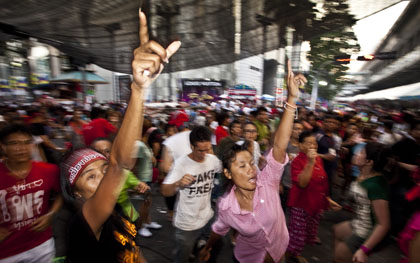
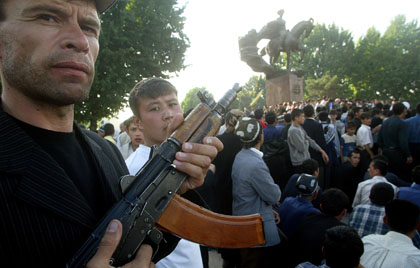
Five years ago today, Dilorom Abdukadirova, 44, managed to escape the heavy spray of bullets in her native Uzbek city of Andijan. On that day, government troops shot and killed hundreds of civilian protesters on the orders of President Islam Karimov. Leaving behind her husband and four children, Abdukadirova found a refuge in Australia, where…
London neighborhoods increasingly ‘off-limits’ to journalists
Life can be bumpy on Britain’s campaign roads. On May 3, Jerome Taylor, a “home news” reporter with the London daily The Independent went into the Bow borough of East London in order to look into allegations of widespread postal voting fraud. His bloodied nose and face appeared in the next day’s Independent.
‘Crude’ filmmaker’s raw footage subject to subpoena
A filmmaker’s raw footage is much like a photographer’s unedited images or a reporter’s notebooks—a private record of their reporting that is rarely disclosed to others. On Thursday, a federal judge in New York ruled that a private firm could subpoena the unedited footage used to make a news documentary. The reason? To help the…

Free speech in India: Between the bullet, baton, and gavel
Freedom of speech and expression in India is balanced precariously between the ever-present threat of direct, physical attacks from both security forces and social vigilante groups on the one hand, and the reassurance of protection from higher judicial authorities on the other. But the scales seem tipped in favor of the former.