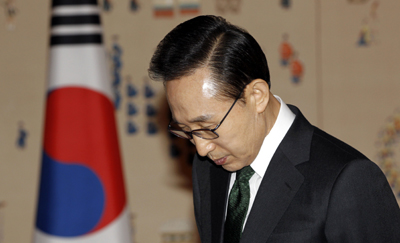
In well-wired South Korea, all is not well for press freedom
CPJ ranks North Korea, with no independent media, as the world’s most censored state. South Korea, with a wide-open press, seldom comes in for criticism. The high-tech, economic powerhouse is ranked as one of the most intensely wired nations in the world, and South Koreans enjoy near universal Internet access. But all is not well…

For Cuban blogger Sánchez, a government ‘distinction’
Acclaimed Cuban blogger Yoani Sánchez has had her share of honors lately. Last year alone, her blogging, which offers a personal and critical view of life in Cuba, was honored by the Dutch Prince Claus Fund, the International Press Institute, and the Danish Centre for Political Studies. This week, Sánchez received a very different type…
In breakthrough, Mexican media sign crime accord
Major Mexican press organizations agreed today on a code for coverage of organized crime, a step seen as a national breakthrough that could set professional standards well into the future. Though organized crime has been the major story in Mexico for several years, coverage has been haphazard based on time, place, and news organization. The…
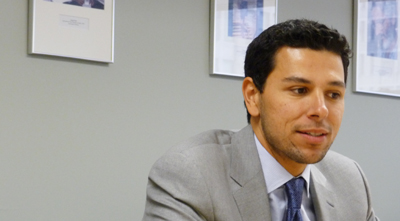
Q&A: Ayman Mohyeldin, Al-Jazeera English correspondent
For the millions of non-Arabic speakers around the world who followed Egypt’s revolution live one journalist stood out–Ayman Mohyeldin of Al-Jazeera English. Mohyeldin, 32, used his knowledge of the region and of the West to make sense of the events unfolding in Cairo’s Tahrir Square for an international audience. He also witnessed the unprecedented wave…
Is China censoring phone conversations?
Are Chinese mainland citizens, as has been reported, finding their telephone conversations cut off whenever they mention the word “protest?” While large-scale, real-time voice recognition is a technological possibility, it is at the edge of what is believed likely. It would certainly be revealing about the capabilities of the Chinese government if these anecdotes proved…
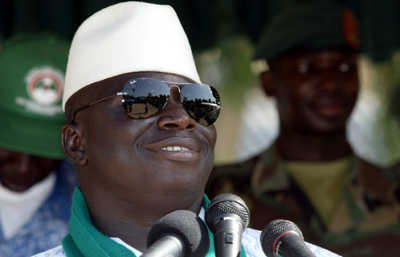
Jammeh to news media: I set limits on press freedom
Last week, Gambian President Yahya Jammeh participated in a rare meeting with select members of the West African nation’s press corps. Jammeh spoke in favor of access to public information. He announced that he would allow The Standard newspaper to resume publication, five months after the National Intelligence Agency forced its editor, Sheriff Bojang, to…


In Ivory Coast, journalists pick sides or flee
Reporting on the power struggle in Ivory Coast is increasingly perilous, with journalists facing a climate of threats, intimidation, and attacks that has forced many to choose between adopting partisan coverage or fleeing to safety. “Here, we are in a situation where if you are not with one camp, then you are against them. You…