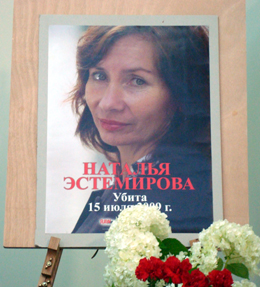
Estemirova investigation on wrong track, colleagues say
Two years ago, as she was leaving home on a hot Wednesday morning in Grozny, several attackers forced Natalya Estemirova, the prominent journalist and human rights defender, into a car. A young witness–who later fled for fear of reprisal–recalled that Estemirova cried out she was being kidnapped and that a white Lada sedan then sped…
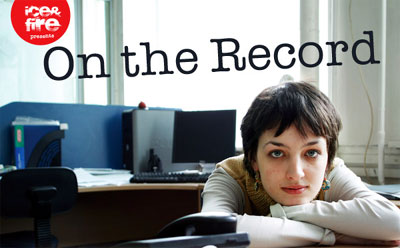
Journalists take stage: Q&A with ‘Record’ playwright
The true stories of journalists from Mexico, Sri Lanka, Russia, the United States, and the Occupied Palestinian Territories will hit the stage July 20 at London’s Arcola Theatre. “On the Record,” which runs through August 13, examines the careers of six journalists, the risks they face, and their determination to make an impact through their…
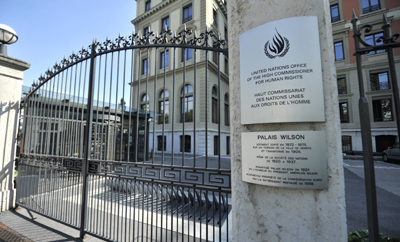
UNHCHR grills Ethiopia on anti-terror law
This week, the Human Rights Committee of the U.N. High Commissioner for Human Rights reviewed Ethiopia’s compliance with the International Covenant on Civil and Political Rights, including its press freedom record. Peppered with questions about an indefensible record of abuse–jailing the second largest number of journalists in Africa and leading the continent in Internet censorship–representatives…

Kenya’s quiet information revolution
An information revolution is quietly unfolding in Kenya, potentially allowing the public greater access to government data and independent local news. This month, the nation became a regional leader in open government with the launch of a website providing easy access to volumes of public information. Journalists can tap into public budget data with relative…
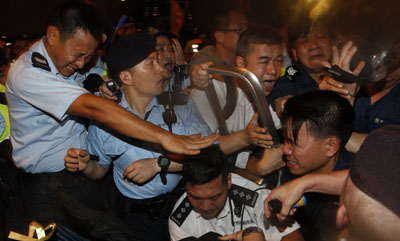
Hong Kong’s accelerating media freedom decline
As a former resident of the Special Administrative Region, the classification given Hong Kong when it reverted to China’s control in 1997, I’ve always watched the media there with the appreciative eye of a news consumer. The concept of “One Country, Two Systems,” put forward to explain how the former British colony’s capitalist economy and…

Security vs. risk: More on Facebook and Google+
It’s been fascinating watching the hothousing of a new social network in Google+. In the early days of Twitter, it was the users who invented social norms like “@”ing people, hashtags, and retweeting, which the designers of Twitter adopted and echoed in thee hardwired code of the website itself. Such affordances, as they are known,…
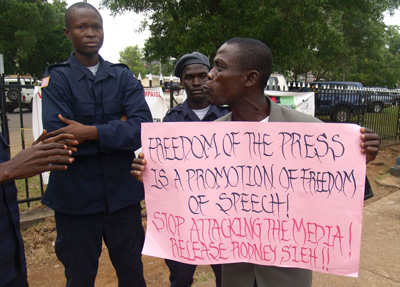
In Liberia, silencing press critics through libel lawsuits
During Liberia’s 14-year civil war, the press was silenced through violence. Journalists now say they are the victims of a more subtle assault. They say a corrupt judiciary and a vindictive use of libel suits are a threat to an otherwise burgeoning free press.

For safety’s sake: New journalist safety rules in Pakistan
I got an early version of the Khyber Union of Journalists’ (KhUJ) list of safety rules and tips for field reports around June 16, after the June 11 double bomb in a crowded market that killed two journalists in Peshawar. Yousaf Ali, KhUJ’s general secretary had forwarded the list. It was quickly drawn up after…
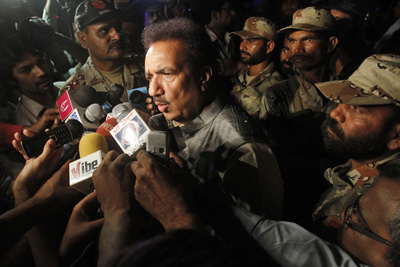
Karachi might be more dangerous for media than FATA
Karachi, Pakistan’s economic hub, is one of the country’s main media centers, with more than 2,000 journalists and the head offices of leading media organizations. Journalists in the city have come under attack before, with seven journalists killed there since 1994. But the situation was never as dangerous as it has been this past year.

Chinese censorship fans rumors on Jiang Zemin
Sina’s Twitter-like microblog platform Weibo blocked searches for “death,” “river” and “301 Hospital” on Wednesday, according to The Wall Street Journal website. The company was responding to what Reuters reported was the service’s most-discussed topic yesterday–the rumored demise of former President Jiang Zemin, whose surname, Jiang, means “river,” and who may or may not have…