Defense tools for Sri Lanka’s online onslaught
Sanjana Hattotuwa, the founder of the citizen journalism website Groundviews, sent us the links to a new series of posters and videos focused on digital communications security. The material, which is aimed at a Sri Lankan audience, is available in English, Sinhala, and Tamil, but is relevant to anyone who uses the Internet or a…
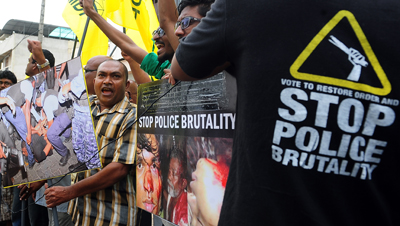
#Maldives media debate unfolds on Twitter
It started at 6:34 p.m. Monday. Abdulla Riyaz (@riyazabdulla), whose Twitter bio describes him as commissioner of the Maldives Police Service (MPS), published the following on his personal account: “MPS decides NOT to cooperate to Raajje TV [sic]. A statement will be released today.”
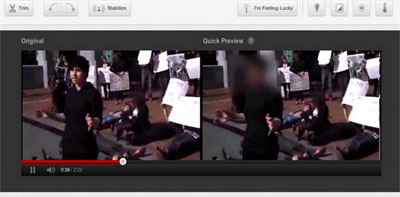
Face-blurring comes into focus for journalists
This week, YouTube announced a feature that should catch the eye of video journalists and bloggers working in dangerous conditions. After uploading a video to YouTube, you can now deploy a “blur faces” post-production tool that, in theory, should disguise the visual identity of everyone on the screen. The Hindu newspaper has an excellent how-to…
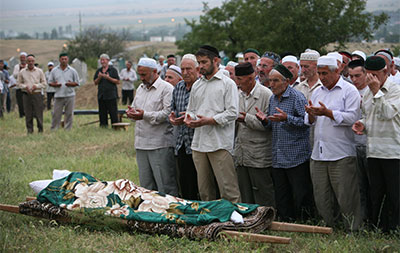
Three years on, Natalya Estemirova’s murder unsolved
Three years ago this week, Natalya Estemirova, a contributor to the independent newspaper Novaya Gazeta and a local staffer for the Moscow-based rights group Memorial, was murdered in the North Caucasus, Russia’s volatile region, where she was famous for her work as a defender of human rights.
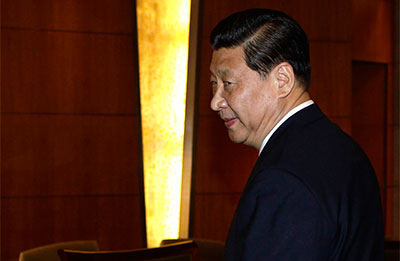
Afghanistan’s draft media law slowed, but not stopped
For now, the Afghan government’s apparent attempt at railroading through a less-than-media-friendly new Mass Media Law without consultation seems to have been sidelined, though not derailed. On Sunday in Kabul, representatives of the Ministry of Information and Culture received recommendations from civil society workers and journalists, including some from the provinces, which were drawn up…

Internet law: a good bad example of Russia’s backsliding
Russia’s State Duma has passed a number of new laws in the past week, all seemingly aimed at reining in civil society and criticism of public figures. The bills would re-criminalize defamation and impose limits and labels on NGOs. They follow the introduction last month of excessive fines for unauthorized protests.

Bossa Nova’s home and Olympics host is risky for press
The jagged mountains ringing Rio de Janeiro descend to a temperate valley with two storied beaches on the Atlantic. Here is the city that gave the world a new, eclectic musical beat with the Bossa Nova, the South American jewel that will host the summer Olympic Games in 2016. Yet Rio has also been the…