


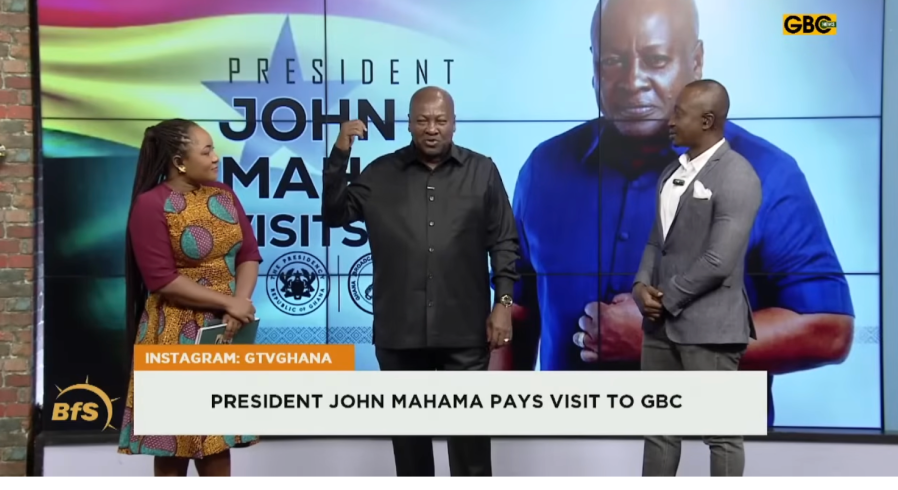
When Ghana’s President John Dramani Mahama took office in January 2025, pledging to restore “an era of true media freedom,” journalists had reason to hope that attacks on the press would be taken more seriously than before.
But during Mahama’s tenure, CPJ has documented eight separate incidents in which at least 17 journalists were attacked with almost complete impunity. Police, firefighters, and soldiers attacked eight of the journalists, while illegal miners and unidentified people attacked nine others.
“We need justice,” said reporter Samuel Addo, who was attacked by firefighters on January 5 while filming the aftermath of a market fire. “We are not safe.”
CPJ spoke with journalists involved in each incident to identify what, if any, justice they had received. Almost all called for law enforcement to ensure those responsible were swiftly arrested and prosecuted. Most also wished for authorities to communicate publicly about steps toward accountability. Yet, a lack of action has left them feeling unsafe and demotivated.
Mahama: ‘They must be dealt with as firmly as possible’
“I am a journalist by training. And so, there’s no way, you know, we’ll countenance the continued assault on journalists,” Mahama told Ghana Broadcasting Corporation’s viewers during a visit to the state-owned broadcaster in January 2026.
“We need a reorientation of many of our security personnel to understand that just as they are doing their job of providing peace and safety, journalists are also doing their job of informing the people … Occasionally these things will come up. But when they come, they must be dealt with as firmly as possible,” he added.
When Mahama was asked about Addo’s case, he said he thought those involved had been identified and “interdicted.” CPJ and Addo did not find any evidence of this.
On June 3, communications minister Samuel Nartey George reiterated Mahama’s commitment to media freedom, saying the president “views the press as the heart of the nation’s democracy.”
However, impunity for attacks on the press under Mahama extends a broad pattern of abuse, including the unresolved murder in 2019 of investigative reporter Ahmed Hussein-Suale Divela.

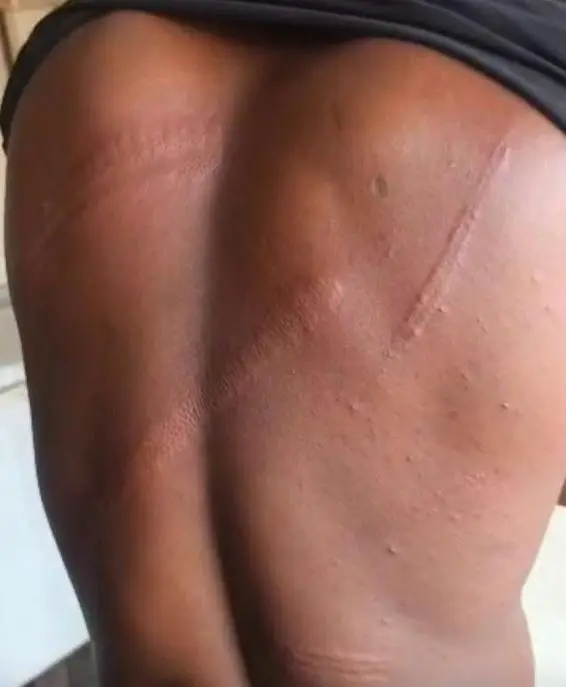
“Nothing changed when President Mahama took over,” said Charles Awuah Mensah, a TV producer attacked while covering elections in Ghana’s southern Ashanti region in 2025.
In each case, journalists told CPJ that they carried formal press identification, like their “Press” jackets and ID cards, or they explicitly identified themselves as journalists.
“They detained me after they knew that I was a journalist. So as a journalist I feel like I am not safe,” said Solomon Kwame Kanaluwe, a reporter who was beaten by soldiers in January.
“It has demotivated me from going out there to the fronts and risking my life,” he added.
Compensated for damaged equipment
After each attack, journalists said they reported what happened to the police.
But the only incident in which there was evidence of any justice was when a court ordered illegal miners to compensate a journalist whose equipment had been damaged.
Jacob Adu-Baah, Akwasi Agyei Annim, and Henry Fynn Emil confirmed the prosecution of the illegal miners who attacked them in 2025. Annim received compensation for his damaged equipment, as did the state.

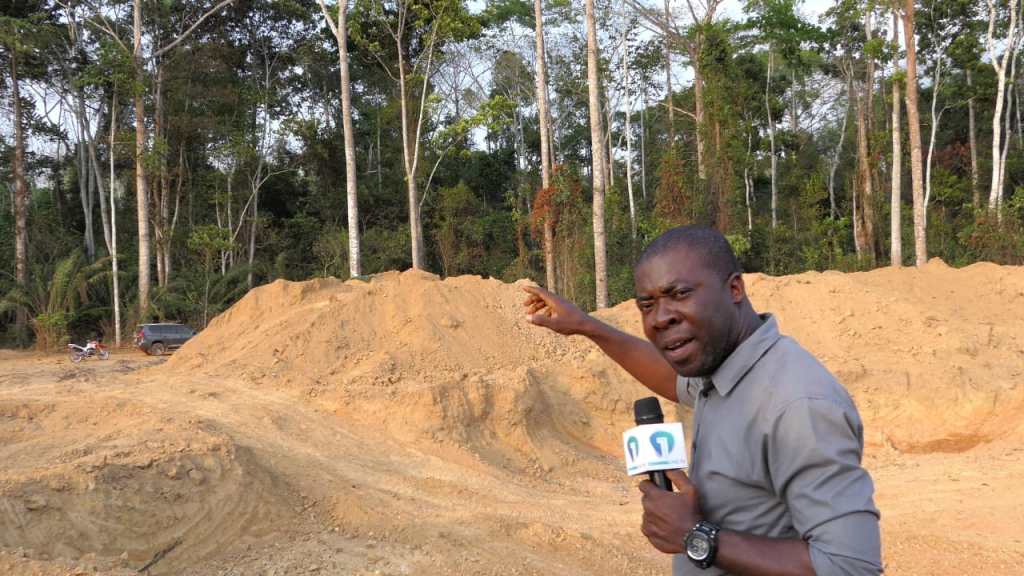
The three journalists told CPJ they were disappointed that the court did not address the illegality of mining that they had been reporting on. Adu-Baah said he had to take a month’s leave “to get a mental check before returning to work.”
While less high profile than the president’s televised claim that the firefighters were being held to account, police also raised false hopes of justice for reporter Kwabena Agyekum Banahene.
Days after police attacked Banahene as he was covering local elections in 2025, the online outlet 3News reported that a police officer was in detention for assault. Banahene told CPJ that a police officer also showed him a written directive from Ghana’s attorney general indicating his attacker would be prosecuted.
But he has received no further news.
“I don’t know whether the matter is going on or not,” Banahene told CPJ.
‘Nobody has contacted me’

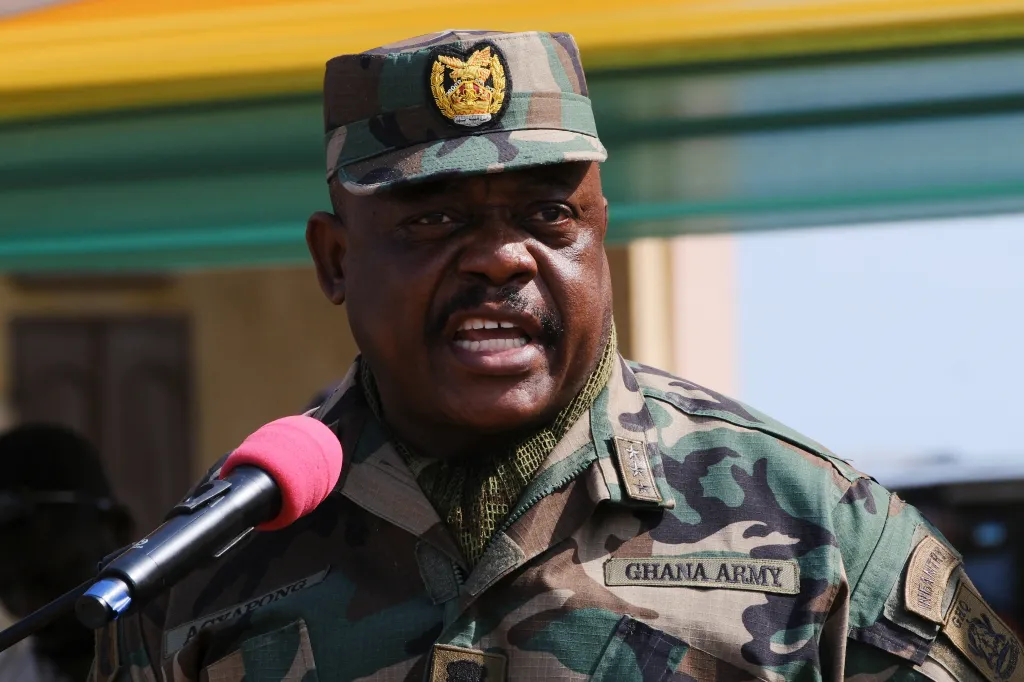
In all other cases, journalists received no updates from authorities. Some felt that effective investigations were unlikely where soldiers had been the perpetrators.
“The armed forces said they are investigating. Nobody has contacted me,” said Kanaluwe. “Even the police. When we reported, they followed me to where it happened and said they would get back to me. Since then, I have not received any calls or messages from them.”
Military officers also beat journalists Tahiru Apiliye Ibrahim and Dokurugu Alhassan as they were filming a bus on fire. The journalists said the police told them that they could not intervene in actions by the military. Alhassan said he had received no follow up.
“It has affected me very negatively,” Alhassan told CPJ, describing his fear of reporting from scenes where security forces are present. “Sometimes there will be news in town, and when you see the people involved, you can’t go there … when you go, they will beat you up again.”
Ghana Armed Forces’ acting director-general of public relations, Veronica Adzo Arhin, asked CPJ to send a written request for comment to the Chief of Defence Staff William Agyapong. CPJ’s email to the address listed on the Ghana Armed Forces website received no reply. CPJ’s calls and text messages to police director of public affairs Grace Ansah-Akrofi requesting comment received no response.
Here are details of the 17 journalists’ cases since President Mahama took office, and what, if any, justice they received:
- On February 21, 2025, police escorted ABC News reporter Jacob Adu-Baah, Channel One TV and Citi FM correspondent Akwasi Agyei Annim, and Angel TV reporter Henry Fynn Emil into a forest in Adomanya in Ghana’s Western Region, where they were attacked by suspected illegal miners. The attackers twisted Annim’s arm and damaged his phone and camera. The three had been reporting on illegal gold mining.
On March 5, 2025, a judge ordered that the miners pay 37,000 cedis (US$ 2,385) to replace Annim’s damaged items, which he received.
- On February, 11, 2025, five journalists — GhanaWeb correspondent Gideon Nana Peprah, Angel Broadcasting Network reporter Gabriel Kwasi Oppong, Lawson TV producer Charles Awuah Mensah, Oyerepa Radio and TV reporter Kofi Adede, and Oseikrom Dawuro newspaper editor Henry Atta Kotei— were hit and slapped by at least 14 unidentified men while covering regional elections in the southern Ashanti region.

Peprah and Mensah told CPJ they had received no updates about the police investigation, and blamed the silence on the influence of politicians, whose associates they believe orchestrated the assault. “We journalists are not safe, and we must not rely solely on the police for our protection during our work,” Mensah said.
CPJ’s April 20 calls and text messages to the Ashanti regional minister, Frank Amoakohene, a member of the ruling National Democratic Congress at whose official residence the assaults took place, did not receive any replies.
- On February 12, 2025, Zaa Multimedia reporter Tahiru Apiliye Ibrahim and Asaase Radio correspondent Dokurugu Alhassan were beaten by six military officers after they filmed a bus on fire in the northeastern Mamprusi community. When they reported the incident, police said they were unable to do anything about military actions. Alhassan told CPJ the situation had deepened his concern for his safety at work.
- On July 11, 2025, a police officer slapped GHOne TV reporter Kwabena Agyekum Banahene when a polling station for a local election on the outskirts of the capital, Accra, was overrun by a group of men who attacked a candidate. Banahene said authorities had failed to hold the officer to account. ATV Ghana reporter Vida Wiafe was also hit with pepper spray deployed by police.

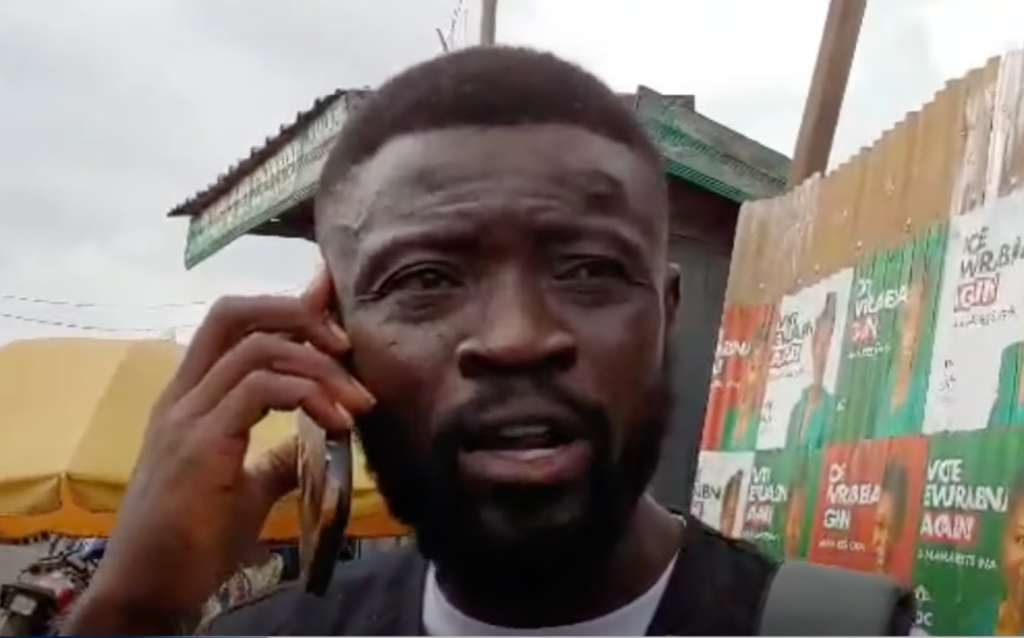
- On July 11, 2025, at the same polling station, Joy News reporter Sally Martey was struck and shoved by a partially masked man. Martey said authorities had failed to hold the attacker accountable.
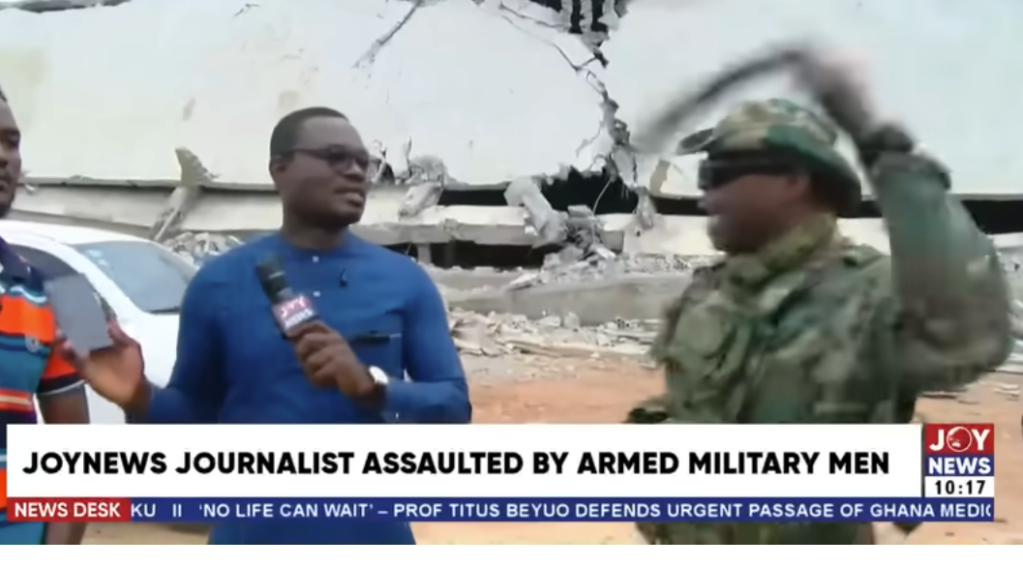
- On July 30, 2025, Joy News anchor and producer Carlos Lorlornyo Atsu Calony was attacked and Joy News camera operator Jonas Zodzi Voergborlo was threatened by at least seven military officers as they covered the demolition of a building in Accra.
Calony told CPJ that authorities took their statements but had not contacted them since. “We are not safe,” Calony told CPJ. “If you allow yourself to be a victim of anything of this sort, no one will come to your aid.”

- On January 5, 2026, about 10 firefighters punched and hit Class Media Group producer Samuel Addo to stop him filming the firefighters’ assault on members of the public in the aftermath of a market fire, the journalist told CPJ and Class 91.3 FM. Addo said the firefighters seized his phone, which was returned after an intervention by a local lawmaker, and he lost 10,000 cedis (US$901) during the five-minute assault in Kasoa, about 30 kilometers (18 miles) west of Accra. Videos shared online showed firefighters clashing with the public and attacking Addo.
The fire service said in a statement that there had been an “altercation between firefighters and a suspected thief” and “the alleged assault of a journalist is under police investigation.” Mahama said in a statement that Addo’s assailants were being investigated. Addo told CPJ that neither the police nor any other authorities had contacted him after an initial interview.