


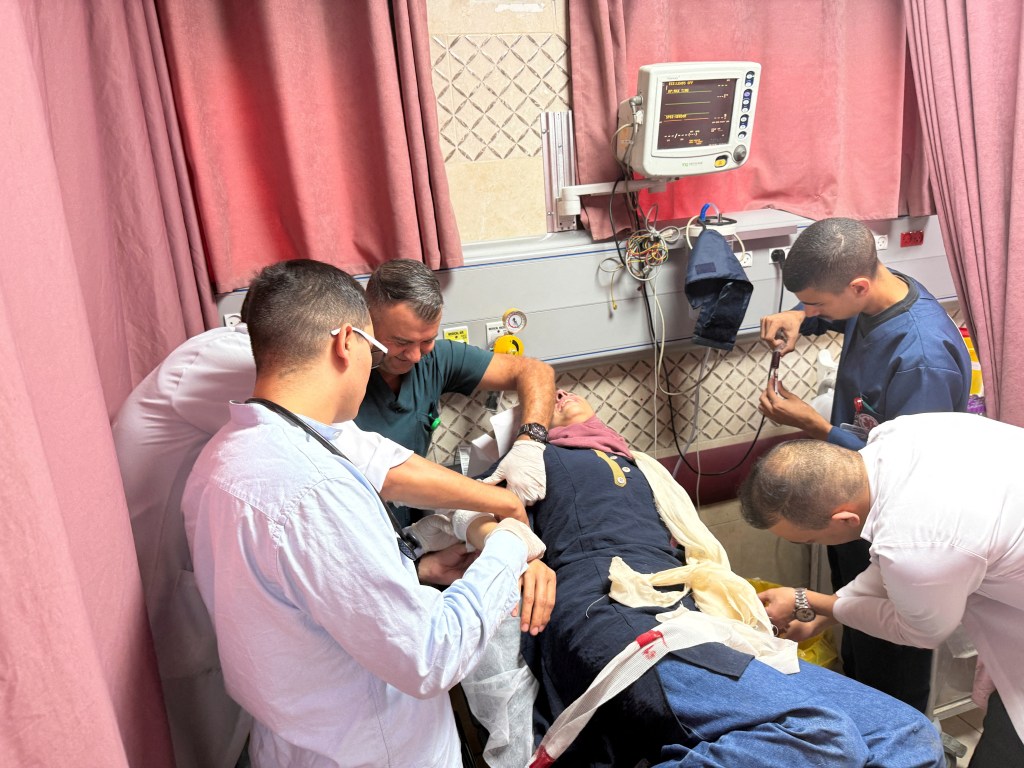
With settler violence against Palestinians in the occupied West Bank spiking, journalists are also facing more frequent and severe attacks.
So far in 2025, the Committee to Protect Journalists has documented 11 attack incidents involving at least 23 Palestinian and international journalists by Israeli settlers — some alongside soldiers — compared with one attack on an Israeli journalist in 2024. Two assaults occurred after the Israel-Gaza war began on October 7, 2023, an event that journalists say marked as the start of the surge.
The United Nations documented more than 260 settler attacks in October, coinciding with the annual olive harvest season — the highest number since U.N. records began in 2006. It has condemned the apparent impunity enjoyed by the settlers.
“While global attention remains focused on Gaza, extremist settlers in the West Bank have been waging one of the most aggressive and successful campaigns of intimidation and land seizure since Israel’s 1967 occupation of the territory, targeting not only Palestinians, but also all journalists who report on this mounting violence,” said CPJ Regional Director Sara Qudah.
Most attacks on journalists occurred near Israeli settlements near Palestinian towns and farmland, which are frequent flashpoints for violence. The settlements are illegal under international law as they are built on land that Palestinians want for a hoped-for future state.
At least 17 journalists either said they were wearing “Press” vests or imagery showed they were wearing that insignia, according to CPJ research.
‘Unprecedented levels of terror’

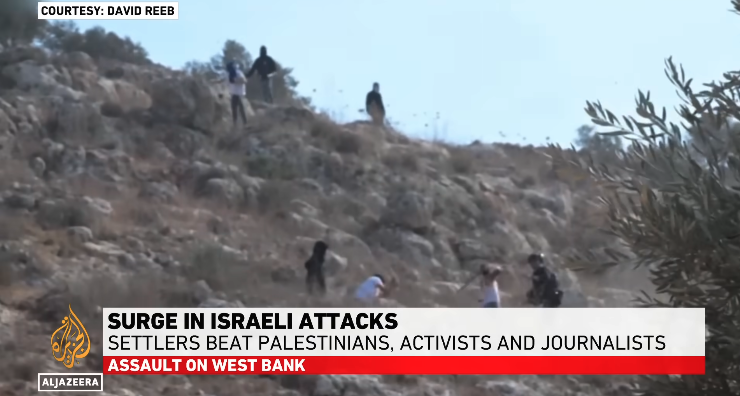
Hanaa Mahameed, a correspondent with Lebanese satellite channel Al Mayadeen, said settler violence against Palestinians has reached “unprecedented levels of terror” with “systematic group attacks carried out under army protection and full legitimacy from the Israeli government.”
An Israeli government spokesperson did not respond to CPJ’s request for comment via messaging app.
Mahameed, who was threatened in 2023 while reporting on settler attacks, told CPJ that she believed journalists were targeted to “deter reporting and prevent exposure of what’s happening on the ground — the killings, destruction, and land seizures.”
“I have avoided traveling to extremely dangerous areas, such as the Jordan Valley or the South Hebron Hills … to protect my team and local guides,” she said, describing Palestinian journalists as having the “weakest” security, compared to Israeli and international reporters.
Noa Bornstein-Hadad, editor-in-chief of the Israeli news site Politically Correct, said that since Hamas’ October 7 attack, “violence in the West Bank has not only intensified — it has gained legitimacy, under the cover of the trauma.”
She said Israeli law enforcement ”rarely intervenes effectively” and most Israeli media “avoid systematic reporting on settler violence.”
2025 incidents

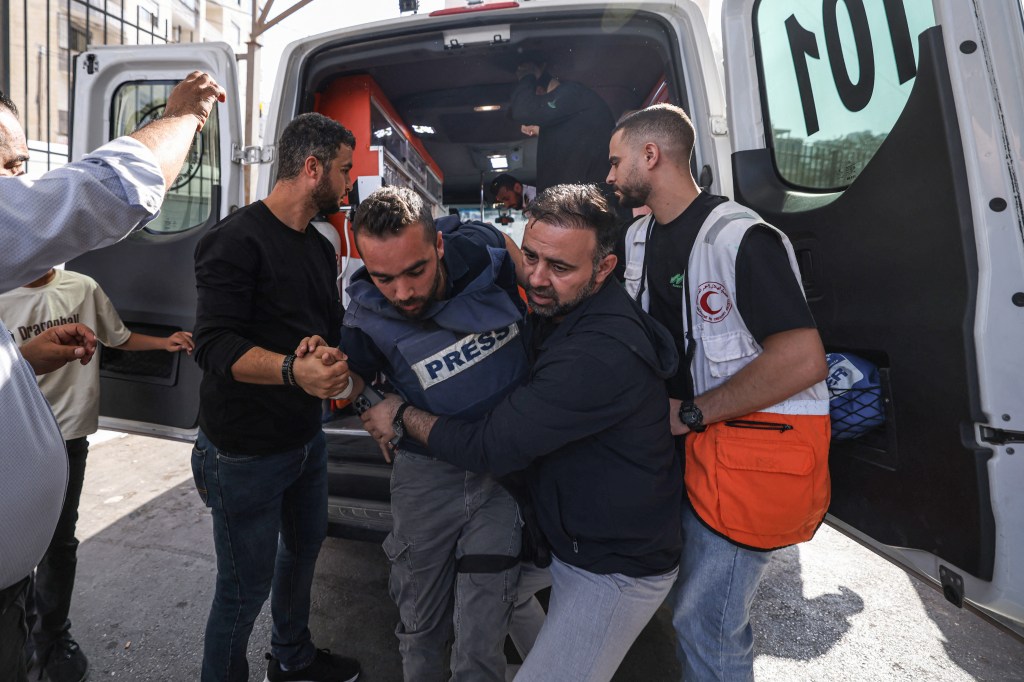
- On November 8, Israeli settlers, some masked and armed with sticks and sharp tools, attacked a group of reporters covering Palestinian farmers and international volunteers harvesting olives in the northern village of Beita, injuring at least five journalists.
Al Jazeera reporter Mohammed Alatrash told CPJ the settlers descended and “attacked anyone in sight,” so he leapt into a valley to escape as stones rained down, fracturing his leg and destroying his camera. Alatrash said his camera operator Lou’y Alsaeed received medical treatment for his injuries, while Reuters news agency reporter Raneen Sawafta was severely beaten on the head and chest.
“We were wearing ‘Press’ vests and helmets — without them, our injuries would have been far worse,” he said, describing the attack as “organized and tactical,” with settlers moving in groups “like militias.”
Alatrash said no Israeli soldiers came to stop the violence — a charge rejected by an IDF spokesperson, who told CPJ via messaging app that Israeli soldiers “arrived at the scene and operated to disperse the confrontation” and the incident “was transferred to the Israel Police” for investigation.
Nasser Ishtayeh, who works for the Hong Kong-based photo agency SOPA Images, told CPJ that settlers beat him with sticks and stones on his shoulders, neck, and arm, and he fell several meters down the hillside. Doctors found nerve damage on the right side of his neck and body, he said.
Nael Bowetel of China’s Xinhua News Agency told CPJ that he was struck with stones, chased for nearly two kilometers, and underwent surgery for a fractured right leg.

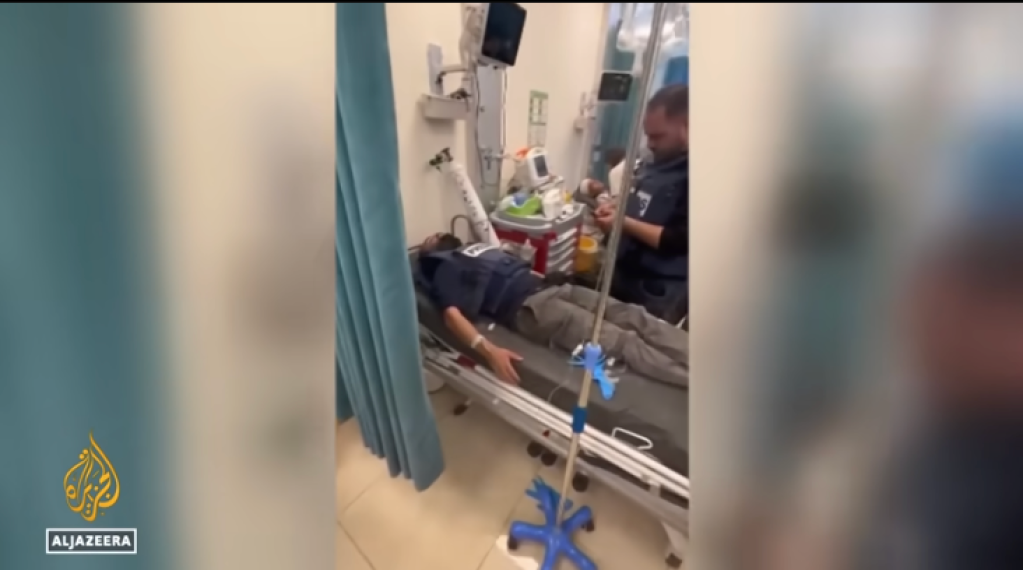
- On October 19, American journalist Jasper Nathaniel was stoned and his car window was smashed with a club by settlers while covering an assault on Palestinian farmers in Turmus Ayya, north of Ramallah. He told CPJ the attackers ignored his shouts of “Press, American, press.
- On October 10, four Palestinian journalists — Jaafar Ashtiyeh of Agence France-Press (AFP), Wahaj Bani Mufleh of Ramallah-based Quds News Network, Saja Al-Alami of Cairo-based Al-Ghad TV, and Yazan Hamayel of Palestinian Al-Fajr TV — were injured while covering a settler attack on farmers in Beita.
Ashtiyeh was beaten and hospitalized, while the others sustained gas inhalation and stun grenade injuries. “They burned my car and began throwing stones at us,” Ashtiyeh told CPJ.
- On July 16, freelance journalist Sidqi Rayan, Quds News Network reporter Abdullah Bahsh, and French photo agency Sipa Press photographer Nasser Shtayyeh were assaulted and had their cameras destroyed while covering settler attacks near Nablus. Bahsh, 29, told CPJ, “Three settlers stopped us — two carrying M16 rifles. They smashed two cars, confiscated a camera, and threatened to shoot us.”
- On July 13, settlers attacked a CNN crew led by reporter Jeremy Diamond in Sinjil, north of Ramallah, smashing their vehicle’s rear window. Diamond wrote on X that the assault reflected “a sliver of the reality many Palestinians face in the West Bank.”
- On July 5, settlers stoned a correspondent and camera operator for Germany’s DW and their vehicle in the central Palestinian town village of Sinjil.
- On May 27, freelance photographer Issam Rimawi was attacked and his two cameras were stolen by masked settlers while covering a wheat harvest near Ramun, east of Ramallah, leaving him with a skull fracture, heavy bleeding.
- On May 17, American journalist and podcaster Eric Maddox was beaten by settlers while filming a march in Hebron’s Old City. Israeli forces detained him the next day. Videos showed soldiers restraining and taking him away.
- On May 3, two settlers, one armed, detained Palestinian social media-based Al Ersal Network correspondent Karim Khmaisa and freelance journalists Ahmad Al-Khatib and Mohammed Turkman in northern Al-Mughayir village, interrogated them for half an hour, and threatened to kill them.
- On March 24, the Palestinian co-director of Oscar-winning film “No Other Land” Hamdan Ballal was assaulted by settlers near the southern city of Hebron and detained by Israeli forces for several hours.

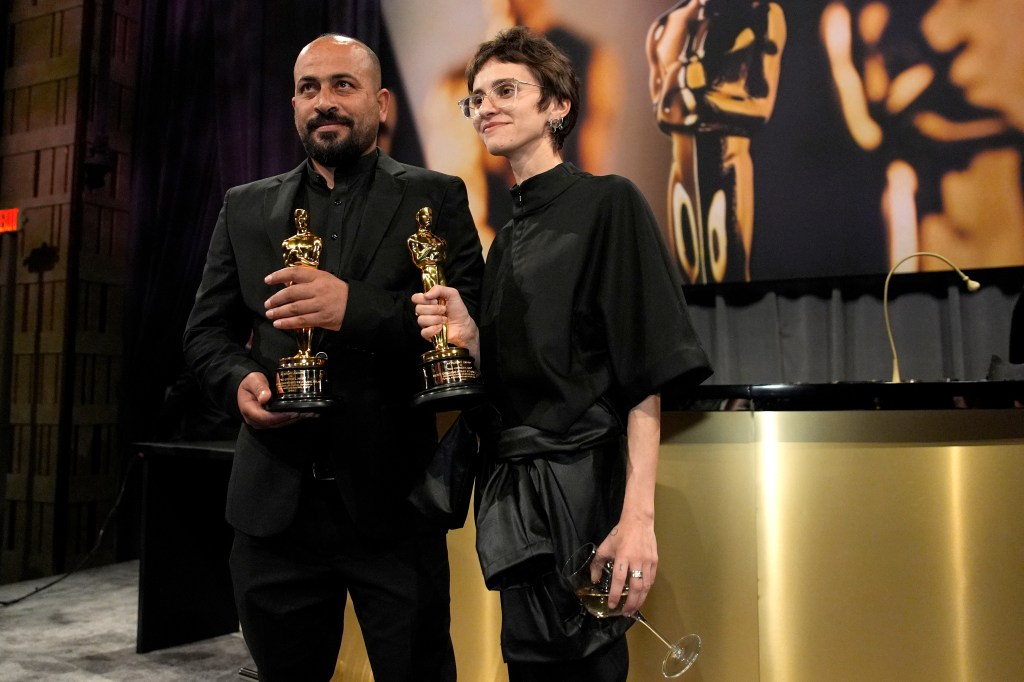
- On April 27, a settler driver tried to run over freelance journalist Mohammed Turkman in the central Al-Mutawi Valley while he worked with journalist colleagues Ahmad Al-Khatib and Shaher Al-Fuqaha. “The attempted ramming made me decide to work alone, because there is no protection at all,” Turkman told CPJ.
Earlier incidents during the Israel-Gaza war
- On April 13, 2024, Israeli photographer Shaul Golan of Yediot Aharonot newspaper and Ynet news site was beaten while documenting settlers torching homes in the central village of Al-Mughayyi. “I shouted that I was Jewish and a journalist, but they kept beating me,” he said, adding that police present did not intervene and opened an investigation only two months later.
- On November 17, 2023, settlers attacked Al Jazeera photographer Joseph Handal after he passed the Container checkpoint east of Bethlehem. “They blocked the road near a bypass gate, forced me to stop, smashed my car’s lights and windows, and hit me in the face with a stone,” Handel told CPJ.
- On October 8, 2023, journalist Mohammed Turkman, 28, from Ramallah, was targeted in an online smear campaign accusing him of terrorism. “I received hundreds of messages within hours,” he told CPJ.
An IDF spokesperson told CPJ via messaging app that the army “takes all possible measures to minimize harm to uninvolved civilians and journalists” and that “all relevant incidents are reviewed according to field circumstances and international law.”
Investigations into suspected settler assaults on journalists were handled by the police, the spokesperson added. The police spokesperson did not respond to CPJ’s messages requesting comment.
Editor’s note: This feature was edited to clarify a quote from Regional Director Sara Qudah.