


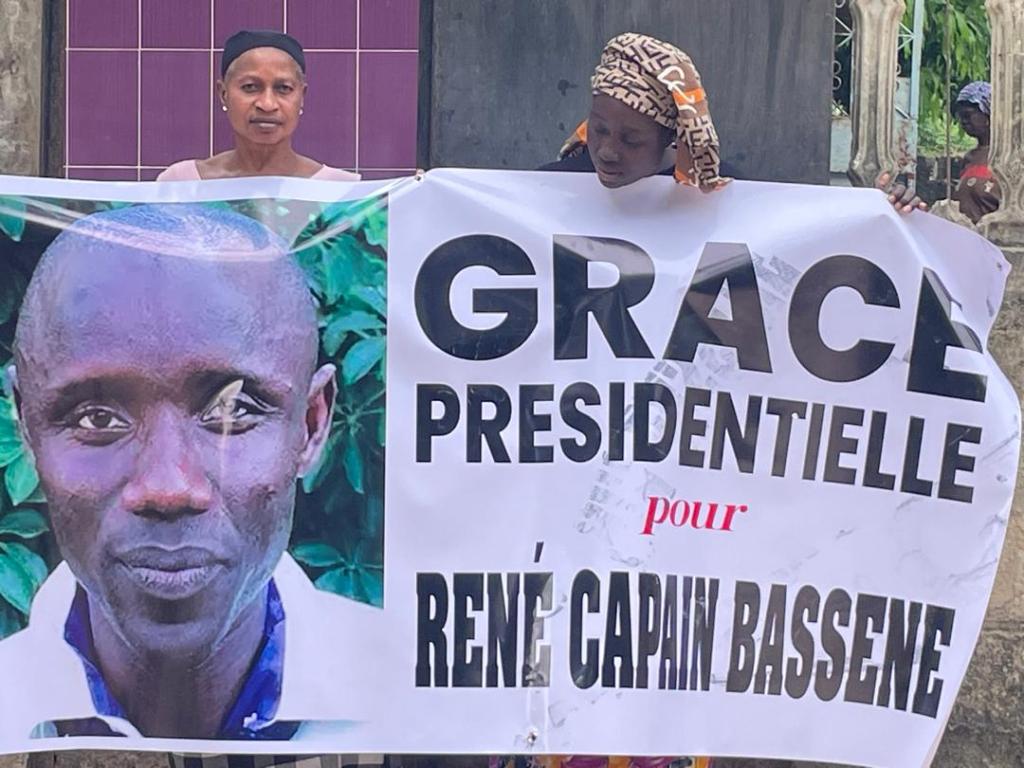
Journalist René Capain Bassène devoted his career to restoring peace to Senegal’s troubled Casamance region. The government accused him of being a rebel who ordered the murder of 14 men and jailed him for life. Now a rebel leader and a U.S. diplomat involved in peace negotiations have refuted the prosecution’s fundamentally flawed theory. The evidence of a miscarriage of justice is clear. The question is whether Senegal has the political will to confront it.
Editor’s note: CPJ was working on this feature prior to René Capain Bassène’s release on May 27, 2026, to raise awareness of his case.
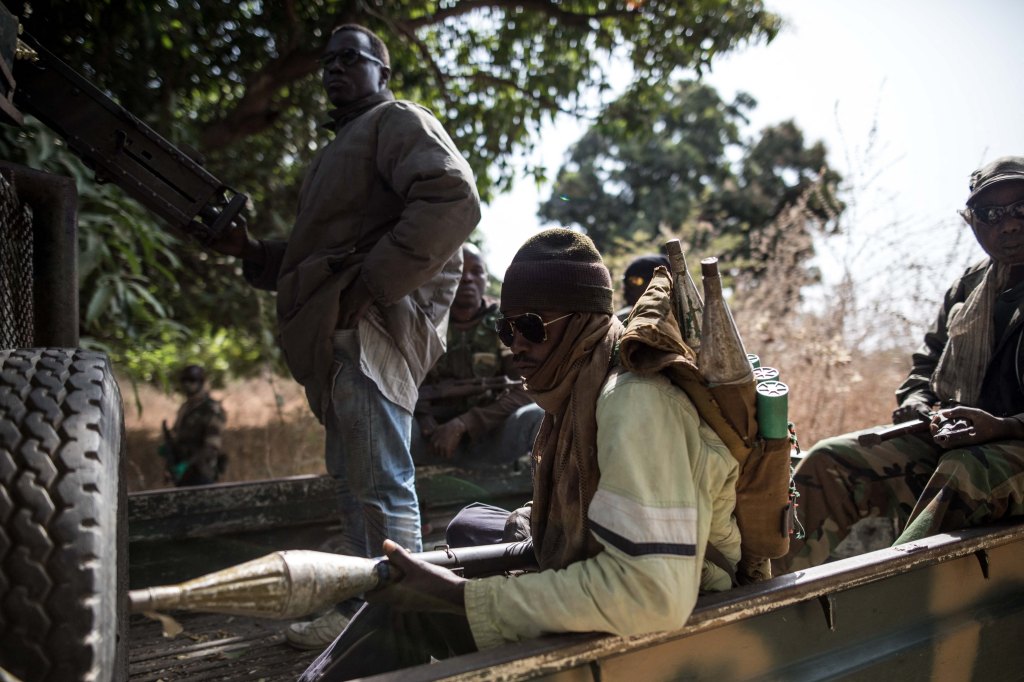
On the morning of January 6, 2018, 14 men went into a forest in southern Senegal to collect wood. None of them came home. They were shot to death in one of the most brutal episodes of violence in the decades long Casamance conflict.
What happened next was perhaps even more shocking. A journalist and writer who had spent years trying to end the fighting was arrested, tortured in custody, and sentenced to life imprisonment for the massacre.

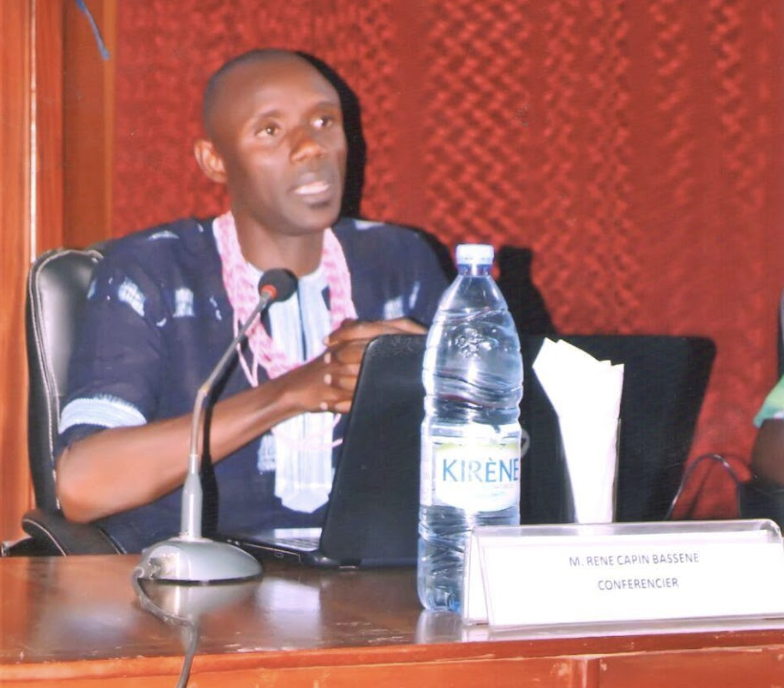
His name is René Capain Bassène. He had devoted three books and countless radio broadcasts to understanding, and ultimately stopping, a war that had displaced his own family.
CPJ regards Bassène’s case as one of the worst miscarriages of justice in Senegalese history, where a journalist trusted by all sides has been convicted of mass murder.
In a new development that casts further doubt on the integrity of Bassène’s conviction, two men with intimate knowledge of the separatist militant group — that Bassène was alleged to have instructed to carry out the killings — have repudiated the prosecution’s case.
One is César Atoute Badiate, the exiled leader of one of the Movement of Democratic Forces of Casamance’s (MFDC) main factions, and the very man that the prosecution claims Bassène ordered to carry out the killings. The other is Mark Boulware, a former U.S. career diplomat appointed in 2014 by the Obama administration as a special envoy to support peace efforts in Casamance.
Justice has failed

CPJ interviewed the rebel and the diplomat for a new podcast, which presents fresh evidence about one of West Africa’s most emblematic press freedom concerns, proving that justice has failed and an innocent man is paying the price.
Listen to CPJ’s podcast “René Capain Bassène, wrongly convicted,” which examines the journalist’s life, career, and trial, through the voices of those involved.
The Casamance conflict began in 1982 amid longstanding grievances over political and economic marginalization. Bassène grew up in that region and his family was displaced from their village on the frontline.
The journalist conducted hundreds of interviews with rebels and soldiers and regularly appeared on a radio program called “Carrefour de la paix” (Crossroads of peace), on local Zig FM, which focuses on resolving the conflict. The title of his 2017 book, in which he revealed that threats from multiple directions were intensifying, Bassène asked the blunt question: When will there ever be peace?
The 14 loggers were killed in a protected forest near Casamance’s largest town, Ziguinchor, in one of the most violent attacks since peace agreements were signed in 2004 and 2014. The MFDC denied involvement.
Prosecutors built a theory: Bassène was a secret MFDC operative who had incited Badiate to order the killings. In June 2022, a Casamance court convicted both men of complicity in murder, attempted murder and criminal association.
‘I knew him as a journalist’

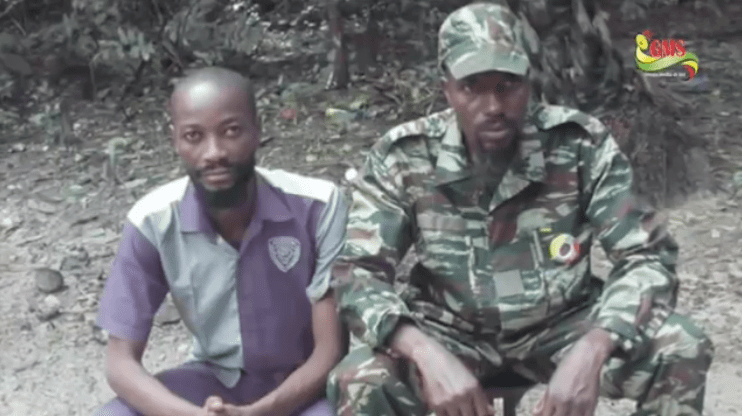
Replying to questions from CPJ, Badiate — who was convicted in absentia and is participating in peace negotiations with the Senegalese government in neighboring Guinea-Bissau — was unambiguous.
“René Capain Bassène is neither an MFDC representative nor a leader to give me orders (to kill). He was neither a member nor a spokesman for the MFDC. I knew him as a journalist and writer,” Badiate wrote to CPJ in March.
While Bassène has spent the last eight years behind bars, Badiate has met freely with Senegalese officials, signing a peace deal in August 2022 and a follow-up plan in February 2025. The government chose to negotiate with the rebel commander it claimed Bassène directed, while keeping the journalist behind bars.
“His absence, facilitated by Senegal’s unwillingness to bring him to trial, deprived me of a unique opportunity to prove my innocence, “ Bassène told CPJ from prison in Senegal’s capital, Dakar.
MFDC members Louis Tendeng and Samba Goudiaby, who introduced Bassène to Badiate, also told CPJ that the journalist never belonged to the movement. Instead, he sought their help in interviewing MFDC rebels as part of his research.
Boulware’s assessment was no less striking. As a diplomat supporting mediation between the government and the rebels, he described Bassène as an “invaluable resource” and a “completely independent” journalist who documented the conflict without favoring either side.
“The accusation of being the mastermind of such an operation seemed laughable to me. It didn’t make sense,” Boulware told CPJ.
Stripped naked, beaten

These latest interviews follow CPJ’s extensive 2025 investigation in which several former co-defendants — all acquitted in 2022 — revealed that they were forced, through beatings and electric shocks, to falsely implicate Bassène. Some said they did not even know the journalist. Meanwhile, Bassène said he was stripped naked, beaten until he lost hearing in one ear, and his genitals were electrocuted during interrogation.
In addition, four witnesses told CPJ that they saw Bassène miles away from the crime scene that afternoon, and that he watched a football match in Ziguinchor, raising doubts about the prosecution’s evidence over the geolocation of his phone. CPJ’s reporting also cast doubt on the authenticity of emails that the prosecution alleged were sent from Bassène’s account.
Despite this, the Supreme Court upheld Bassène’s life sentence.
While Bassène has been in prison, his wife has raised their four children alone. Eight years on, she is still waiting for him to come home.
“Enough is enough,” Odette Victorine Coly told CPJ. “His children need their father’s love. His unjust detention has gone on for far too long.”
Senegal has long held a reputation as one of West Africa’s stable democracies. President Bassirou Diomaye Faye, who came into power in 2024 on a reform platform, has the authority and the opportunity to act.
Presidential spokesperson Ousseynou Ly, government spokesperson Marie Rose Khady Fatou Faye, Defense Minister Birame Diop’s offices, and the gendarmerie have not responded to CPJ’s requests for comment.