


CPJ signed a joint letter on March 16 with 34 diaspora, human rights, and civil society organizations urging the U.S. Congress to hold markup sessions for the bicameral and bipartisan Transnational Repression Policy Act (H.R. 4829/S.2525). The bill would establish stronger U.S. mechanisms to protect people from foreign government threats and to hold perpetrators accountable.
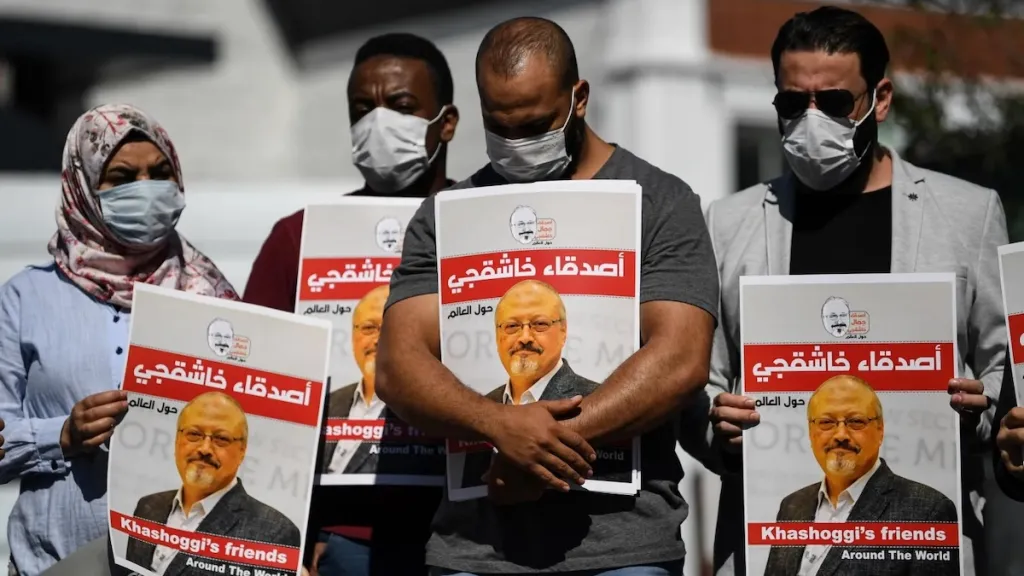
The brutal murder of journalist Jamal Khashoggi in 2018 by Saudi Arabia in Turkey showed the shocking lengths to which some states will go to silence independent journalists and dissidents outside their borders. The erosion of democracy and protections for human rights is also driving the increasing use of transnational repression by governments, particularly targeting journalists in exile. Repressive tactics used across borders include assassinations, unlawful deportations, detentions, renditions, defamation, physical and online threats, surveillance, and coercion by proxy. Major perpetrators include the governments of Russia, China, Iran, Egypt, Belarus, Saudi Arabia, and Azerbaijan.
Recent cases illustrate the threat. On January 14, Azerbaijan sentenced U.S.-based journalist Sevinj Osmanqizi to eight years in prison in absentia on charges of inciting mass unrest and calling for the overthrow of the state. On March 15, Iranian authorities threatened to target satellites and infrastructure linked to Farsi-language broadcaster Iran International. The Egyptian government has threatened, surveilled, and engaged in online gender-based violence against investigative reporter Basma Mostafa, who lives in Germany, in retaliation for her reporting.
In particular, the act would require the State Department to lead a national strategy to counter transnational repression by partnering with allies, engaging multilateral institutions, and supporting civil society organizations that help victims. It would also improve the U.S. government’s response by requiring outreach and support to at-risk individuals and communities.
Read the full letter here.