


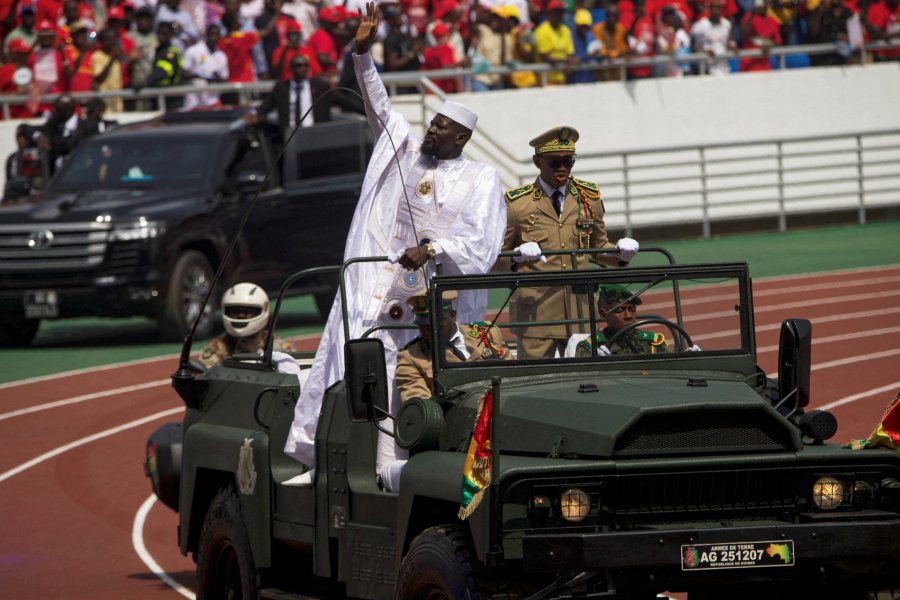
Dakar, September 18, 2026—The Committee to Protect Journalists calls on Guinean authorities to reverse Thursday’s ban on France 24 after a presenter called President Mamadi Doumbouya a “putschist president“ and to reinstate the accreditation of the pan-African weekly Jeune Afrique’s Guinea correspondent Diawo Barry.
“By prohibiting France 24 from broadcasting and Jeune Afrique’s Diawo Barry from working, Guinean authorities have shown their ruthless determination to silence independent voices and to intimidate other media outlets into self-censorship,” said Moussa Ngom, CPJ’s Francophone Africa representative. “Authorities must immediately reverse these decisions and refrain from further actions that erode press freedom and the public’s right to information.”
In its September 17 decision, the regulatory High Authority of Communication (HAC) said it had banned France 24 because it had failed to comply with its order the previous day “to immediately cease using terms deemed derogatory to the dignity of the Head of State and to make the required editorial corrections.” The HAC also withdrew press accreditation for all the French state-owned channel’s correspondents, special correspondents, and contributors in Guinea.
On Monday, a France 24 presenter used the word “putschist” while commenting on Doumbouya’s visit to Ivory Coast.
Hours after the HAC’s September 16 notice, France 24 added an online correction to the video’s description, saying that Doumbouya had been “mistakenly labeled a coup leader.”
“Having seized power in a coup on September 5, 2021, which overthrew President Alpha Condé, he was subsequently elected President of the Republic following the presidential election of December 28, 2025,” the correction said.
France 24 told Agence France-Presse news agency that it had also apologized and corrected the error on air.
Also on September 16, the HAC revoked Barry’s accreditation as Jeune Afrique’s correspondent on the grounds that his coverage of news in Guinea did not meet the requirements of objective, neutral, balanced reporting.
The Guinean satirical newspaper Le Lynx, where Barry is publishing director, suggested that Jeune Afrique’s September special report on Guinea, “Democracy under surveillance,” had “ruffled feathers.”
Jeune Afrique said that the HAC’s decision had been handed down “without prior consultation” and was “not based on any specific allegation” to support its “vague” accusations.
Since Doumbouya took power, the HAC has introduced long-term and indefinite bans on numerous critical outlets and reporters. The whereabouts of journalist Habib Marouane Camara, who was seized by uniformed men in 2024, and of exiled journalist Mamoudou Babila Keita’s elderly father, Elhadj Adama Keita, who was kidnapped in 2025, remain unknown.
CPJ’s calls to request comment from the HAC went unanswered.