


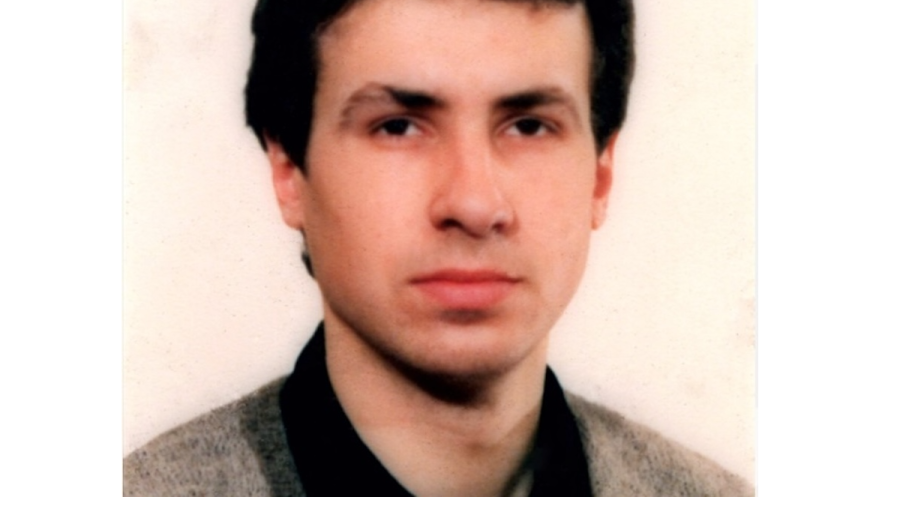
Berlin, June 9, 2026—The Committee to Protect Journalists welcomes that Polish prosecutors are preparing for a new trial in the 1992 disappearance and presumed murder of investigative journalist Jarosław Ziętara, after a court recently transferred the case to national prosecutors in Krakow for further evidence-gathering. Hearing dates have yet to be announced.
On May 25, the regional court in Poznań ordered prosecutors to supplement the evidence, including by reviewing former state security files, after an appeals court last December overturned the 2022 acquittal of Mirosław R., also known as “Ryba,” and Dariusz L., pseudonym “Lala.” The appeals court found the evidence sufficient to convict the two men of kidnapping Ziętara and aiding in his murder, stressing that the journalist had been targeted because of his reporting on powerful business interests, and sent the case back for retrial.
In an interview with CPJ, Eryk Stasielak, head of the Krakow Department of Organized Crime and Corruption at the National Prosecutor’s Office, said that a separate investigation continues into those who may have ordered the killing, including possible links to politicians, organized crime figures, and security service members.
“The upcoming retrial of Jarosław Ziętara’s murder case offers Polish authorities a long-overdue chance to uncover the full truth and finally move this case toward full accountability,” said Attila Mong, CPJ’s Europe representative. “More than three decades after Ziętara’s disappearance, prosecutors must ensure that every lead is fully investigated. Bringing to justice all those who planned, ordered, or carried out this crime would send an important signal to Polish journalists that crimes against them will not go unpunished.”
Stasielak told CPJ that prosecutors are convinced Ziętara was killed because of his reporting. “He was investigating connections between business figures, organized crime, and politicians, and was preparing an article when he was killed for getting too close to the story,” he said. Stasielak said prosecutors are examining state archives and former security service files because they believe former state security may have been involved in the murder. “We hope this will uncover new evidence that helps identify those who planned and ordered the crime,” he said.
“We will do everything possible to solve this case. It is one of the most important investigations in our office, and while I cannot guarantee success, I can guarantee our determination,” Stasielak said.
Case summary:
- Ziętara, a 24-year-old investigative journalist for the regional daily Gazeta Poznańska, disappeared on September 1, 1992, after leaving home for the newsroom in Poznań. His body has never been found.
- Ziętara had reported on alleged corruption, privatization scandals, organized crime, smuggling, and suspected links between business figures, political elites, and security services.
- Police initially failed to pursue a criminal investigation, suggesting Ziętara may have disappeared voluntarily or died by suicide; the case was opened in 1993, discontinued in 1995, resumed in 1998, and dropped again in 1999.
- After pressure from Ziętara’s family, colleagues, and Polish editors, prosecutors reopened the investigation in 2011 and reclassified the case as murder — from kidnapping — connected to Ziętara’s journalism.
- In 2014, former security guards Mirosław R. and Dariusz L. were charged with abducting, imprisoning, and aiding in Ziętara’s murder. The two men were acquitted in October 2022, but on December 3, 2025, the Poznań Court of Appeal overturned the acquittal, found the evidence sufficient to support conviction, and sent the case back for retrial.
- Separately, former senator and entrepreneur Aleksander Gawronik was acquitted of inciting Ziętara’s murder in February 2022, a decision that was upheld by the Poznań Court of Appeal in January 2024.