


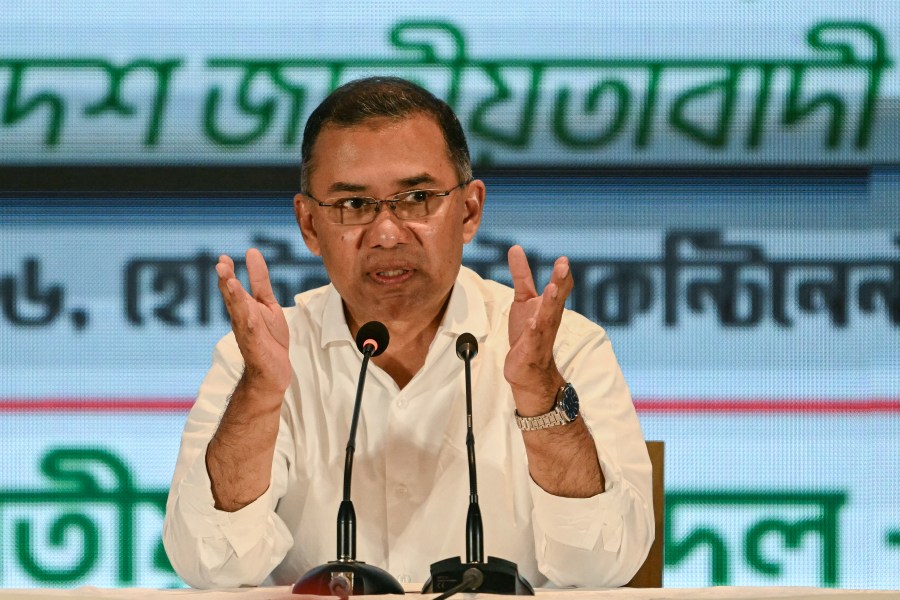
After 100 days in office, Prime Minister Tarique Rahman must start living up to his election manifesto pledge of protecting press freedom by breaking the cycle of partisan persecution of journalists in Bangladesh, the Committee to Protect Journalists said.
Bangladesh has had three governments in under two years: the administration of long-time leader Sheikh Hasina’s Awami League, ousted in August 2024; the interim government of Muhammad Yunus; and, since February 2026, the government of Rahman’s Bangladesh Nationalist Party (BNP).
Through each transition, journalists have been detained, prosecuted, surveilled, attacked, and vilified — often for their perceived alignment with whichever government had just fallen. Recently, a concerning report by The Daily Star revealed that police are conducting background checks and profiling journalists across the country.
“Press freedom in Bangladesh has too often been treated as an opportunity for each new government to turn the law against journalists allegedly aligned with the previous administration,” said CPJ Asia-Pacific Program Coordinator Kunal Majumder. “Prime Minister Tarique Rahman’s government pledged to be different — but 100 days in, meaningful progress remains limited.
“The government can start by releasing imprisoned journalists and dropping politically motivated cases, ending political vendettas against the press, protecting journalists from mob violence, halting smear campaigns and fixing laws that make all of this possible. These steps would ensure the same standard is applied to every journalist, regardless of who they are perceived to support. That is what breaking the cycle looks like.”
The 10 key steps to restoring press freedom in Bangladesh are:
1. End the use of the criminal justice system against journalists.
Dozens of journalists who produced coverage seen as supportive of Hasina have been detained or charged since August 2024. Often authorities criminalize journalists with First Information Reports — documents that open an investigation — that name hundreds of people, or are filed against unidentified individuals and subsequently used to accuse a reporter of wrongdoing. Authorities also target individual journalists with multiple cases at once to obstruct bail.
The most well-known cases are those of Farzana Rupa, Shakil Ahmed, and Mozammel Babu from the Bengali-language broadcaster Ekattor TV, and Shyamal Dutta of Bengali-language daily Bhorer Kagoj — all of whom have been detained since August or September 2024. On May 11 this year, the High Court Division of the Supreme Court of Bangladesh granted Rupa and Ahmed bail in most cases against them, but they remain in detention for other cases. On May 28, the day Rahman marked 100 days in office, an Editors’ Council delegation handed the government a list of 282 journalists facing politically motivated cases. Information Minister Zahir Uddin Swapon stated that the Prime Minister expressed solidarity with the Editors’ Council and directed authorities to take necessary measures regarding the lawsuits against journalists.
CPJ reminds the government that these cases continue to do harm and that acknowledgment must be followed with action. The government must order a review of all cases filed against journalists in line with international human rights standards; instruct prosecutors not to oppose bail in cases arising from journalistic work; end the practice of case-stacking and mass First Information Reports against journalists; and ensure that no journalist is prosecuted for their perceived political alignment.
2. Stop the International Crimes Tribunal being used against journalists. The International Crimes Tribunal (ICT) — a domestic court established in 2010 to try crimes from the 1971 Liberation War — is being deployed against journalists for their editorial work. At least 25 journalists are under ICT investigation, in many cases for genocide or crimes against humanity tied to their alleged support for the Hasina government. For example, the tribunal ordered Rupa and Babu to appear on May 14 in response to allegations that their coverage of the May 2013 crackdown on a rally by Islamic group Hefazat-e-Islam at Shapla Chattar contributed to crimes against humanity.
These charges are particularly concerning because Article 47A of Bangladesh’s Constitution excludes individuals accused of genocide, crimes against humanity, and war crimes from protections guaranteed under Articles 31 (right to protection of law) and 35 (protection in respect of trial and punishment), and bars them from seeking constitutional remedies before the Supreme Court.
Precedents for media liability under international criminal law — including the Nuremberg Tribunal’s Streicher judgment and the International Criminal Tribunal for Rwanda’s “Media Case” — concerned direct, sustained incitement of mass killing through propaganda, not editorial choices about contentious coverage. The government must ensure the ICT is not used to penalize journalism; conduct an independent review of all ICT cases involving journalists; and introduce safeguards to prevent atrocity charges from being applied to journalistic work.
3. Ensure accountability for crimes against journalists, regardless of politics. Journalists have been killed, attacked, surveilled, and arbitrarily detained under both the Hasina government and the interim administration. Too often, accountability for these crimes has depended on the politics of the moment, rather than the facts. Political vendettas must be ended by ensuring accountability through transparent, independent investigations and meaningful redress for victims.
The government must ensure that investigations and prosecutions of crimes against journalists, under whichever administration they occurred, are conducted impartially and without the use of the death penalty.
4. Protect journalists and newsrooms from mob violence. Journalists and media outlets in Bangladesh face violence and intimidation from organized groups and political party supporters. During the December 2025 unrest, the offices of Bangladesh’s two largest newspapers — Prothom Alo and The Daily Star — were attacked and set on fire, with journalists temporarily trapped inside burning newsrooms and both outlets forced to suspend print and online publication. Elsewhere, individuals stormed the offices of Somoy TV and demanded the dismissal of journalists, while reporters from other newsrooms have been physically attacked while covering protests. In 2025, CPJ documented at least 10 incidents of violence and harassment against reporters covering political events, most of them carried out by members or affiliates of the BNP and its student wing, Chhatra Dal.
The government must condemn this violence and direct authorities to conduct prompt and impartial investigations into attacks on the press, and hold perpetrators accountable regardless of political affiliation.
5. Replace the Cyber Protection Act, 2026 and dismiss politically motivated cybercrime cases. The Cyber Protection Act, 2026 — enacted by the newly elected government to replace Cyber Protection Ordinance, 2025, the Cyber Security Act, 2023, and the Digital Security Act, 2018 — retains the vague definitions and weak judicial oversight that made its predecessors instruments of press repression. The government must replace or substantially amend the statutes to align them with international standards and clearly protect journalistic work. It should also establish a transparent and independent review process, and dismiss cases filed against journalists under the current and previous cybercrime laws.
6. Reform the Anti-Terrorism Act, 2009 to end its use against journalists. The Anti-Terrorism Act, 2009 — along with statutes like the Special Powers Act, 1974 and the Official Secrets Act, 1923 — has been used to detain and prosecute journalists. In December 2025, journalist Anis Alamgir was arrested under the law over his television commentary and social media posts before being granted bail. In May 2021, Rozina Islam was arrested and detained under the Official Secrets Act on allegations of stealing confidential official documents and espionage. The government must replace or substantially amend these statutes to bring them into line with international human rights standards, narrow the definition of terrorism, and introduce an explicit exemption protecting legitimate journalism.
7. Withdraw the draft media regulatory ordinances and implement the Media Reform Commission’s recommendations. The draft National Broadcast Commission Ordinance and the draft National Media Commission Ordinance, 2026 risk creating regulators that could be used to control broadcast and print media, much like the system under Hasina. The Media Reform Commission established by the interim government produced substantive recommendations on press freedom and regulatory independence, but they have not been implemented.
The government should not adopt the draft ordinances in their current forms and should instead implement the commission’s recommendations through a transparent, multi-stakeholder process that guarantees the independence of any media regulator.
8. Repeal or amend the legacy laws and surveillance frameworks used to silence journalists. The government should repeal or substantially amend the Official Secrets Act, 1923; repeal the criminal defamation provisions of the Penal Code, 1860; and amend the Special Powers Act, 1974 to ensure it cannot be used to arbitrarily detain journalists. It should also reform the surveillance and interception provisions of the Bangladesh Telecommunication Regulation Act, 2001 to require independent judicial oversight and stop warrantless interception by security agencies.
9. Reform the accreditation system and establish safeguards against abusive litigation. After Hasina stepped down in 2024, the Press Information Department revoked the accreditation of 168 journalists, while the system has been used to punish critical editors. Journalists also face parallel civil and criminal complaints — Strategic Lawsuits Against Public Participation (SLAPPs) — filed to drain newsroom resources. The government must reform the accreditation system so that credentials cannot be revoked on the basis of allegations; introduce anti-SLAPP safeguards, including early dismissal mechanisms, drawing on international best practice; and ensure that any data protection framework includes robust exemptions for journalism.
10. End the smearing and vilification of journalists. Political actors, state-aligned media, and online trolls routinely label Bangladeshi journalists as “pro-India,” “anti-Islam,” “traitors,” or agents of the former government. Smears like these not only delegitimize journalists’ work, but also endanger their safety and intimidate sources. This vilification has driven journalists into exile and exposed others to threats. To resolve this, the government must ensure no state body is used to smear journalists or to question their loyalty to the nation or Islam. Journalism is protected underArticle 39 of the Constitution of Bangladesh and by Article 19 of the International Covenant on Civil and Political Rights, to which Bangladesh is a party.
The government must make clear and repeated public statements affirming that independent journalism is a constitutional right and a democratic necessity, and that those who incite violence against the press through vilification will be held accountable.