


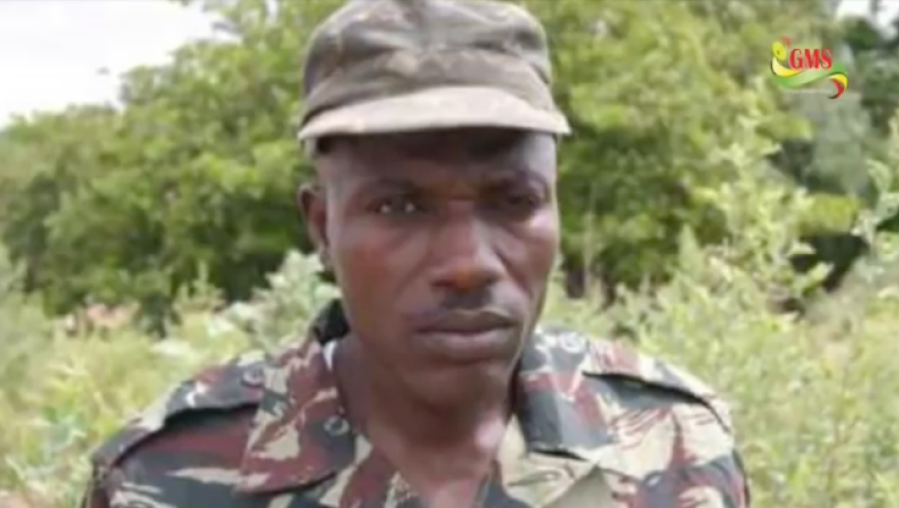
A key Senegalese rebel leader, César Atoute Badiate, has broken his silence on jailed journalist René Capain Bassène, refuting the prosecution’s claim that Bassène was a militant fighting for independence of the Casamance region who incited him to murder 14 illegal loggers in 2018.
“René Capain Bassène is neither an MFDC representative nor a leader to give me orders [to kill],” said Badiate, who heads one of the main factions of the separatist Movement of Democratic Forces of Casamance (MFDC), in his first public statement about the case.
“He was neither a member nor a spokesman for the MFDC. I knew him as a journalist and writer,” he wrote to CPJ in March, from exile in neighboring Guinea-Bissau where he is negotiating a peace deal with Senegalese authorities.
A former U.S. envoy to the Casamance, Mark Boulware, also expressed shock that “a real journalist” with deep knowledge about one of Africa’s longest running armed conflicts was handed down a life sentence, while a respected local academic, Paul Diédhiou, told CPJ that Bassène had been a “victim of demonization” in the media, even though his balanced reporting was crucial in documenting Senegal’s history.
One of Senegal’s worst miscarriages of justice

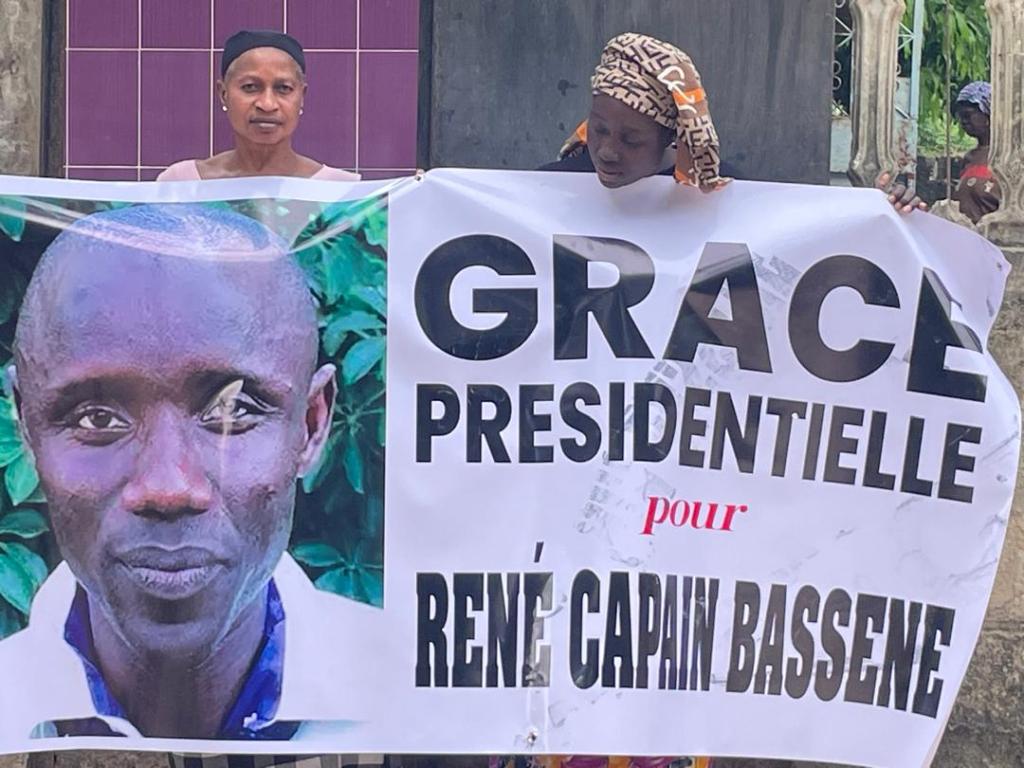
CPJ regards Bassène’s prosecution as one of Senegal’s worst miscarriages of justice, where a journalist and author, who has devoted his life to understanding and ending the conflict, is in jail for a crime he could never have committed.
On June 13, 2022, a Casamance court found Bassène guilty of complicity in murder, attempted murder, and criminal association for the execution of 14 men illegally collecting wood in the protected Bayottes forest, near Ziguinchor, Casamance’s largest town.
CPJ’s podcast presents extensive new evidence about Bassène’s conviction, including interviews with several former co-defendants — all acquitted in 2022 — who said they were forced, through beatings and electric shocks, to falsely implicate Bassène. It raises serious questions about the integrity of a case that has become one of West Africa’s most emblematic press freedom concerns.
Listen to the podcast René Capain Bassène, wrongly convicted, which examines the journalist’s life, career, and trial, through the voices of those involved.
CPJ’s 2025 investigation also revealed significant flaws in the trial, with some witnesses who didn’t even know Bassène signing transcripts of interviews that had been altered to include inaccurate information, doubts about emails allegedly sent from the journalist’s account, and the geolocation of his phone at the time of the murders remains disputed.
Four people told CPJ they saw Bassène in Ziguinchor on the afternoon of the killings, one of whom said they watched a football match together. Bassène also told CPJ that he was stripped naked, beaten until he lost hearing in one ear, and electrocuted on the genitals during questioning.
Despite this, the Supreme Court upheld Bassène’s life sentence.
“Enough is enough,” said Bassène’s wife, Odette Victorine Coly, who has raised their four children alone since 2018. “His children need their father’s love … His unjust detention has gone on for far too long.”
Sign CPJ’s petition calling on Senegal’s President Bassirou Diomaye Diakhar Faye to right a monumental miscarriage of justice by releasing Bassène here.
A leading expert in Casamance conflict

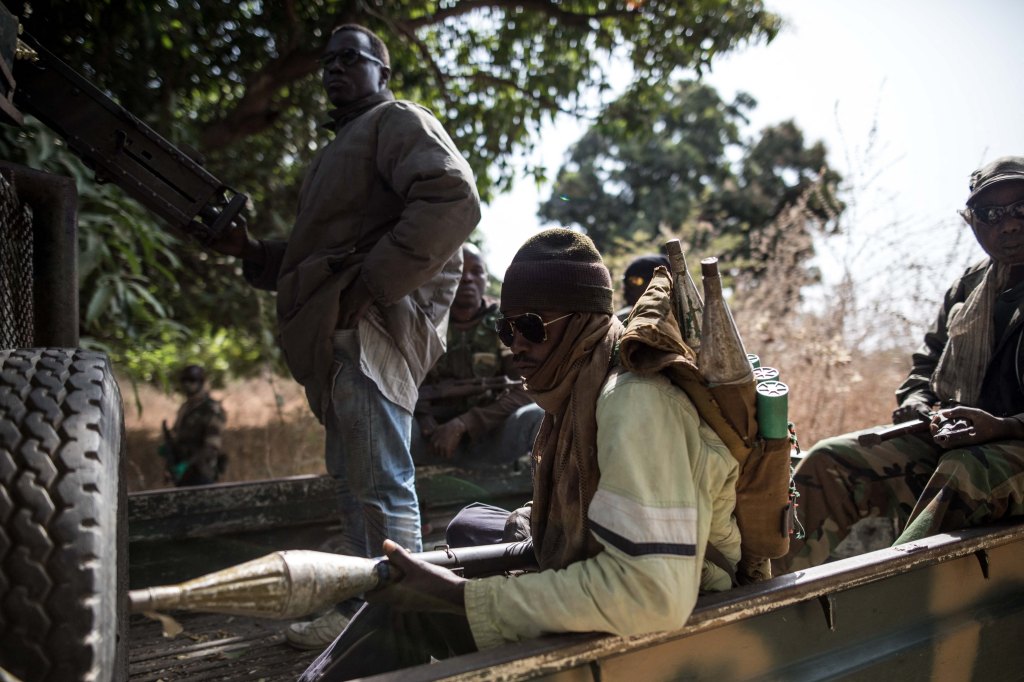
Bassène is a leading expert in the Casamance conflict, which began in 1982 amid longstanding grievances over marginalization. Bassène’s interest in the uprising was personal: his family was displaced from their village on the frontline.
Through hundreds of interviews with separatists and soldiers alike, and across three books, Bassène shed light on the roots and drivers of the conflict.
In his message to CPJ, Badiate recalled that Bassène had interviewed him for a radio show, “Carrefour de la paix” (Crossroads of peace), on local Zig FM, which focuses on resolving the conflict — one of many encounters between the two men.

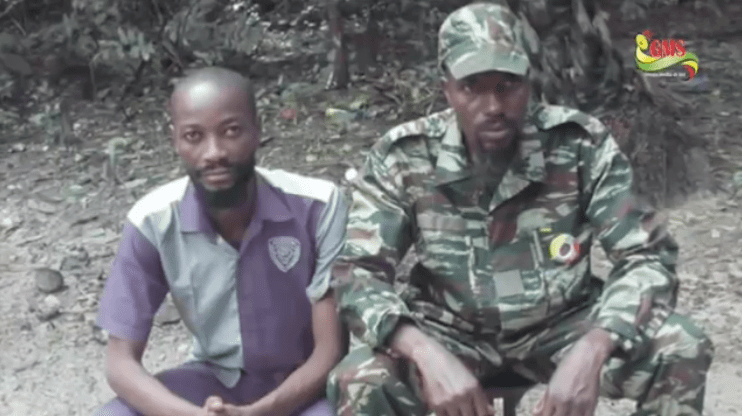
While Bassène has spent the last eight years behind bars, Badiate has met freely with Senegalese authorities. Despite an international arrest warrant for his 2022 conviction in absentia on the same charges, Badiate met government officials to sign a peace agreement in August 2022 and a follow-up seven-point plan in February 2025.
“His absence, facilitated by Senegal’s unwillingness to bring him to trial, deprived me of a unique opportunity to prove my innocence,” Bassène told CPJ from his prison in Senegal’s capital, Dakar.
The MFDC has denied involvement in the massacre — one of the most violent incidents since the signing of peace deals in 2004 and 2014 — for which no group has claimed responsibility.
MFDC members Louis Tendeng and Samba Goudiaby, who introduced Bassène to Badiate, also told CPJ that the journalist never belonged to the movement. Instead, he sought their help in interviewing MFDC members as part of his research.
Boulware: ‘I never felt him taking sides’
Ambassador Boulware, a career diplomat appointed in 2014 by the Obama administration as a special representative for Casamance, described Bassène as an “invaluable resource” in his work to bolster the peace process.

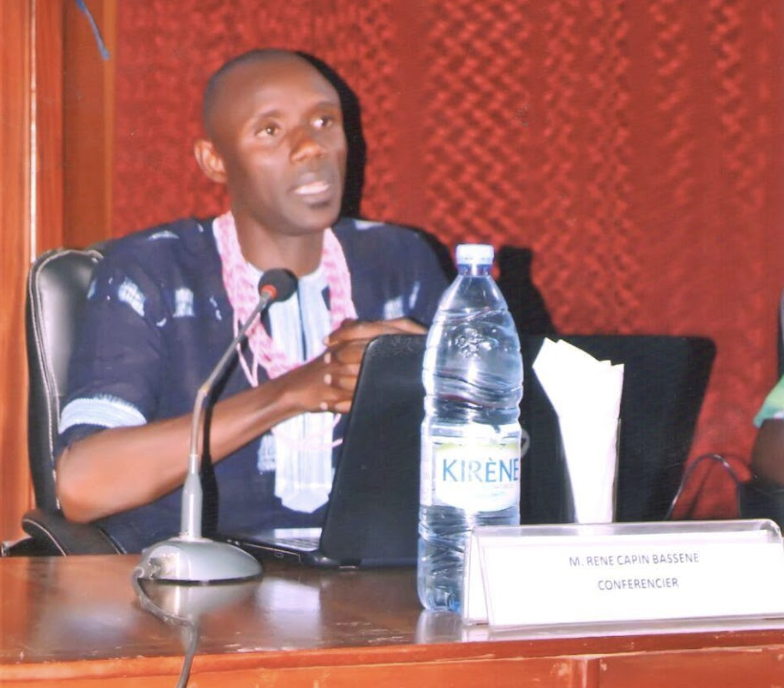
“René was completely independent, a real journalist who wanted to describe what he saw and inform the public about the stakes of the conflict. I never felt him taking sides,” he told CPJ. “He was among the most informed about the conflict, with a perfect mastery of the actors and the different issues … The accusation of being the mastermind of such an operation seemed laughable to me. It didn’t make sense.”
Similarly, Diédhiou, a professor of sociology at the University of Ziguinchor, told CPJ that the smearing of Bassène’s reputation after his arrest was completely unjustified.
“It is regrettable because he was the victim of demonization in the media. He was highly objective; when you read his work, it is impossible to say that he favors one side over another,” said Diédhiou. “René’s work — and I hope he is continuing to write from where he is — is part of Senegal’s history, which will disappear if these testimonies are not preserved.”
Bassène’s 2013 book profiled the rebellion’s late founder Augustin Diamacoune Senghor, while his second included testimonies from over 200 local people, from fighters to civilians. His third book, “Casamance: When will there be peace?,” published in 2017, highlighted the intransigence of both government and rebel negotiating positions.
“His works helped me a lot because I had sketched in my work the rarely studied problem of the individual motivations of the rebels. This is a blind spot in academic research that René has tried to highlight,” said Diédhiou.
Bassène: ‘My life is under greater threat than ever’

In the introduction to his 2017 book, Bassène revealed that he was facing intensifying threats.
“Since 2004, I have hesitated to include, in my various writings and statements, certain facts related to the war,” he wrote. “But now that my life is under greater threat than ever from all sides, I have no choice but to publish certain accounts,” he said, referring to a section of the book detailing violent abuses against civilians.
Such reputational attacks are common to local war reporters whose work challenges official narratives.
Ibrahima Gassama, presenter of the Zig FM show where Bassène once interviewed Badiate, has also been harassed for trying to report the story fairly from all sides. He was one of six journalists working for Sud FM who were detained in 2005 after broadcasting an interview with an MFDC leader.
“Covering the conflict is like being between a rock and a hard place, especially for us who are on the ground in Ziguinchor, watched as much by the army as by the MFDC,” said Gassama, who regularly invited Bassène on the show and said they carried out “journalistic missions together” to the field.
CPJ’s letters requesting comment from the gendarmerie and Defense Minister Birame Diop’s offices in mid-April, as well as text messages and phone calls to presidential spokesperson, Ousseynou Ly, and government spokesperson, Marie Rose Khady Fatou Faye, did not receive any replies.