


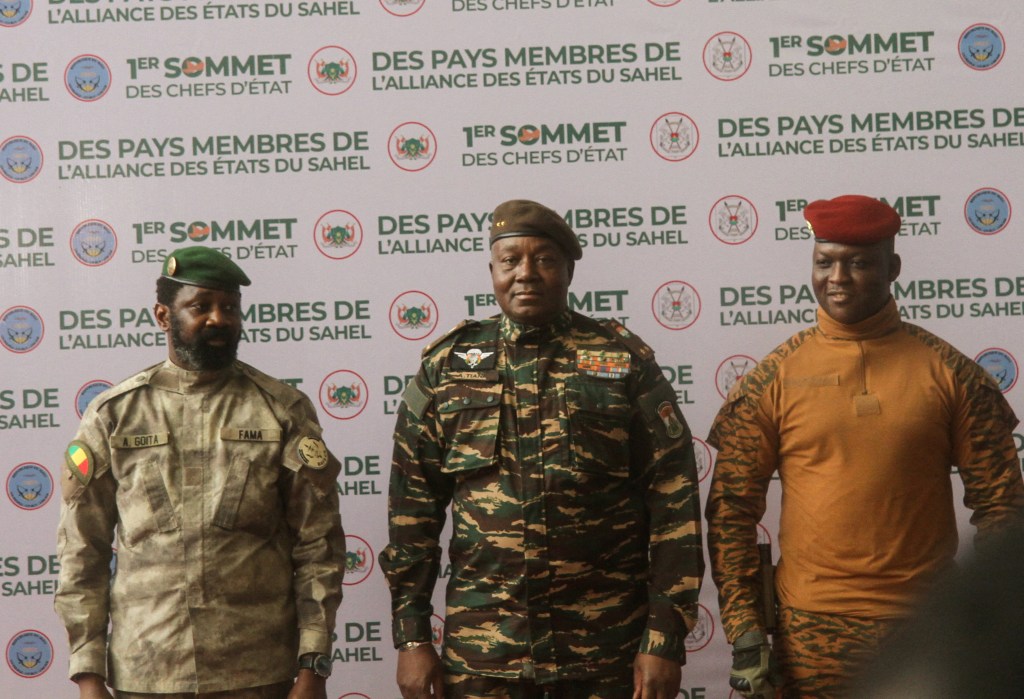
Dakar, January 21, 2026—The Committee to Protect Journalists calls on Malian authorities to reverse their ban on the distribution, circulation, and sale of the privately owned French news magazine Jeune Afrique, the latest outlet to be prohibited by the allied military governments of Mali, Niger, and Burkina Faso.
“One of the main, shared achievements of the Alliance of Sahel States has been proving themselves to be a zone hostile to journalism that may be critical of authorities’ handling of security challenges,” said Moussa Ngom, CPJ’s Francophone Africa representative. “Malian authorities must reverse their censorship to allow Jeune Afrique to be read and guarantee the right of citizens to be freely informed.”
Following military coups, the three countries finalized the establishment of the Alliance of Sahel States in 2024 to fight security threats from jihadist militants that have killed thousands and displaced millions.
The Alliance states have suspended and banned several French media outlets in recent years, while also pivoting from France to Russia for military support.
In its January 16 decision, Mali’s Ministry of Territorial Administration banned Jeune Afrique, a widely read pan-African weekly, because of its “spurious and subversive” accusations against Mali over the disruption of fuel imports, for “glorifying terrorism,” and “defamation and incitement to hatred.”
Since September, the al-Qaida-backed Jama’at Nusrat al-Islam wal-Muslimin (JNIM) has blocked fuel imports by attacking supply routes to Mali’s capital, Bamako, triggering lengthy petrol queues, power cuts, surging prices, and school closures.
The ministry also said that Jeune Afrique had made baseless accusations and lacked balance in its handling of “allegations of abuses against of a segment of the population” by the AES and Burkinabé armed forces. In 2025, Jeune Afrique published several investigations into the massacre of ethnic Fulani civilians by troops seeking to defeat Islamist armed groups.
“The accusations made against Jeune Afrique reflect a desire to criminalize any information, analysis or investigation that does not strictly align with the official discourse,” Jeune Afrique said.
Burkinabe authorities also banned Jeune Afrique in 2023 over its coverage of the military.
CPJ’s calls to request comment from Mali’s Ministry of Territorial Administration were not answered.