


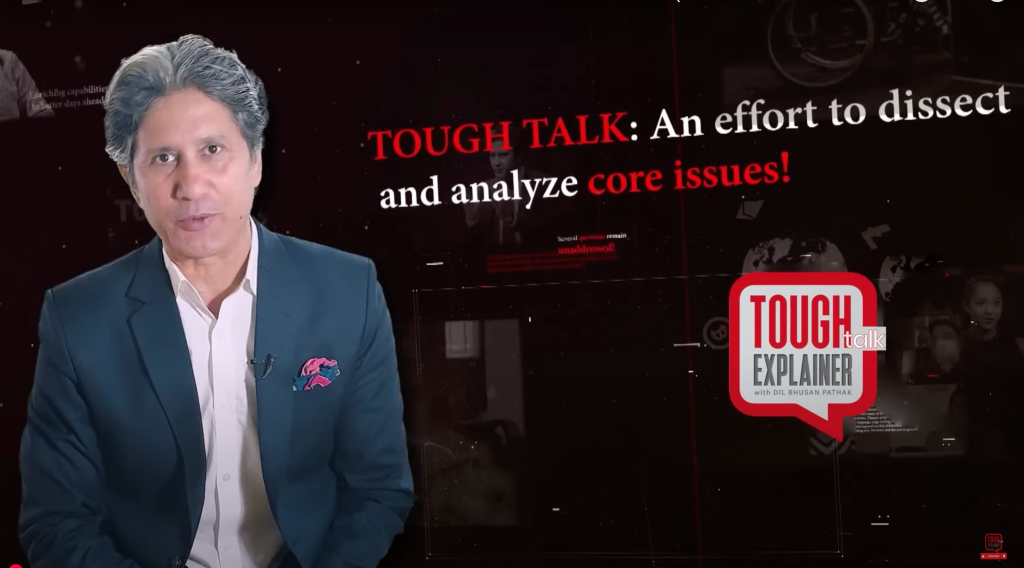
Journalist Dil Bhusan Pathak could face up to five years in prison for alleging on his YouTube channel that Jaiveer Singh Deuba, the son of two powerful Nepalese politicians, was linked to questionable deals involving the new Hilton Kathmandu.
His case illustrates a disturbing trend in Nepal, where journalists reporting on alleged corruption by high-profile individuals and state institutions — from the regulatory Press Council Nepal and Securities Board of Nepal to the courts themselves — are facing retaliatory legal threats.
Pathak was charged with publishing “illegal material” on “Tough Talk with Dil Bhusan,” under the 2008 Electronic Transactions Act, which Laxman Datt Pant, head of Media Action Nepal advocacy group, told CPJ is regularly used to stifle online commentary and prosecute journalists. Protected from arrest due to High Court intervention, Pathak is due back in court on August 25.
The controversy surrounding Pathak’s exposé intensified when media house director Shova Gyawali said that Deuba’s mother, Foreign Minister Arzu Rana Deuba, threatened her over Nepal Republic Media’s coverage of the journalist’s case.
The foreign minister, who is married to former Prime Minister Sher Bahadur Deuba, denied the accusation on Facebook, saying that she only urged fact-checking. Jaiveer and Arzu Rana Deuba did not respond to CPJ’s emails requesting comment; the hotel owners denied any wrongdoing in a public statement.

“The charge facing journalist Dil Bhusan Pathak is emblematic of the growing risks journalists face in Nepal for critically reporting on powerful figures,” said CPJ Regional Director Beh Lih Yi. “The rise in legal harassment, arrest warrants, violence, and regulatory censorship of journalists in Nepal is deeply troubling. From courtrooms to police stations, journalists are being targeted simply for doing their jobs.”
Political reporting has become increasingly difficult in the Himalayan nation, as frustration with politicians and corruption mounts. There has been growing demand for the restoration of the monarchy and Hinduism as the state religion in Nepal, which became a secular republic in 2008, following a decade-long armed rebellion by Maoists.
Other recent press violations include:
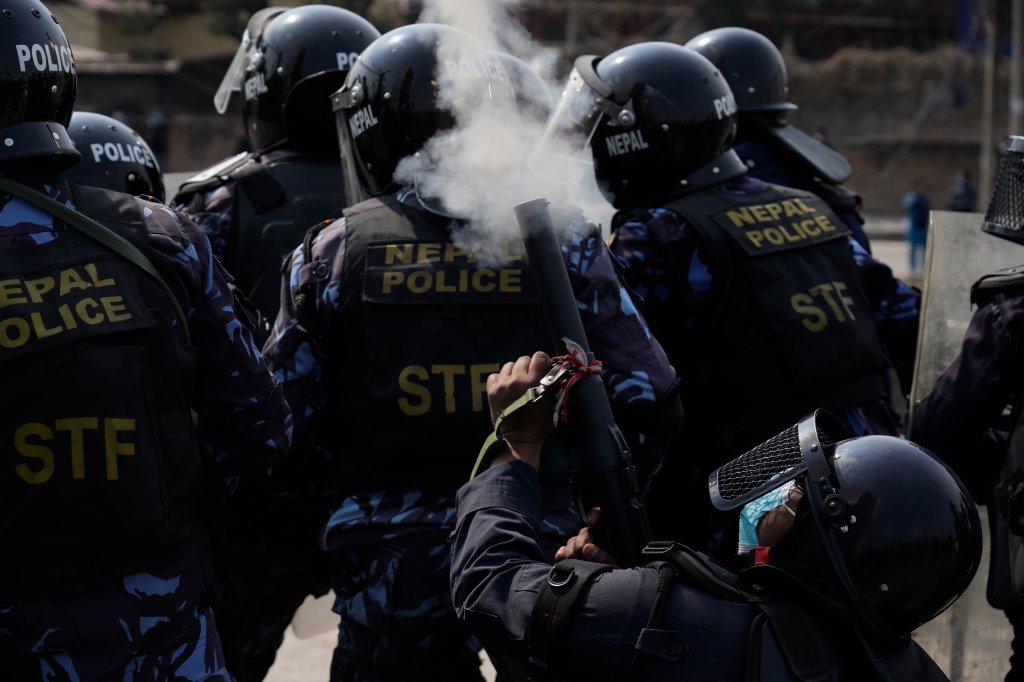
Journalists harassed for reporting on protests
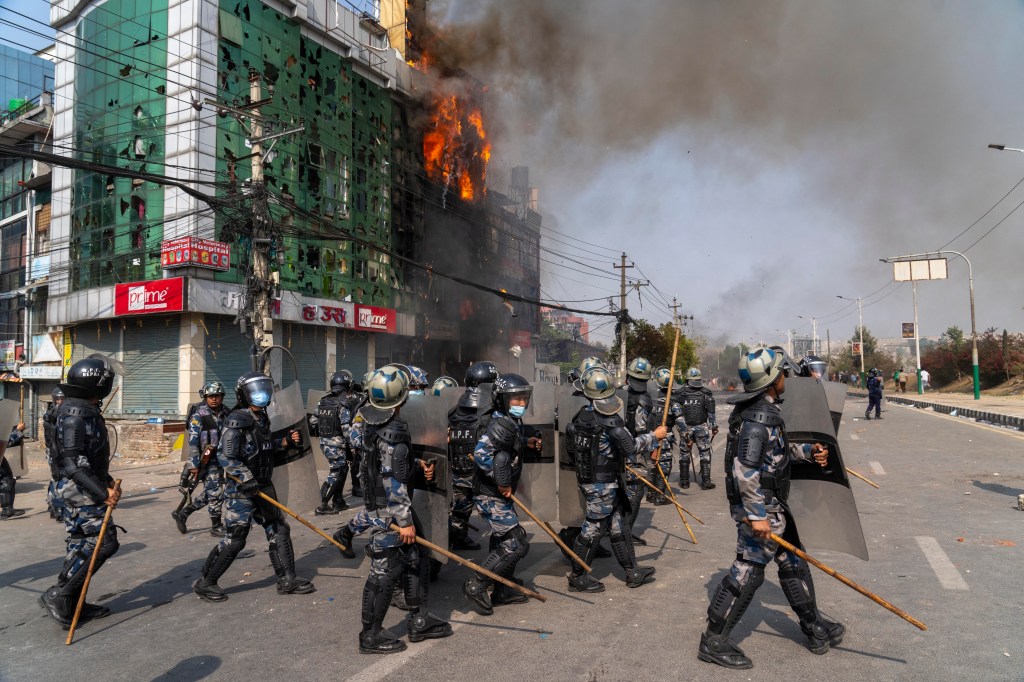
- On March 28, Prakash Chandra Dahal, editor of the online outlet Nepal Pukar, was briefly arrested and now faces criminal charges for filming deadly clashes between royalists and republicans, according to the local watchdog Media Action Nepal.
“Instead of doing my job, I’ve spent months trying not to get arrested for it,” said Dahal, who is out on bail and awaiting trial.
- On May 8, JanachasoKhabar’s reporter Angaraj Pariyar and Khulanajar’s correspondent Prajwal Chunara were beaten by police while covering a protest for their local outlets in the western town of Surkhet.
As Pariyar was filming the police allegedly manhandling a woman and children outside the High Court, officers seized the journalists’ phones and camera and deleted their footage, according to the local watchdog Freedom Forum.
- On June 6, Hadis Khuddar, a bureau chief for Naya Patrika National Daily was assaulted and briefly detained by police while covering a protest at a police station in southern Dhanusha District. Despite identifying himself as a journalist, officers seized his phone, grabbed him by the neck, beat him with a baton, and detained him, Khuddar told CPJ.
He was released after an hour following pressure from other journalists, he said, adding that he believed the attack was in retaliation for his recent reporting on police misconduct.
Take down orders for corruption reporting
- On May 27 and 28, the governmental Press Council Nepal issued an order, reviewed by CPJ, instructing the online outlet Diyopost to take down a series of news items alleging corruption and malpractice by the media regulator’s chairperson Balkrishna Basnet. Diyopost has published multiple reports alleging corruption within the council. The order said the article was defamatory and lacked a right of response, warning of a nationwide ban if not removed.
On December 12, 2024, Diyopost was removed from the list of government-recognized media platforms, Diyopost’s editor-in-chief Sudip Biswokarma told CPJ. This could result in the outlet’s journalists losing their media accreditation and access to government events, and the suspension of Diyopost’s operating license, according to Taranath Dahal, head of Freedom Forum Nepal advocacy group.
- On June 11, Kathmandu District Court issued an interim order directing news sites Bizmandu and Nepal Khabar to take down reports alleging bribery by the chairperson of the Securities Board of Nepal, Santosh Narayan Shrestha, which he said were defamatory. The court reversed its order on June 19, finding insufficient grounds to justify the removal of the content.
Courts retaliate for critical reporting on judiciary
- On May 30, the Supreme Court initiated a contempt of court case against publisher Kanak Mani Dixit, editor Sant Gaha Magar, and correspondent Man Bahadur Basnet over two articles in the magazine Himal Khabar critical of acquittals handed down in rape cases.
The publishing house’s lawyer Samman Humagain rejected the allegation of contempt and told CPJ that the news articles did not hinder the administration of justice. The next hearing is scheduled for September 17, he added.
- On June 9, the Special Court, which handles corruption cases, initiated legal proceedings, without a complainant, over Drishti News reports accusing judges of rushing trials to acquit corrupt officials, the outlet’s lawyer Ananta Raj Luitel told CPJ.
On June 24, the court gave chairperson Shambhu Lal Shrestha and executive editor M.P. Subba, three days to justify a June 22 report alleging court corruption or face contempt of court proceedings.
At a June 26 hearing, Shrestha and Subba recorded their statements and were allowed to remain free, on bail of 25,000 rupees (US$178) each, awaiting trial. Luitel said the journalists were exercising their legal right to free expression, with no intent to obstruct justice.
Attacked while reporting on state corruption
- On July 7, journalist Diwakar Sah and cameraperson Manoj Pariyar of HTP Khabar were manhandled and their camera was seized while reporting on alleged corruption at the Infrastructure Development Office in southern Jaleshwar Municipality, media rights groups reported. Pariyar sustained a minor head injury, Freedom Forumsaid.
In HTP Khabar’s video, Sah pointed out officials working late at night, empty beer bottles in the head official’s room, questionable payment records, and fuel coupons without vehicle registration numbers — suggesting they were being used to fuel non-government vehicles.
In a subsequent Facebook Live, Sah said he and Pariyar were attacked while the police officers, who accompanied them on the shoot for security, disappeared.
Police spokesperson Binod Ghimire, the Special Court, Press Council Nepal, Jaleshwar Municipality, and Santosh Narayan Shrestha did not respond to CPJ’s emails requesting comment.