


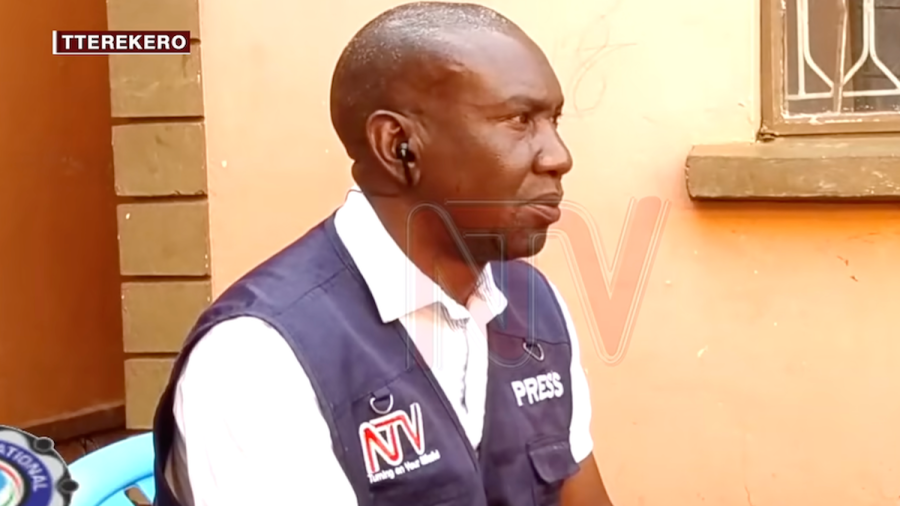
New York, November 24, 2026—The Committee to Protect Journalists calls on Ugandan authorities to immediately release journalist John Kenneth Odele, drop the criminal libel charge against him, and stop using laws that have been struck down as unconstitutional to punish journalists for their reporting.
Odele, Nation Media Group-Uganda’s (NMG-U) correspondent in the eastern Teso sub-region, was arrested on November 10 while covering a security meeting at Soroti University convened by the security minister, retired Maj. Gen. Jim Muhwezi.
“Ugandan authorities are using criminal libel provisions that the country’s own Constitutional Court has declared unconstitutional to silence reporting on matters of public interest,” said CPJ Africa Director Angela Quintal. “John Kenneth Odele must be released without delay, the charge against him dropped, and journalists allowed to report on sensitive issues without fear of arrest or intimidation.”
A journalist who witnessed the arrest told CPJ, on condition of anonymity for fear of reprisals, that a plainclothes security officer approached Odele and asked to speak privately. Shortly afterward, Odele telephoned the colleague to say he had been taken into custody.
Odele was initially held at a Soroti police station, before being transferred to Kampala on November 12 and subsequently returned to Soroti, according to his colleague and his wife, Ngwang Martha Odele, who spoke to CPJ.
On November 20, Odele was charged in a Soroti court with criminal libel under Section 162 of the Penal Code Act. Odele allegedly “provided a story to NTV and the Daily Monitor on November 9 concerning remarks made by Gen. Samuel Okiding about the security situation in Teso, suggesting that Okiding was reluctant to carry out his duties,” according to the charge sheet, which CPJ reviewed, and his lawyer Timothy Ntale confirmed. Odele’s report was actually published on November 8 in the Daily Monitor, and CPJ could not confirm the date of the NTV broadcast.
The report concerned the arrest of former Ugandan deputy military chief and presidential adviser, Peter Elwelu, over allegations of involvement in activities aimed at destabilizing the country.
Odele was remanded until December 3, according to his colleague and Ntale.
In March 2026, Uganda’s Constitutional Court declared both Section 162 of the Penal Code Act, which criminalized libel, and Section 163, which defined defamatory matter, as unconstitutional.
CPJ has documented a broader crackdown on Uganda’s media, including censorship and restrictive legislation. NMG-U, which owns the Daily Monitor and NTV Uganda, was shut down by a military siege on June 28 after a social media announcement by military chief Gen. Muhoozi Kainerugaba, who is also President Yoweri Museveni’s son. A month later, the media group announced that it had resumed operations.
In June, veteran commentator Timothy Kalyegira was charged with operating two digital news outlets without broadcasting licenses.
Alternative Digitalk journalist Arnold Anthony Mukose spent five weeks in prison on charges of publishing “fake news” about First Lady Janet Kataha Museveni. While the charges were dropped on August 24, he was arrested again on the same charges on October 13 and released on bail three days later.
On August 19, journalist Remmy Asiteza was charged with publishing fake news and broadcasting without a license after reporting on alleged corruption in the recruitment of local government officials. He was granted bail on October 26 and is scheduled to return to court on December 14.
CPJ’s requests for comment, sent on November 23 via messaging app to the minister for the presidency Babirye Milly Babalanda and via email to Uganda Police Force, did not receive any replies.