


Beirut, October 13, 2026 — The Committee to Protect Journalists is deeply alarmed by a recent wave of violations committed by Israeli authorities against the press in Israel and the occupied Palestinian territory. Recent incidents include a local reporter shot with rubber bullets, a Portuguese journalist detained and deported, and the barring of German and British reporters. CPJ demands that Israeli authorities allow the press to operate freely without intimidation or harassment.
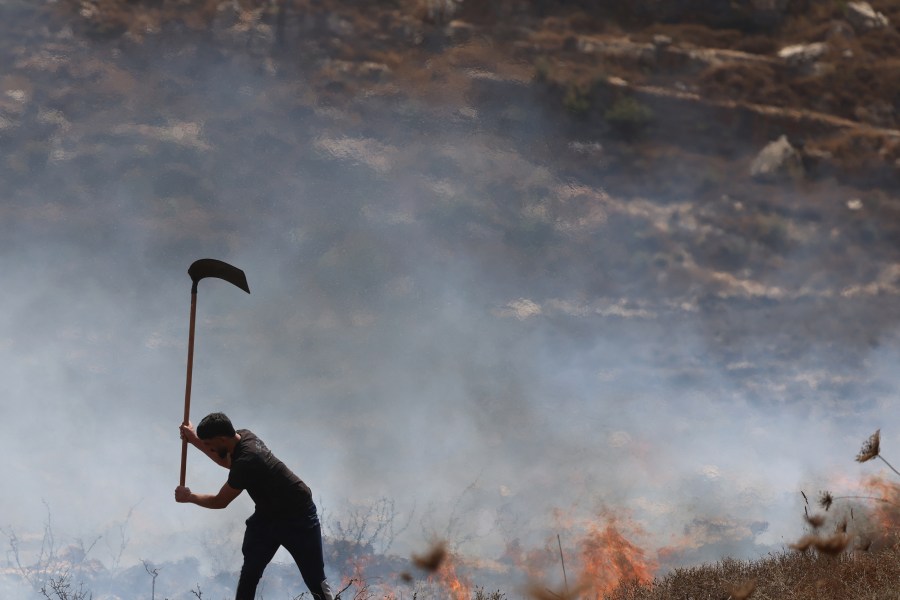
Israeli forces in the occupied West Bank targeted two journalists documenting the Palestinian olive harvest. On October 8, 2026, a Portuguese correspondent for the independent outlet Fumaça was arrested in Rantis, northwest of Ramallah, and deported the following day.
Ribeiro told CPJ that upon his detention, he identified himself as a journalist, showing his press credentials to the soldiers. He was then taken to a military base where he was threatened with physical assault, and blindfolded. He said that international journalists were removed so that Israeli authorities could continue what he described as an “ethnic cleansing project.”
Two days later near Ramallah, Israeli troops fired rubber bullets during clashes involving settlers, striking Palestinian photojournalist Issam al-Rimawi. Al-Rimawi told CPJ that he was wearing an identifiable “Press” vest when the incident occurred.
This attack follows similar incidents against Palestinian journalists covering the olive harvest in the West Bank; Israeli settlers attacked Agence France-Presse photographer Jaafar Ashtiyeh on October 6, and Israeli authorities detained journalists Mohammad Abed and Mohammad Atiq later that day.
On October 11, British journalist Secunder Kermani, working with Channel 4, said he was denied entry into Israel and briefly detained by immigration authorities before the decision was reversed, and he was allowed to enter.
Israel also reportedly rejected a work visa application for German journalist Serena Bilanceri, who was set to become Die Tageszeitung’s correspondent there. According to Israeli media, the application was denied due to her “anti-Zionist” views and past reporting calling for sanctions against Israel. Bilanceri told CPJ that the rejection hinders her ability to report from the region.
In June, CPJ recorded at least six other cases where journalists were denied entry into Israel, some for expressing opinions critical to the country, and warning of heightened censorship.
“Israel’s actions against Palestinian, and foreign journalists are increasing in frequency, demonstrating a clear lack of internal and external accountability,” said Sara Qudah, CPJ regional director. “These repeated incidents of intimidation, detention, deportation, and refusal of entry reveal that Israel continues to operate with complete disregard for international laws preventing retaliation against journalists.”
The Israeli Population and Immigration Authority did not immediately respond to CPJ’s request for comment on why the foreign journalists were barred and deported. The Israeli military did not respond toCPJ’s request for comment on the shooting and injury of Issam al-Rimawi.