


New York, August 19, 2026—The Committee to Protect Journalists is shocked by the eight-year prison sentence handed down to Gulnara Bazhkenova, former editor-in-chief of independent outlet Orda, in Kazakhstan on August 18, and warns that this latest prosecution appears to be part of an escalating crackdown on the media ahead of elections this month.
An Almaty court convicted Bazhkenova, who has been under house arrest since December last year, on charges of criminal dissemination of false information, embezzlement, and illegal entrepreneurship. She denies the charges and plans to appeal.
The court deferred Bazhkenova’s jail term by two years on the grounds that she has a child who is a minor, but applied an additional five-year ban on “engaging in activities related to media, journalism, blogging, public events, and other forms of public engagement, as well as on holding managerial or financially responsible positions in media-related organizations,” it said.
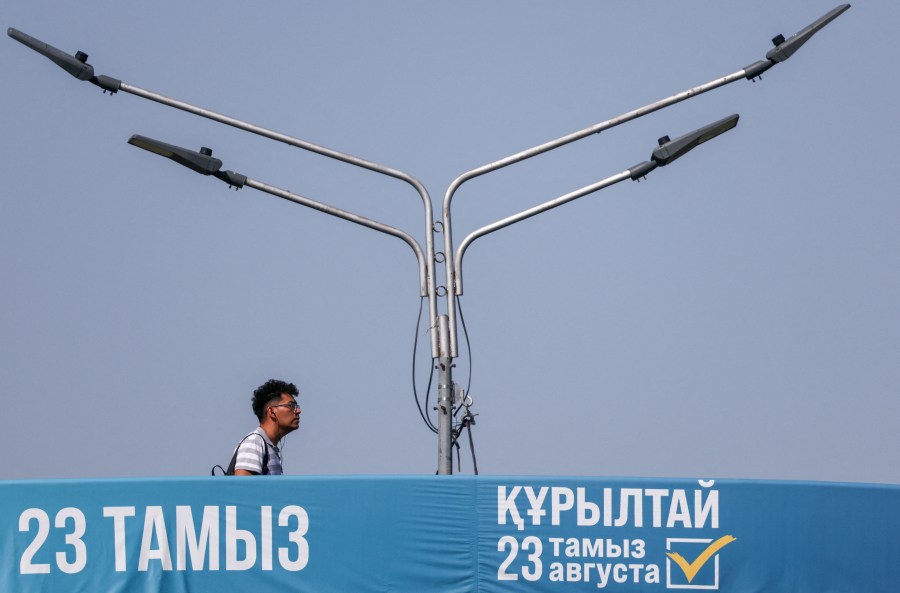
“The draconian eight-year prison sentence handed down to Gulnara Bazhkenova is part of an alarming pattern of arrests and convictions that reveal the authorities’ determination to silence the press ahead of upcoming parliamentary elections in Kazakhstan on August 23,” said Carlos Martínez de la Serna, CPJ’s program director in New York. “Kazakh authorities must end their escalating crackdown on the press and allow Bazhkenova and other targeted journalists to work freely.”


Armed Kazakh police raided the offices of Orda, one of Kazakhstan’s largest independent outlets, and arrested Bazhkenova on multiple charges of deliberate dissemination of false information in December 2025. Authorities later brought further charges of embezzlement and illegal entrepreneurship relating to her time at Orda.
Bazhkenova’s arrest came weeks after Orda published reports linking the country’s then-foreign minister to large-scale corruption and the 2024 assassination of an opposition blogger. Kazakh journalists and rights defenders have suggested her arrest and conviction may be in retaliation for these reports, though they were not among the publications cited in the charges brought against her for alleged dissemination of false information.
The December raid also followed months of alleged harassment of Bazhkenova and Orda, including cyberattacks, hacking attempts, threats of violence, and fake announcements of Bazhkenova’s death.
CPJ was unable to immediately determine the details of Bazhkenova’s journalism and public activities ban, but Kazakh authorities have lately applied sweeping prohibitions on convicted members of the press, including bans on media appearances, participation in public events, and use of social media. This tactic has been decried by local rights groups.
Last week, CPJ joined eight local and international press freedom and human rights groups in expressing deep concern over escalating pressure on the press in Kazakhstan ahead of the August 23 vote.
Since late July, authorities have arrested political satirist Azamat Omarov, sentenced journalists Aset Matayev, Amir Kasenov, and Aleksandra Alyokhova to prison or parole-like “restricted freedom,” and opened criminal probes into journalists Lukpan Akhmedyarov and Dinara Yegeubayeva. At least a dozen leading journalists have reported having their social media accounts blocked or publications removed in an apparently coordinated wave of spurious copyright claims and other complaints.
CPJ emailed the Office of the Prosecutor-General, via Kazakhstan’s Ministry of Foreign Affairs, which handles inquiries from foreign organizations, but did not immediately receive a reply.