


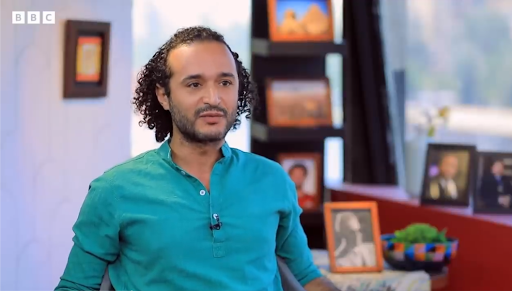
Washington, D.C., June 3, 2026—The Committee to Protect Journalists calls for the release of Egyptian political commentator Ahmed Douma, who was handed a one-year prison sentence on Wednesday over his criticism of conditions inside Egypt’s prisons.
“The sentencing of Ahmed Douma for writing about prison conditions is a stark violation of the right to free and safe expression. No journalist should face prison for sharing firsthand experiences or expressing critical opinions,”said CPJ Regional Director Sara Qudah. “Egyptian authorities must immediately and unconditionally release Douma and stop weaponizing the country’s legal system to quash public debate.”
A Cairo court convicted Douma on charges of publishing “false news and rumors inside and outside the country that would disturb public order” over social media posts and an article he wrote for the London-based news website The New Arab. In the piece, Douma describes his personal experience as a political prisoner, arguing that imprisonment has become a central tool of control for several governments across the region and the world.
Douma was arrested on April 6 at the Supreme State Security Prosecution headquarters following a six-hour interrogation and held for nearly two months in pre-trial detention. He was sentenced despite Article 71 of the Egyptian Constitution, which states that “no custodial sanction shall be imposed for crimes committed by way of publication.”
Douma is a political commentator and a poet whose work has appeared in several outlets, including The New Arab, Arabi21, and the independent platform Sotour.
Douma previously spent approximately 10 years in prison for his political activism before receiving a presidential pardon. Following his release in August 2023, he faced a travel ban, denial of official documents, and six interrogations by the Supreme State Security Prosecution over social media posts and opinion articles.
His conviction follows the jailing of economic commentator Abdel Khaleq Farouk in October 2025, who is serving five years in prison on nearly identical charges after a trial that, according to his defense team, “lacked all the guarantees of a fair trial.”
Egypt remains one of the world’s leading jailers of journalists, with 18 currently behind bars.
CPJ’s email requesting comment from Egypt’s Public Prosecutor’s Office did not receive an immediate response.