


Nairobi, February 16, 2026—The Committee to Protect Journalists calls on Ethiopian authorities to restore the accreditation of three Reuters journalists who were barred from reporting after the news agency published a report alleging that Ethiopia was secretly training forces fighting in neighboring Sudan’s civil war.
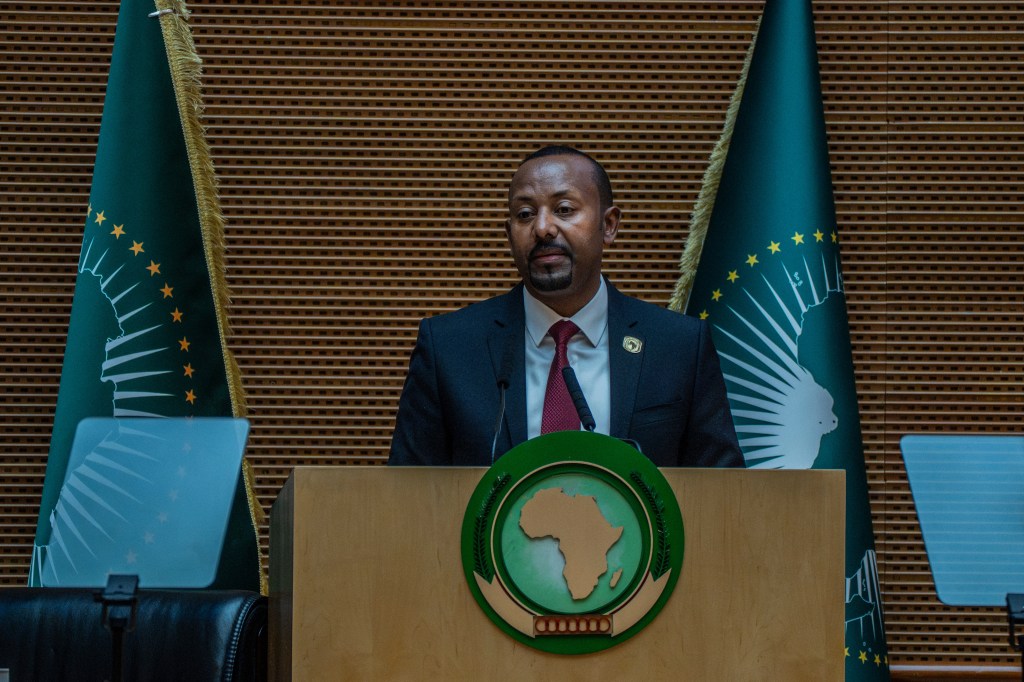
On February 14, Reuters reported that the Ethiopian Media Authority (EMA) had “declined” to renew the journalists’ accreditation and had also revoked its accreditation to cover the 39th African Union summit of heads of state and government in the Ethiopian capital Addis Ababa on February 14 and 15.
“The revocation of Reuters’ credentials is the latest in a troubling pattern of repressive regulatory action against international and independent press in Ethiopia,” said CPJ Africa Program Coordinator Muthoki Mumo. “Ethiopian authorities should restore Reuters’ credentials, lift sanctions on other independent media, and stop treating critical journalism as a threat.”
Reuters said the EMA had “informally indicated” that the regulatory body’s actions were prompted by Reuters’ February 10 investigation, reported from Nairobi, London, and Cairo, which alleged that Ethiopia was hosting a secret camp, financed by the United Arab Emirates (UAE), to train thousands of fighters for Sudan’s paramilitary Rapid Support Forces (RSF). The group has been accused of war crimes.
Ethiopian authorities have not publicly responded to the report, while the UAE rejected the allegations as “unfounded.”
Reuters said it was reviewing the decision and will continue to report on Ethiopia “in an independent, impartial and reliable way.”
The move follows a series of restrictions on foreign media, including the October suspension of the licenses of all nine of Germany’s Deutsche Welle (DW) correspondents in Ethiopia. Following pressure, seven have resumed work but two correspondents, who cover the restive Tigray and Amhara regions, remain banned.
In January, the EMA revoked the operating license of the online outlet Wazema Radio, citing what it described as reporting that contradicted the “national interest,” lacked balance, excluded government responses, and incited unrest.
Wazema’s management said they had complied but did not believe the action was “correct by any standard.”
On June 1, Ethiopians are due to vote in a general election, amid concerns about regional conflicts and a stalled peace agreement ending its 2020 to 2022 civil war.
CPJ did not immediately receive responses to its requests for comment sent via email to the EMA and via messaging app to the EMA’s deputy director general, Yonatan Tesfaye