


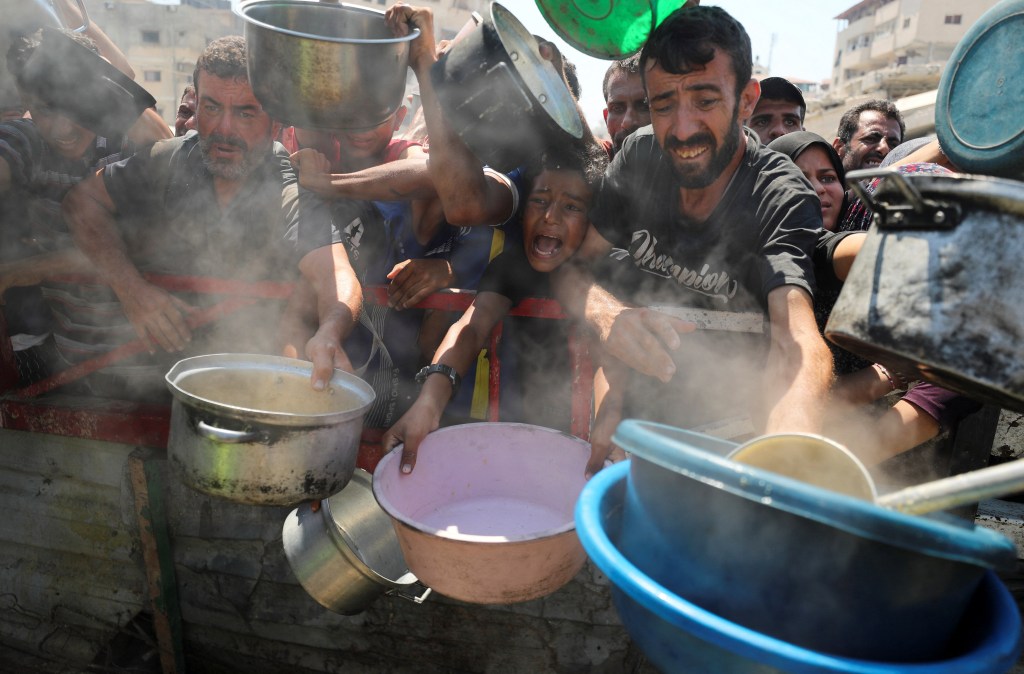
New York, July 23, 2025—The Committee to Protect Journalists added its voice to Wednesday’s urgent appeal from more than 100 aid agencies to end to Israel’s starvation of journalists and other civilians in Gaza, as they called on states to “save lives before there are none left to save.”
“Israel is starving Gazan journalists into silence. They are not just reporters, they are frontline witnesses, abandoned as international media were pulled out and denied entry,” said CPJ Regional Director Sara Qudah. “The world must act now: protect them, feed them, and allow them to recover while other journalists step in to help report. Our response to their courageous 650 plus-days of war reporting cannot simply be to let them starve to death.”
On Tuesday, CPJ launched its Voices From Gaza video series of Palestinian journalists describing their challenges working in Gaza. In the first video, Moath al Kahlout said his cousin was shot dead while waiting for humanitarian aid.
As Israel partially eased its 11-week total blockade of Gaza in May, CPJ published the testimony of six journalists who described how starvation, dizziness, brain fog, and sickness threatened their ability to report.
Since then, more than 1,000 Palestinians have been killed in Gaza, while trying to get food aid, the majority near sites where Israel and the United States’ controversial, militarized Gaza Humanitarian Foundation was delivering supplies.
‘Gaza is dying’
In recent days, numerous Palestinian journalists have spoken out about their desperation:
- On June 20, Al Jazeera correspondent Anas Al Sharif posted online, “I am drowning in hunger, trembling in exhaustion, and resisting the fainting that follows me every moment… Gaza is dying. And we die with it.”
- Sally Thabet, correspondent for Al-Kofiya satellite channel, told CPJ that she fainted consciousness after doing a live broadcast on July 20 because she had not eaten all day. She regained consciousness in Al-Shifa hospital, where doctors gave her an intravenous drip for rehydration and nutrition. In an online video, she described how she and her three daughters were starving.
Another Palestinian journalist, Shuruq As’ad said Thabet was the third journalist to collapse on air from starvation that week, and posted a photograph of Thabet with the drip in her hand.

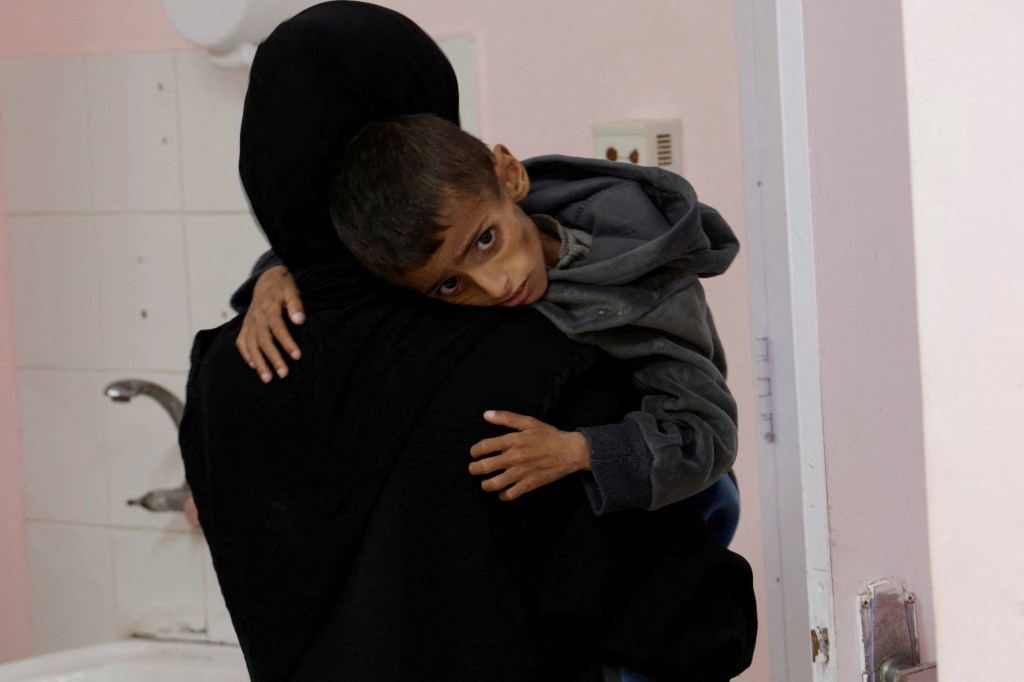
- During a live broadcast on July 20, Al-Araby TV correspondent Saleh Al-Natour said,
“We have no choice but to write and speak; otherwise, we will all die. At some point, journalists will collapse too, and they will fall to the ground in front of you, in front of the cameras, and on air … Today, the feeling of fainting came again, and to prevent that from happening, I ate some sugar that I had been saving for a while.”
- On July 21, CPJ International Press Freedom Awardee Shrouq Al Aila told CPJ that she was continuously losing weight due to lack of food and experiences severe weakness, fatigue, and dizziness.
- On July 21, Agence France-Presse’s union said that the news agency’s 10 freelance journalists reporting from Gaza were all threatened by famine, gunfire, and disease. “Without immediate intervention, the last reporters in Gaza will die,” it said.
APF and France’s foreign minister Jean-Noël Barrot later said that they hoped Israel would allow the journalists to be evacuated.
- On July 22, a photo and video of Algerian state TV correspondent Wesam Abu Zaid taking part in a protest denouncing starvation of Gaza went viral online. Zaid held up a sign saying, “A hungry journalist reporting on hunger.”
“We have all suffered from weight loss, dizziness, and an inability to stand or walk as a result of not eating,” Zaid told CPJ, adding that it was hard for him to keep working.
- On July 23, Al Jazeera Media Network called for an end to “this forced starvation that does not spare journalists who are the bearers of truth.”
The Israel Defense Forces (IDF) told CPJ via email that, “Despite the false claims that are being spread, the State of Israel does not limit the number of humanitarian aid trucks entering the Gaza Strip.” It said that delays in the collection of aid from crossing points into Gaza by international aid organizations “harm the situation and the food security of Gaza’s residents.”
COGAT, the Israeli unit responsible for humanitarian initiatives, told CPJ via email that, “Despite Hamas’s false propaganda campaign, the IDF, through COGAT, continues to work in coordination with international actors to allow and facilitate the continued entry of humanitarian aid into the Gaza Strip, in accordance with international law.”