In China, journalist released after weeks in jail
Shi Ping, a Henan-born Time Weekly journalist who wrote under the penname Shi Yu, was arrested on May 26, 2014, in connection with his alleged attendance at small-scale Tiananmen memorial events, the journalist said on his Weibo microblog page. He was accused of “gathering a crowd to disturb social order.”
Chinese journalist held after publishing book on Tiananmen
New York, June 13, 2013–Chinese authorities must immediately release a journalist who has been detained since May 31 following the publication of his book on the Tiananmen massacre, the Committee to Protect Journalists said today. Du Bin’s detention, which was reported by his family members, came a few days before the 24th anniversary of the…
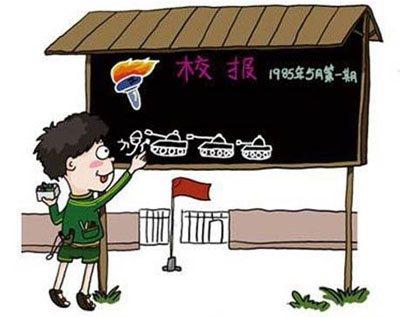
Tank cartoon erased before Tiananmen anniversary
Twenty-one years after the Tiananmen Square crackdown, China’s censors are still working to purge public discourse about the tragic events of June 4, 1989. But some Chinese Web users clearly have a healthy appetite for such a debate and are willing to circumvent the government censors.
Looking at Tiananmen as a ‘development opportunity’
The English-language version of the state newspaper Global Times raised eyebrows on Tuesday with an article headlined, “Evolution of Chinese intellectuals’ thought over two decades.” The opinion piece included a quote from an academic referencing the “June 4 incident”–a departure for domestic, state-run media, which never refer explicitly to the peaceful demonstrations that were crushed…
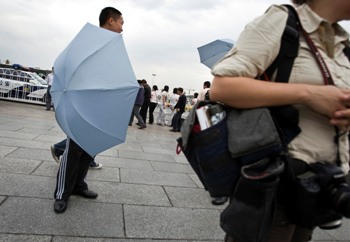
Tiananmen: It’s raining censorship
It’s hot in Beijing this time of year. An umbrella can serve as a convenient protection from the sun. Back in the spring of 1989, hundreds of umbrellas filled Tiananmen Square like makeshift shelters–until the army deployed tanks and guns against the anti-government protesters holding them.
Foreign journalists harassed in Tiananmen Square
The Foreign Correspondent’s Club of China (FCCC) has posted a statement on its Web site about Chinese security officials–uniformed and otherwise–harassing foreign journalists in and around Tiananmen Square. The group’s incident list includes five cases of obstruction reported in the past week. As usual in situations the government finds sensitive, police are not following regulations…
China blocks Twitter before Tiananmen
“Twitter is a new thing in China. The censors need time to figure out what it is. So enjoy the last happy days of twittering before the fate of YouTube descends on it one day,” veteran Chinese blogger Michael Anti told the media blog Danwei in a May 27 interview.
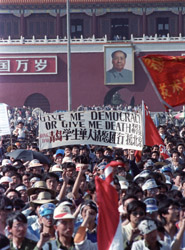
Tiananmen briefing: Gate to press freedom closed in 1989
The events of 1989, which culminated on June 3 and 4 when the army opened fire on civilians trying to block its approach to the main site of protests at Tiananmen, the “gate of heavenly peace,” are dismissed as riots in official state media accounts. Propaganda officials interpret references to the events as a sign…