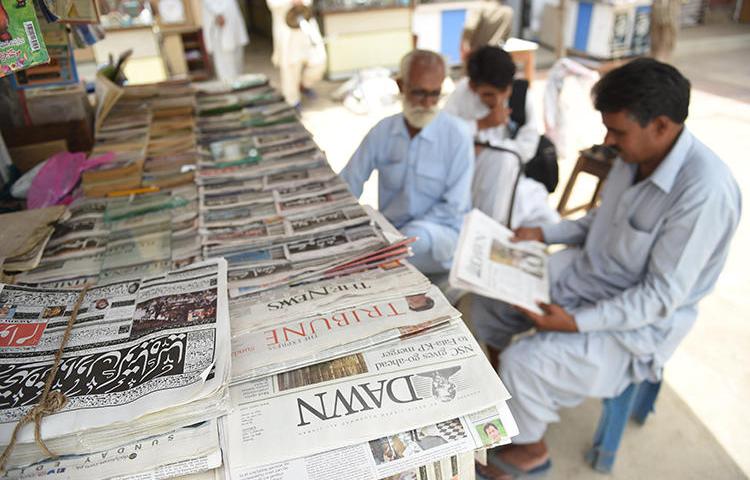
Pakistan government suspends advertising in 2 independent media groups
Washington, D.C., March 2, 2020 — Pakistani authorities should grant government advertising to outlets without regard for their editorial stances, and should lift the suspension of advertising in the Dawn and Jang media groups, the Committee to Protect Journalists said today.
CPJ urges Pakistani officials to rescue Jang executive, keep other journalists safe
New York, September 29, 2016– The Committee to Protect Journalists today condemned the kidnapping of Abid Abdullah, executive director of the Jang media group, and called on Pakistani authorities to ensure the safety of journalists who the kidnappers explicitly threatened.
Blasphemy charges, threats loom for outspoken journalist in Pakistan
Forty-nine year-old magazine editor and publisher Shoaib Adil fled his home in the eastern city of Lahore last month and went into hiding with his wife and children. Adil faces threats and possible charges of blasphemy–a crime punishable by life imprisonment or death–in connection with a book he published in 2007, written by a judge…
Am I a traitor?
EDITOR’S NOTE: Hamid Mir, the executive editor of Pakistan’s Geo Television, survived an April 19 assassination attempt, but was badly injured. The shooting came a few weeks after the Pakistani government pledged in a meeting with CPJ to address the insecurity plaguing the country’s journalists. Shortly after the attack, some Pakistani media stated that CPJ…
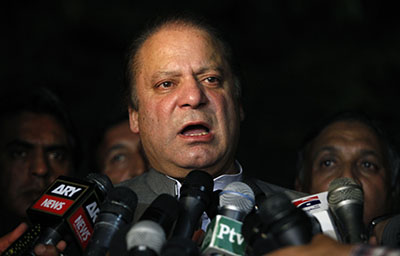
Sharif’s challenge: Work with Pakistani press, not against it
Pakistan’s general elections in May, though marred by violence that left more than 100 dead, was a reaffirmation of the people’s commitment to the democratic process. Voters proved once again that they can make decisions based on their own political interests–and not because of intimidation by those who would perpetrate violence. The media, with their…
In Pakistan, cases filed against Baluch outlets, journalists
New York, May 17, 2013–Pakistani authorities should dismiss separate complaints filed against newspapers and journalists in Baluchistan for publishing statements made by banned militant groups, the Committee to Protect Journalists said today.
Is Pakistan’s Ansar Abbasi being banned?
Ansar Abbasi, editor of investigations for Pakistan’s leading media group Jang, is apparently facing a de facto ban from his own employers. Other TV channels also report being told not to air his views. Abbasi has charged cable operators with spreading immoral, anti-Islamic messages through Indian movies and other popular culture broadcasts. In response, he…