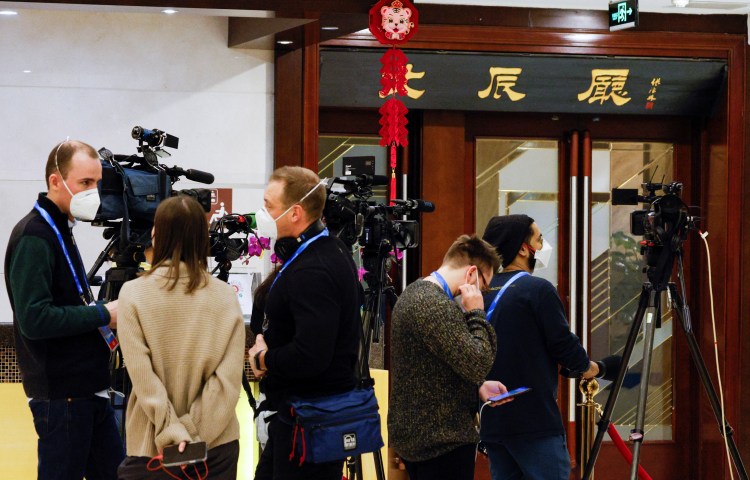
How China is stepping up harassment of foreign correspondents
When international journalists rushed to Zhengzhou city in Henan province to cover a deadly flood in July 2021, they were confronted by angry bystanders who accused them of “spreading rumors” and “smearing China.” Many also received harassing messages on social media and intimidating calls, according to the Foreign Correspondents’ Club of China. This hostility spread after the Henan Communist Youth…

China’s overseas critics under pressure from smear campaigns, cyber attacks
“I think my actions … have harmed the national interest. What I have done was very wrong. I seriously and earnestly accept to learn a lesson and plead guilty,” said Chinese journalist Gao Yu during a televised confession on the state-run channel CCTV in May 2014.

Defending the middle ground of online journalism
It’s easy to use polarizing descriptions of online news-gathering. It’s the domain of citizen journalists, blogging without pay and institutional support, or it’s a sector filled with the digital works of “mainstream media” facing financial worries and struggling to offer employees the protection they once provided. But there is a growing middle ground: trained reporters…

China censors reaction to star-studded propaganda film
The creators of “Beginning of the Great Revival,” a new film about the founding of the Chinese Communist Party, have spared no expense to make it a popular success. Done in a popular Chinese soap opera style, the movie features more than 100 stars, along with leading directors and producers. Then, the government enlisted information…