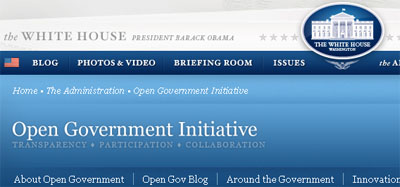
These are busy days for Freedom of Information. On April 5, the watchdog Web site that knows no borders, WikiLeaks, posted a classified U.S. military video showing U.S. forces firing on Iraqi civilians, killing many, including two Reuters journalists, as well as wounding children. Two days later, the Pentagon posted a redacted U.S. military assessment of the same incident concluding that U.S. troops fired “in accordance with the law of armed conflict and rules of engagement.” The very same day President Obama hailed the scheduled release of a new Open Government Initiative by all Cabinet agencies to improve transparency and compliance with information requests.
Congress is frustrated with the lack of transparency, too. On April 15, the Senate Judiciary Committee sent a bill with bipartisan support to the full Senate for consideration. Sponsored by Chairman Patrick Leahy (D-VT) and Sen. John Cornyn (R-TX), the Faster FOIA or Freedom of Information Act 2010 would establish a new oversight commission to study why U.S. agency responses to information requests are often incomplete or delayed.
It’s about time. Until now, U.S. military commanders had largely covered up the July 2007 incident above in the Iraqi suburb of New Baghdad, telling the press that they were firing on insurgents, killing approximately a dozen people along with two journalists who got caught up in the crossfire. But the now-posted U.S. military video shows as many as two armed men among the group that was fired on, and both of the armed men, who may or may not have been insurgents, carrying their weapons over their shoulders and not firing at all; U.S. military helicopters firing on a wounded individual being rescued by other men with no weapons within reach or even sight of all three of them, which U.S. forces’ voices recorded on the video also confirm. CPJ sent a letter today to Defense Secretary Robert Gates pointing out that several experts on international humanitarian law are calling for investigations to determine whether U.S. forces complied with such law when they fired on unarmed, wounded men.
Moreover, over the past three years while U.S. military commanders concealed most of the information, officials at the Pentagon in Virginia and U.S. Central Command at MacDill Air Force Base in Florida also refused to release the video, which was taken from a U.S. Apache helicopter gunship, even though Reuters had long requested it along with other information through the U.S. Freedom of Information Act.
U.S. cable television networks only showed short clips, editing out the more graphic images and audio commentary by U.S. soldiers involved in the shooting to their U.S. audiences. But non-American networks from the BBC to Al-Jazeera broadcast the video to hundreds of millions of viewers in nations worldwide. Hmm? Perhaps the Vatican is not the only large institution these days in need of reviewing how it communicates and manages information. Obama’s plan is to create not only new avenues for faster compliance to information requests in nearly every U.S. agency, but to also establish a “FOIA Dashboard” or Freedom of Information Act “visual report card” at the Department of Justice to both promote transparency and monitor compliance across U.S. agencies.
Obama has made similar promises before, however, only to break them later. The very day after his inauguration he instructed U.S. agencies to “adopt a presumption in favor of disclosure” when handling FOIA requests. But instead, agencies only increased their use of possible legal exemptions to avoid replying to FOIA requests during Obama’s first year in office, according to a review of agencies by The Associated Press. Sen. Charles Grassley (R-IA), a member of the Senate Judiciary Committee, sought legislation to examine how U.S. agencies handle FOIA requests after the AP investigation.
Similarly, most of CPJ’s FOIA requests in recent years have either been denied or delayed, or somehow fallen into a bureaucratic black hole. One day in April 2003 in Baghdad, U.S. military forces separately fired airstrikes on the Baghdad bureaus of two critical Arabic-language satellite networks, Al-Jazeera based in Qatar, and Abu Dhabi TV based in the United Arab Emirates. The same day, a U.S. tank unit fired on the Palestine Hotel where many “unilateral” or journalists moving independently of U.S. forces were based. Three journalists were killed and four were wounded in the three attacks. CPJ filed FOIA requests to the Pentagon asking for more information about all three incidents.
The U.S. military eventually released its own detailed investigation looking into why a U.S. tank commander ordered the strike on the Palestine Hotel: The tanks were coming under increasingly close artillery fire and they feared that figures on the hotel roof with binoculars (who may or may not have been journalists) may have been directing the artillery fire; the report also repeated unsubstantiated claims that hostile gunfire was also coming from inside the hotel. By then CPJ had already completed its own comprehensive investigation, which concluded that with better U.S. military communication as well as command and control over targeting decisions this particular tragedy at the Palestine Hotel might have been avoided.
But the Pentagon has simply failed to provide any information at all concerning the two U.S. air strikes the same day on the Baghdad bureaus of two significant broadcast critics.
The U.S. military has also failed to respond to a CPJ FOIA request about another incident. Three weeks earlier, a camera crew from the British-based ITN television network disappeared while covering combat involving U.S. forces near Zubayr, Iraq; correspondent Terry Lloyd’s corpse was later found, but both Fred Nerac and Hussein Othman remain missing.
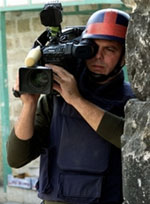
In total, no fewer than 16 journalists have died in incidents involving U.S. forces in Iraq, according to CPJ research. But the Pentagon has released comprehensive information in only two other attacks in which journalists were killed besides the incident involving the Palestine Hotel. One was the fatal shooting by a machine gunner atop a U.S. tank of Reuters cameraman Mazen Dana (who less than two years earlier had been awarded CPJ’s International Press Freedom Award for his work in his native West Bank and Gaza). Not unlike the scenario shown in the WikiLeaks video, in which U.S. soldiers clearly mistook at least one Reuters journalist with a camera for an insurgent armed with a rocket-propelled grenade, the machine gunner who shot and killed Dana also appears to have mistook the Palestinian cameraman, whom he later told U.S. military investigators had “dark skin and dark hair,” for an insurgent holding not a camera but a rocket-propelled grenade.
The U.S. military report on the Dana shooting, like the one on the Palestine Hotel tank firing, exonerated the U.S. soldiers involved. But the military report on the Dana shooting also recommended that the Pentagon review its own rules of engagement to try to avoid such tragic cases of misidentification in the future. “Recommend that [commanders] review [the] Rules Of Engagement against the current enemy threat in the Iraqi theater to make a formal assessment if modifications are necessary to the Rules Of Engagement,” reads the “Investigation Recommendations” of the 117-page U.S. military assessment.
That sounds a lot like the recommendations made by both CPJ and Human Rights Watch in a 2005 letter to then-Defense Secretary Donald H. Rumsfeld. In fact the whole point of pressing the Pentagon to release information is not necessarily to assign blame to any soldiers involved in such incidents, depending upon the circumstances. But to try and find common sense ways to see if such incidents—that everyone now agrees in hindsight are tragedies—could have been avoided. Or, as the U.S. military report on the Dana shooting succinctly puts it, to explore whether it might be possible to make “modifications to the Rules Of Engagement without compromising force protection.”
Another such case of tragic misidentification occurred at a U.S. military checkpoint in Baghdad in March 2004 when soldiers fired on a press vehicle killing two journalists from the Al-Arabiya satellite network based in the United Arab Emirates. The U.S. military investigation of this incident, however, failed to reconcile conflicting statements between civilian witnesses and U.S. soldiers. But the report is nonetheless valuable to help further a constructive discussion. The military completed its own investigation of this incident within 11 days of the fatal shooting, according to the report itself. CPJ filed a FOIA request to the Pentagon asking for information the same month. But the Pentagon inexplicably waited three years before finally releasing the report.
The Freedom of Information Act purports to provide “an important means through which the public can obtain information regarding the activities of Federal agencies” and requires Federal agencies to make their FOIA programs “citizen-centered and results-oriented.” But in practice the many legal loopholes in the law along with the process’ irregular as well as secret forms of oversight have left it largely up to individual administrations and their respective agencies to decide how responsive they wish to be to information requests. Obama’s nice, new initiative sure looks bright on the White House Web site. But it will need teeth and muscles if the new promise is to produce any better results.
Here’s food for thought. If the Pentagon had been more forthcoming, say, about the 2007 New Baghdad shooting long before WikiLeaks posted the military’s own embarrassing video of it for countless people to see, then the debate today would not be over the actions and words of the U.S. soldiers involved. Instead it would have been over how to best adjust the rules of engagement toward both saving civilian lives while still protecting U.S. troops. That’s hardly a radical or even idealistic notion. It’s exactly what the Pentagon’s own report on the Dana shooting recommended.