Daniel Coronell’s name didn’t come up in a hearing this week on Capitol Hill, even though CPJ had just learned that a Colombian court had ordered the arrest of the respected Canal Uno TV reporter and Semana magazine columnist over his work. Coronell is one of many journalists and human rights monitors who’ve lately been forced to defend themselves against irregular, if not bogus, criminal charges brought in Colombian courts. The hearing held by the Tom Lantos Human Rights Commission of the House Foreign Affairs Committee did, however, hear important testimony from one of Coronell’s colleagues.
Hollman Morris, another respected TV journalist (his program CONTRAVÍA roughly translates as “The Other Way”), told Commission Co-Chairman Rep. Jim McGovern (D-Mass.) as well as Rep. Joseph R. Pitts (R-Penn.) that he recently learned that Colombian prosecutors were preparing criminal charges against him. By then Andrew Hudson of Human Rights First had already told the bipartisan commission that Colombian prosecutors had recently brought no less than 32 unfounded and “specious” criminal investigations against Colombians, including journalists as well as human rights investigators.
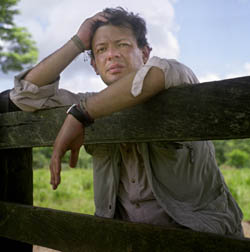
Morris, right, told members that he had been publicly, repeatedly and falsely accused of purported offenses by Colombian officials as high-ranking as the nation’s head of state. Last month CPJ and Human Rights Watch wrote a joint letter to President Álvaro Uribe over the president’s latest accusation that Morris was an alleged “accomplice of terrorism.” (Three weeks later, CPJ reported that Colombia’s national intelligence service was spying on journalists, Supreme Court judges, opposition politicians, and officials in Uribe’s administration.) Uribe was hardly alone. Vice President Francisco Santos (himself a former journalist who was once kidnapped by FARC Marxist guerrillas, and whose family runs Bogotá’s largest daily, El Tiempo) and his cousin, Defense Minister Juan Manuel Santos, have also accused Morris of having guerrilla ties.
These latest accusations against the CONTRAVÍA journalist came after Morris briefly interviewed four hostages–three police officers and one soldier–shortly before they were released by the FARC. But Morris told CPJ that he cut short the interviews once he realized that the hostages had been coerced by the FARC into giving scripted answers. Morris also neither aired the footage nor published the hostage’s testimonies. Nonetheless, Attorney General Mario Iguarán announced the opening of a criminal investigation of Morris for alleged terrorist ties.
“The recent barrage of accusations that you and senior members of your administration have launched against Morris undermines your commitment to freedom of expression,” HRW and CPJ jointly wrote to President Uribe on February 5. “Official comments linking journalists to any actor in Colombia’s internal armed conflict have resulted in serious threats and have led reporters to flee the country or to engage in self-censorship.” Morris this week told members of Congress that he has received some 50 death threats, many of which have come in the wake of public accusations by Uribe and other senior Colombian officials. Morris and his family have fled the country several times. A short documentary about the Colombian journalist, which was recently shown at the Sundance Film Festival, documented the stress this has caused not only Morris, but his wife and children as well.
The stories that may have really upset Uribe and other senior Colombian officials are Morris’ investigative reports into politically motivated violence, including assassinations by both rightist paramilitary groups and leftist guerrillas in communities such as San José de Apartado. Morris’ reports have included evidence–also reported by HRW and others–that rightist paramilitaries responsible for much of the violence have been secretly backed by the Colombian military. In 2007, HRW gave Morris is its prestigious Human Rights Defender Award for his ground-breaking reporting.
Morris’s situation is not unique. Journalist Ignacio “Nacho” Gómez went into exile twice, years before Uribe took office, each time after uncovering evidence of ties between illegal rightist paramilitaries and the U.S.-backed Colombian military. Gómez spent a year in exile as a Nieman Fellow at Harvard University before returning to Colombia to work at Canal Uno. He found himself in trouble again after reporting on links between then-presidential candidate Uribe and the Medellín drug cartel. After the report aired, Gómez and Coronell, the show’s news director at the time, receive death threats. CPJ gave Gómez its International Press Freedom Award in 2002.
Coronell went in exile with his family in 2005 after receiving a series of threats, including two funeral wreaths predicting his death. (That same year, CPJ documented widespread self-censorship in Colombia inspired by intimidation and threats.) An inquiry by local authorities later showed that intimidating e-mails targeting Coronell and, shockingly, his toddler daughter had been sent from the computer of former Congressman Carlos Náder Simmonds, a close friend of Uribe. Náder later admitted sending one of the e-mails, but said it was misinterpreted. He was never charged.
Coronell returned to Colombia to continue reporting for print and television. Last year, Coronell, and Canal Uno aired a previously taped interview with former Congresswoman Yidis Medina that ignited nationwide controversy. In the interview, Medina alleged that high-ranking officials had offered her bribes in exchange for her vote in favor of a constitutional amendment that allowed Uribe to seek re-election in 2006 for a second four-year term. Summoned to testify, Uribe called for a criminal investigation–into Coronell. He claimed the journalist broke the law by airing instead of immediately disclosing the videotaped interview.
Another witness before the Tom Lantos Human Rights Commission was Liliana Andrea Avila of the Jesuit-run Inter-Church Commission for Justice and Peace. She noted that human rights defenders have found themselves targeted for investigation after reporting evidence of paramilitary violence, including ties to the U.S.-backed Colombian military. Human Rights First and the Tom Lantos Commission found the same in their report and hearing, both titled, “In the Dock and Under the Gun.”
It’s not unlike the situations facing the journalists Gómez, Morris and Coronell.
The arrest warrant issued this month against Coronell stemmed from a 2008 report that alleged links between a local businessman and drug traffickers. The businessman denied the allegation and filed an injunction seeking a correction. A criminal judge in the eastern province of Meta agreed, and ordered Canal Uno as well as El Tiempo, which had repeated the allegation, to both issue corrections. Both news outlets did so, but they also appealed the decision. An appeals court ruled against them, and ordered a second correction. Coronell and Cano Uno refused, saying the ruling was improper. CPJ agreed.
“With all due respect to the court, we question the legality of ordering a second correction,” noted CPJ’s Carlos Lauría on Wednesday. “Holding Coronell in contempt without adequate due process smacks of judicial harassment and sets a precedent that will weaken judicial guarantees in Colombia and chill reporting.”
As Morris told Congress, the combination of threats, accusations and trumped-up criminal charges have “serious repercussions.”