Middle East & North Africa
2010
Protecting yourself from denial-of-service attacks
It’s my second link to a report by Hal Roberts (and others at the Berkman Center) in as many days, but I worry that this this detailed document on denial-of-service (DOS) and hacking attacks on independent media and human rights groups might get missed in the holiday season. The news headlines in the last few…
Six stories: Online journalists killed in 2010
This week, CPJ published its year-end analysis of work-related fatalities among journalists. Six of the 42 victims worked online. While you can read the full statistics and our special report elsewhere, I want to highlight the stories of these six journalists who worked on the Web.
In Lebanon, Gebran Tueni’s daughter seeks the truth
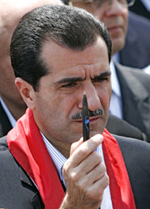
On a rainy Sunday in downtown Beirut, in St. George Cathedral at Place d’Etoile, the family of murdered Lebanese journalist Gebran Tueni gathered with the staff of his newspaper, Al-Nahar, to hold a memorial marking the fifth anniversary of Tueni’s assassination. The memorial was held in the same church where Tueni was married in 2001,…
Lebanon tries to modernize its chaotic media laws
Current Lebanese media laws exist in the perfect state of chaos. For example, a print journalist who is a member of the Journalists’ Syndicate, according to the Publication Law, is protected from administrative arrest for an opinion piece or an article he writes. However, if the same journalist broadcasts the very same opinion and some…
Internet Blotter
Venezuela prepares law to regulate media, including the Internet. Iranian blogger Hossein Derakhshan briefly released from jail on $1.5 million bail… …but fellow Iranian-Canadian anti-censorship software designer Saeed Malekpour still faces death penalty. Syrian telecom minister says awareness of the dangers, not censorship of the Internet is the solution.

With 145 journalists behind bars, what’s in a number?
Today we released our annual census of imprisoned journalists around the world, citing 145 reporters, editors, and photojournalists behind bars on December 1, an increase of nine from 2009 figures. The tally begs the question, What’s in a number?
Facebook gets caught up in Egypt’s media crackdown
As CPJ has previously documented, journalists in Egypt have faced a deterioration in press freedom in the run-up to the parliamentary vote on Sunday. Editors have been fired, TV shows suspended, and regulations over SMS texting suddenly tightened. In the final few days, a new forum found itself caught up in this attempt to control…
CPJ Press Freedom Awardee: ‘I always wanted answers’
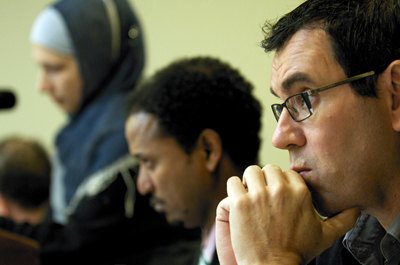
The last few weeks have been extremely busy for everyone at CPJ as we’ve been preparing for the 2010 International Press Freedom Awards. Today’s press conference in Washington will be followed by a series of events culminating in our awards ceremony Tuesday in New York. As always, the awardees make it special.
Internet Blotter
Egyptian blogger Karim Amer is finally free after four years in prison. Iran launches yet another police force to deal with the Internet, headquartered with the Revolutionary Guard. Its commander says the state plans to quadruple its Internet control budget. Google lobbies U.S. policymakers to consider online censorship a free trade issue. Is breaking into…
Press Club honors jailed Iranian Kouhyar Goudarzi
The National Press Club next week will honor an Iranian journalist who is languishing in prison. Kouhyar Goudarzi, an online reporter and human rights activist, was pursuing an aerospace degree at Sharif Industrial University when security agents put him behind bars, according to the International Campaign for Human Rights in Iran. Goudarzi, left, was an…