Haiti
2010
Global Media Forum cites risks of environmental reporting
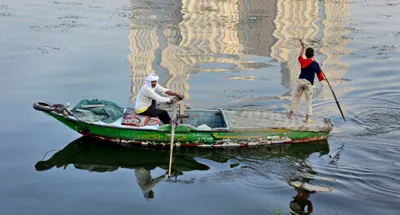
He’s young, unemployed and carries himself with the innocence of a man who hasn’t spent much time outside his own village. But Egyptian blogger Tamer Mabrouk is the real deal. Appearing at an international media conference in Bonn, Mabrouk’s description of chemical dumping into a brackish lagoon on the northern Nile Delta near the Mediterranean Sea…
Starting from scratch: A Haitian journalist exiled in the U.S.
I arrived in New York in April 2003. It was cold.The streets of Brooklyn seemed too wide to me and the buildings huge. The number 3 train would pass over and over again like a luminous monster. From the window of my apartment, I would watch this train go by. I would also watch people walk without…

Le Nouvelliste resumes daily publication in Haiti
Three months after the January 12 earthquake, Haiti’s oldest newspaper, Le Nouvelliste, has resumed daily publication. The April 6 issue not only signaled the resumption of daily publication, it marked a return to some normality, said Frantz Duval, the daily’s new editor-in-chief.
Media center in Haiti has become ‘anchor point’ for press
Three months after it opened, Haitian journalists are still benefitting from the wide-ranging services provided by the Media Operations Center, which has provided a workspace for journalists after the earthquake. While radio stations based in the capital are back on the air, the long power cuts and problems accessing the Internet are still prompting journalists…
Media in Leogane devastated
Of the 12 radio stations in the city Leogane, south of Haiti’s capital, Port-au-Prince, only five are back on the air more than two months after the earthquake. Most stations were seriously damaged and several broadcasters are struggling to restore transmission, the head of the Leogane Press Association (APL), Julmane Saint Fort, told CPJ. Saint…
Haiti’s only Creole newspaper is out of business
Haiti’s sole newspaper published exclusively in Creole has disappeared under the rubble of the January 12 earthquake. The Port-au-Prince offices of the monthly Bon Nouvel (Good News) were destroyed, as were the facilities of its La Phalange printing unit, which specialized in the production of Creole-language books and documents.

For Haitian media, a big story amid big demands
In the aftermath of the January 12 earthquake, Kerby Joseph stays on the job. He helps gather news for Amikal FM, a radio station that now broadcasts from a tent in the devastated Haitian town of Leogane, where most of the buildings have been damaged or destroyed. But the radio station lacks the money to…
Journalists fleeing Haiti in aftermath of quake
Thousands of Haitians, including many journalists, have fled the country since the January 12 earthquake. Ronald Leon, a veteran journalist who worked with Haiti’s National Television station, Radio Caraibes and Tropic FM, has now settled in Florida, leaving behind his family and his journalism training school, Ameritech, which was destroyed in the earthquake. Its last class had 15 students.
French weekly gives issue over to Haitian journalists
The French weekly Courrier International opened its columns on February 4 to Haitian print media journalists in a special edition being circulated worldwide. The paper’s managers did it to express solidarity with Haitian journalists following the earthquake, which completely paralyzed the publication of the country’s dailies. The two dailies in Haiti’s capital, Port-au-Prince, Le Nouvelliste and Le Matin, were honored in the special edition. Haiti Liberté,…
Radio Lumière in Haiti loses three journalists in quake
Radio Lumière has officially published the names of three of its journalists who died in the January 12 earthquake in Haiti: Jude Marcellus, Marlene Joseph, and Ginord Desplumes. They died under the rubble of collapsed buildings. It took a month for Radio Lumière officials to decide to publish the names of the three victims.