Somalia
2013
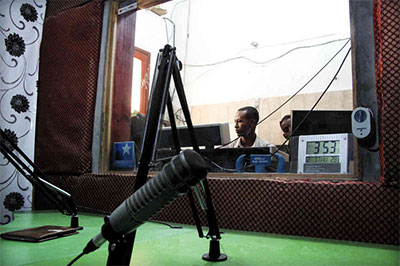
Shabelle off air and staff evicted, fearing for safety
The young staff members of Radio Shabelle, whose offices were in the relatively safe section of Mogadishu next to the airport, are no longer feeling safe. On Saturday, while presenters were on the air, heavily armed security forces raided the Shabelle offices and arrested the three-dozen staff members at gunpoint, according to a statement by…
Somalia, it’s time for action
On the morning of Tuesday, October 22, 2013, Somali television journalist Mohamed Mohamud, nicknamed “Tima’ade,” was seriously wounded when unknown armed men attacked him on his way home from work. He was shot more than five times. Colleagues and local residents in Wadajir district, where the attack took place, immediately rushed him to Madina Hospital in…
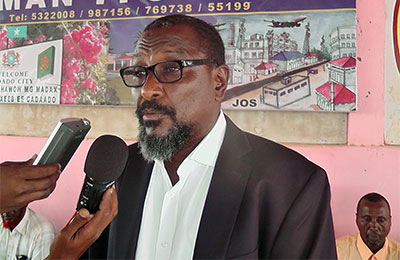
Duping pirates and endangering journalists
It could have been the script for a John Le Carré intrigue. On Saturday October 12, Belgian security agents arrested Mohamed Abdi Hassan, a kingpin of Somali piracy known as “Afweyne” (Big Mouth), and his associate Mohammed M. Aden, nicknamed Tiiceey, a former governor of Himan and Heeb province.
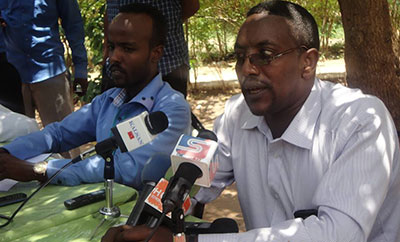
Q&A: Hubaal’s editor talks about press in Somaliland
Hubaal, Somaliland’s critical and much-beleaguered daily newspaper, is back on newsstands after a presidential pardon last week. The paper was shuttered on orders of the attorney general in June without explanation. In April, two gunmen, subsequently identified by authorities as police officers, raided the office of Hubaal and attacked its staff after a series of…
A bid to rid Africa of criminal defamation, sedition laws
The African Union’s special rapporteur on freedom of expression and access to information, Commissioner Pansy Tlakula, has launched an auspicious initiative in East Africa to counter criminal defamation and sedition laws. Since independence, authorities and business interests in the East and Horn region have used criminal laws on sedition, libel, and insult–often relics of former,…

In Index, a pattern of death, a roadmap for solutions
Gerardo Ortega’s news and talk show on DWAR in Puerto Princesa, Philippines, went off as usual on the morning of January 24, 2011. Ortega, like many radio journalists in the Philippines, was outspoken about government corruption, particularly as it concerned local mining issues. His show over, Ortega left the studios and headed to a local…
In Somalia, the mysterious case of Rahmo Abdulkadir
It seemed clear-cut and sadly familiar: A journalist was shot and killed while walking in Mogadishu, one of the deadliest places in the world for the press. Yet in the four weeks that have passed since those initial reports from international and local news agencies–accounts that were then amplified by the United Nations, CPJ, and…
CPJ launches Somali Security Guide
Last week, two gunmen waited near the home of a young Somali journalist, Rahmo Abdulkadir, who had recently returned to the capital from the Galgadud district in central Somalia where she worked as a reporter for Radio Abudwaq (Worshipper). According to local journalists, 25-year-old Rahmo had just left an Internet café in Mogadishu around 9:30…
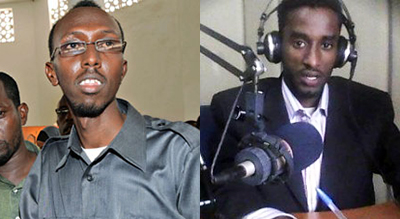
Jubilation, then tragedy, for Mogadishu press this week
“He’s free! He’s free!” a friend of mine from Somalia’s capital, Mogadishu, shouted down the phone line on Sunday. For a fleeting second I did not know whom he referred to, given the high number of journalists imprisoned in the Horn region of Africa–but then it dawned on me: Abdiaziz Abdinuur had finally found justice.…
Jail for reporting on women in Mangalore, Mogadishu
Today marks International Women’s Day. Hashtags like #IWD and #InternationalWomensDay have been trending on Twitter. Among the twitterati who voiced their support for women’s rights was Indian Prime Minister Manmohan Singh. He tweeted: PM: Let me reiterate in this House the commitment of our govt. to ensuring the dignity, safety and security of every woman…