Somalia
2010
Somali journalist lives under threat, in fear in South Africa
Violence has cut through the life of 28-year-old journalist Abdulahi Ibrahim Dasar, from his high school days in Kismayo, the third-largest city in Somalia, to his life as a refugee in South Africa. The turbulence of Dasar’s life also explains his entry into journalism, a profession that has made him a target of assassination by…
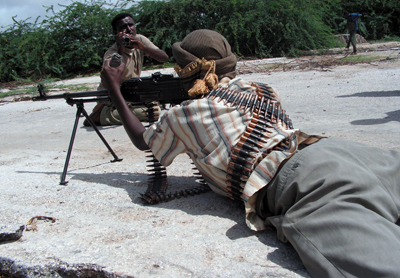
‘A Somali journalist’s life is short anyways’
In August, Shabelle Media Network, one of Somalia’s leading independent broadcasters, did something incredibly brave–they rebroadcast news and music that the BBC’s Somali-language service beams to the war-torn Horn of African nation in defiance of a ban imposed by hard-line militant Islamist rebel groups Al-Shabaab and Hizbul Islam. For Somali journalists, who risk death by crossfire and assassination, and censorship from both…
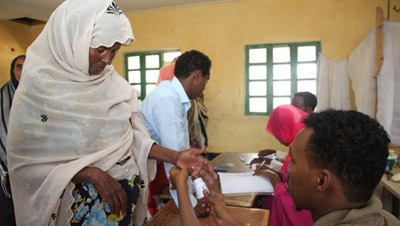
Somaliland elections and coverage surprisingly…normal
Critical voices in the East African media—whether in Ethiopia, Rwanda, Burundi, or Uganda—have been intimidated, banned, blocked, and beaten prior to elections in recent years. Somalia is so embroiled in conflict that even the concept of having elections remains a faraway dream. But in late June, the semi-autonomous region of Somaliland in northern Somalia managed to hold relatively peaceful and free elections with decent media…

View from a Somali photojournalist’s blood-stained lens
On Tuesday, several journalists were wounded when missiles were fired on a press conference in the battlefield of Somalia’s capital, Mogadishu. When the National Union of Somali Journalists broke news of the attack, I immediately checked in with local reporters. I obtained the phone number of photojournalist Ilyas Ahmed Abukar, expecting to speak to a frantic or traumatized man, but to…
Somali journalist Mustafa Haji Abdinur wins CNN award
At CPJ’s International Press Freedom Award ceremony in November 2009, Agence France-Presse’s Somalia correspondent Mustafa Haji Abdinur—an award winner—pleaded with his audience: “Friends, if a journalist is killed the news is also killed. We need your support now more than ever. Please don’t forget us.” Abidnur, 28, has not been forgotten. We are excited to learn that…
Exiled Somali journalists face new challenges in Nairobi
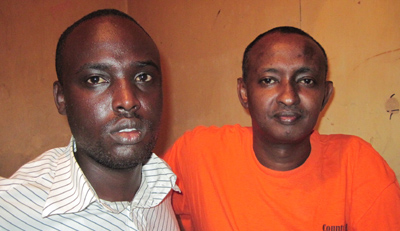
Somali journalists Hassan Ali Gesey and Abdihakim Jimale are roommates these days, living in a tiny, graffiti-ridden room in Nairobi, Kenya. Neither would have wanted to eke out an existence like this, but dire circumstances brought them together—starting with the night three years ago that Gesey saved Jimale’s life.
Somali editor, family make a new life in exile
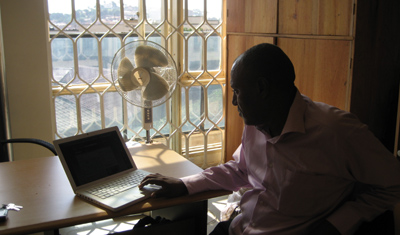
KAMPALA, Uganda As Ahmed Omar Hashi strode toward me, his figure silhouetted in the bright morning light, it was hard to believe this was the same man who left Mogadishu on a stretcher just six months earlier after suffering a near-fatal gunshot wound. As I reached to shake his hand, he pulled me into a…
African journalists face increasing risk for foreign outlets
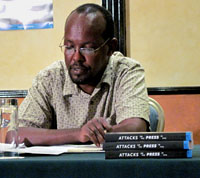
“I didn’t wear the bulletproof jacket and helmet that Reuters gave me,” explained veteran Somali journalist Sahal Abdulle to a packed crowd at Nairobi’s Serena Hotel for CPJ’s launch of Attacks on the Press. “It didn’t seem right when my colleagues, local journalists, were risking their lives trying to cover the same event.” Abdulle, like…
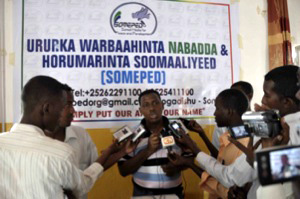
A new mission for Somalia’s Mustafa Haji Abdinur
January 21 marks Press Day in Somalia, the most dangerous country in Africa to be a journalist. As such, few local journalists find much reason to celebrate. With nine Somali journalists killed in the line of duty last year, numerous local journalists have fled, especially from the restive capital, Mogadishu. “The free media is going…