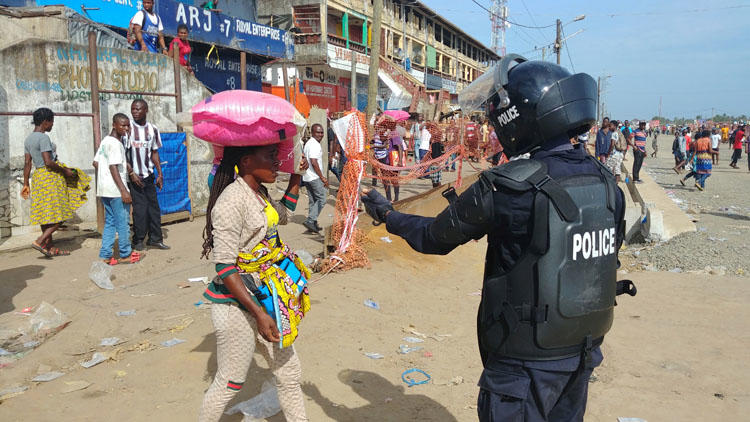
Liberia’s journalists wary as authorities announce new press passes, threaten shutdowns
When the coronavirus arrived in Liberia, local journalists knew what it meant to report on a deadly, infectious disease; six years earlier they had donned personal protective equipment (PPE) to report on the Ebola crisis, Musa Kenneh, the Press Union of Liberia’s secretary general, told CPJ. But this time, Kenneh said, threatening comments from government…

Q&A: Rodney Sieh on how Liberia’s press is faring under Weah presidency
Rodney Sieh, editor-in-chief and publisher of Liberian investigative outlet FrontPageAfrica, knows first-hand the harassment and risks critical journalists in his country face. In 2013, CPJ documented how he was sentenced to prison over unpaid fines in a criminal defamation case.
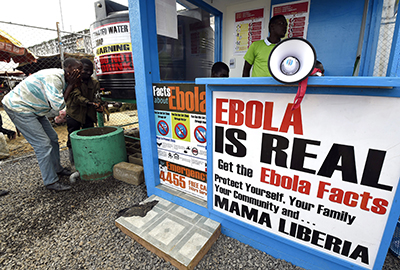
In Ebola-stricken countries, authorities and journalists should work together
The Ebola crisis in West Africa is unrelenting, and journalists on the frontline of reporting on the virus are caught between authorities wanting to control how the outbreak is reported, and falling victim to the disease themselves.
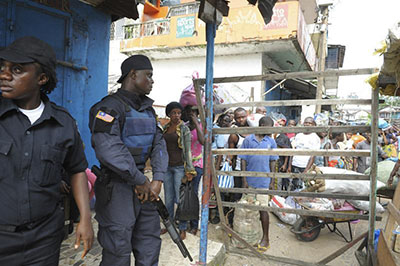
In attempts to contain Ebola, Liberia censors its press
With the Ebola epidemic predicted to get worse, the Liberian government has taken action to silence news outlets critical of its handling of the health crisis which, according to Liberia’s Information Ministry, has claimed more than 1,000 lives in the country since March. Publishers have been harassed and forced to cease printing, and journalists were…
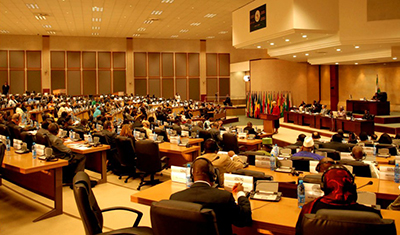
Press freedom: Challenge of changing words into deeds
The Pan African Parliament’s (PAP) launch of a media freedom campaign through a “Dialogue on Media Freedom in Africa” in mid-May marks an important and welcome starting point. For too long, media freedom has been divorced from the debate around development and democratization when it has an integral role to play in promoting transparency, underpinning…
Liberian press boycotts Sirleaf over aide’s comments
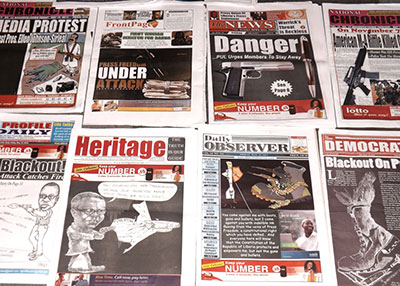
Most governments, even repressive ones, at least give lip service to supporting freedom of the press–especially on World Press Freedom Day, May 3. But in Liberia this month, Othello Daniel Warrick, President Ellen Johnson Sirleaf’s chief security aide, shocked local journalists by threatening them and calling them “terrorists” at a public event to mark the…

Awardees say indignation trumps intimidation
The battle for a free press sometimes feels like a war between indignation and intimidation. Journalists learn of abuses of power, crime, or corruption, and–indignant–they speak out. In response, the perpetrators of those abuses–be they government officials or criminals–try to intimidate the journalists into silence with threats, lawsuits, jail, or even murder. Last night, the…
Liberia university suspends student journalist over article
A private university in Liberia has suspended a journalist studying there for publishing a newspaper story critical of the institution’s management. On May 8, private Cuttington University in Suacoco in central Liberia suspended Selma Lomax, a reporter with independent newspaper FrontPage Africa and a third-year student in agriculture at the institution, for four months over an April 26…

Liberian journalist Mae Azango on cold threats, hot stories
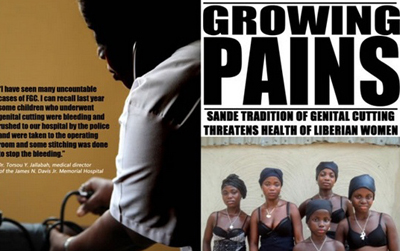
Mae Azango was not surprised when the Liberian police failed to help when she began receiving threats of violence in response to an article she had written about female genital cutting that was published on in FrontPage Africa on March 8. She had previously reported critically on the police, including a case of police brutality…
In Liberia, journalist Mae Azango moves a nation
Liberian journalist Mae Azango’s courageous reporting on female genital mutilation, which made her the target of threats and ignited international controversy, has forced her government to finally take a public position on the dangerous ritual. For the first time, Liberian officials have declared they want to stop female genital mutilation, a traditional practice passed down…