CPJ joins UN complaint on behalf of jailed Eritrean journalists
On July 21, 2022, the Committee to Protect Journalists joined the Raoul Wallenberg Centre for Human Rights in partnership with seven other rights organizations and lawyers in a complaint filed to the United Nations Working Group on Arbitrary Detention calling for accountability in the cases of Dawit Isaak and fifteen other journalists held behind bars…
CPJ joins call for Canada to impose targeted sanctions on Eritrean officials
The Committee to Protect Journalists yesterday joined 15 other rights organizations, journalists, and human rights experts in a statement calling on the government of Canada to impose targeted sanctions on senior Eritrean officials for human rights abuses, including the 20-year imprisonment of newspaper editor Dawit Isaac and other journalists. “After two decades, the devastating mistreatment…
CPJ joins letter calling on UN Human Rights Council to maintain pressure on Eritrea
The Committee to Protect Journalists joined 23 other free speech and human rights organizations in a letter sent yesterday urging the United Nations Human Rights Council to extend the mandate of the special rapporteur on the human rights situation in Eritrea.
CPJ joins call for UN to continue scrutinizing human rights situation in Eritrea
The Committee to Protect Journalists and 29 other civil society organizations today sent a letter to members of the United Nations Human Rights Council urging them to continue to scrutinize the human rights situation in Eritrea. The letter was sent ahead of the 41st session of the Human Rights Council, which will take place in…
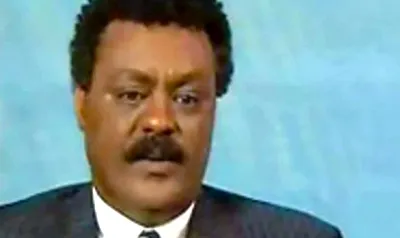
Eritrea: Ali Abdu pleads ignorance of Dawit Isaac’s fate
On Wednesday, the Swedish newspaper Expressen published what it described as an exclusive interview with Ali Abdu–Eritrea’s long-time information minister, government spokesman, and censor-in-chief–who vanished from public view in November. The piece confirmed that Ali had gone into exile, but it shed no light on the whereabouts and well-being of more than two dozen imprisoned…
Journalist Assistance helps record number in 2012
An increase in press freedom violations last year created a surge of need among journalists, driving a record number of assistance cases for CPJ’s Journalist Assistance Program in 2012. More than three-quarters of the 195 journalists who received support during the year came from East Africa and the Middle East and North Africa, reflecting the…

Where is Eritrean Information Minister Ali Abdu?
Eritrean Information Minister Ali Abdu Ahmed, government spokesman and censor-in-chief of the Red Sea nation, has been invisible in the past few weeks. The total absence of any independent press in Eritrea has allowed the government to maintain complete silence in the face of mounting questions and surging Internet rumors of his defection. It was…

For exiled Eritreans in Sudan, fear greater than most
With the launch of CPJ’s most recent exile report, I will have worked exactly three years for our Journalist Assistance program. More than 500 cases later, I have helped journalists who have gone into hiding or exile to escape threats; those in need of medicine and other support while in prison, and journalists injured after…

Most censored nations each distort the Net in own way
One big reason for the Internet’s success is its role as a universal standard, interoperable across the world. The data packets that leave your computer in Botswana are the same as those which arrive in Barbados. The same is increasingly true of modern mobile networks. Standards are converging: You can use your phone, access an…
China not most censored, but may be most ambitious
China didn’t make the cut for our 10 most censored countries. While the Chinese Communist Party’s censorship apparatus is notorious, journalists and Internet users work hard to overcome the restrictions. Nations like Eritrea and North Korea lack that dynamism.