Africa
2013
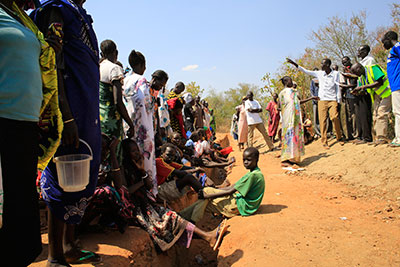
Reporting on South Sudan crisis difficult, dangerous
“They even started shooting through my house–I had to lie on the floor with my wife and kids,” Angelo Wello, a freelance journalist for faith-based news sites and a pastor, told me. Like many residents of the capital of Juba, South Sudan, Angelo has found it incredibly hard to get accurate information and report on…
Defining success in the fight against impunity
For the second time this year, the U.N. Security Council took up the issue of protection of journalists. In a discussion today sponsored by the French and Guatemalan delegations, and open to NGOs, speaker after speaker and country after country hammered home the same essential facts: The vast majority of journalists murdered around the world…
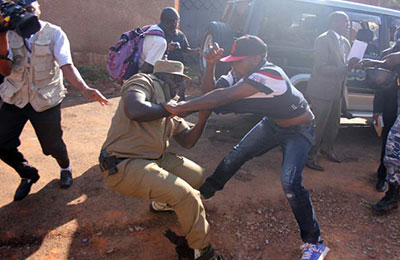
Take this survey on digital safety, then take these steps
It is an extraordinarily difficult time to be a journalist. Nearly every month, the digital security landscape shifts–new surveillance concerns are unearthed and freshly drafted laws are introduced that seek to curb freedom of expression under the guise of national security.
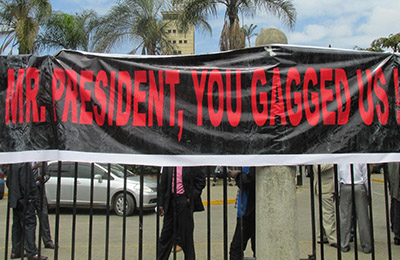
Kenya’s press takes to the streets against bill
“Mr. President, you gagged us!” said a banner tied to the gates of Parliament today. Kenya’s Editors Guild and the Kenya Correspondents’ Association organized peaceful demonstrations across the country to protest a media bill currently under parliamentary review. Protests were held in every county in the country, according to William Janak, chairman of the correspondents’…
After UN resolution on impunity, more work to be done
For all the people who have been working on the problem of impunity for so long, the announcement on November 26 that the Third Committee of the United Nation’s General Assembly had passed a resolution on the safety of journalists and the issue of impunity, setting November 2 as the “International Day to End Impunity…
Interactive Timeline: 12 months of impunity at a glance
In December 2012, the Committee to Protect Journalists and 27 partner organizations launched Speak Justice: Voices against Impunity as part of an international effort to seek justice for the hundreds of journalists who have been murdered around the world. Today, on International Day to End Impunity, we are taking a look back at what has…
Journalists can help curb gender-based violence
Training journalists how to better cover gender-based violence can help challenge attitudes that foster sexual attacks. Helping journalists learn personal skills to safely navigate sexual aggression can help prevent them from becoming victims themselves.
Training can help journalists survive captivity
Two murdered journalists for the Africa service of Radio France Internationale, Ghislaine Dupont, 51, and Claude Verlon, 58, might have had a chance. They were abducted on November 2 in Kidal in northern Mali, but the vehicle their captors were driving suddenly broke down, according to news reports.
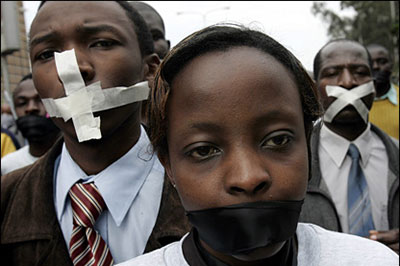
Just the fear of draconian press laws is enough
Few in Kenya’s media could comprehend how a media bill, considered the most repressive in Kenya’s 50-year history, could sail so easily through Parliament last week. Fittingly, Parliament passed the Kenya Information and Communications Amendment Bill on Halloween. It is awaiting President Uhuru Kenyatta’s signature following a 14- day deliberation period.