Go »
  Go »

Africa

2012


Eritrean Information Minister Ali Abdu Ahmed (Somali Mirror)

Eritrean Information Minister Ali Abdu Ahmed, government spokesman and censor-in-chief of the Red Sea nation, has been invisible in the past few weeks. The total absence of any independent press in Eritrea has allowed the government to maintain complete silence in the face of mounting questions and surging Internet rumors of his defection.

It was on November 17 that U.K.-based Eritrean opposition news website Assena first reported, citing unnamed sources, that Ali had sought asylum in Canada. Ten days later, Madote, a pro-government site, dismissed the Assena report and claimed, citing unnamed witnesses who reported by phone, that Ali was "seen walking in the capital and discussing with citizens."

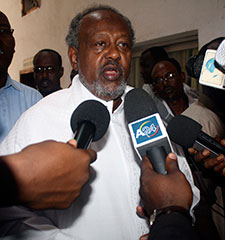
Djibouti President Ismael Omar Guelleh addresses the media after his re-election in April 2011. (AP)

Online journalist Houssein Ahmed Farah spent more than three months in jail in Djibouti before an appeals court finally released him in November--after his defense requested bail three times, Houssein said. His crime? Officially nothing. "It appears to have been an arbitrary arrest because there is still no evidence on file," Houssein told me. He said he was accused of distributing identity cards for the opposition, but he has not been charged with a crime.

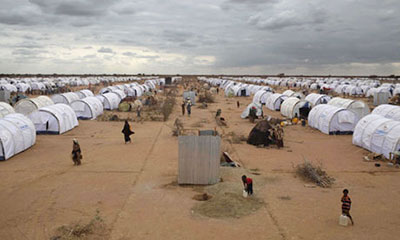
Somali refugees in Kenya are ordered to report to the Dadaab refugee camp, which already holds more than 450,000 people. (Mohamed Abdi)

Exiled Somali journalists living in Nairobi were struck with disbelief this week when daily newspapers published a statement by the Department of Refugee Affairs ordering all Somali refugees to move to refugee camps. "The refugees, particularly those living in urban centers, are contributing to insecurity in the country," the statement read. The acting commissioner for refugee affairs, Badu Katelo, said aid agencies including the U.N. High Commissioner for Refugees (UNHCR) must stop providing aid to those outside the camps. 

Members of the European Parliament take part in a voting session in Strasbourg, France, on June 13, 2012. (AFP/Frederick Florin)

On December 18, 16 members of the European Parliament (MEPs) wrote an open letter to Ethiopian Prime Minister Hailemariam Desalegn calling for the immediate release of the independent journalist and blogger Eskinder Nega, who was condemned in July to 18 years in prison under the country's tough 2009 anti-terrorism legislation.
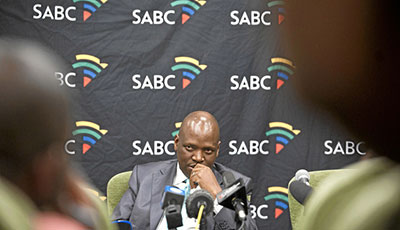
SABC acting Chief Operating Officer Hlaudi Motsoeneng answers questions about censorship at the broadcaster on December 6. (Madelene Cronjé/MG)

South Africa is in the midst of one of its most important political events--the ruling African National Congress's Mangaung elective conference, which takes place once every five years to shape policy and elect new leadership.  Because of the power of the ANC as South Africa's leading political party, the conference holds not only the future of the party in its hands, but also the future of South Africa.


(AFP/Pedro Pardo)

Almost half of the 67 journalists killed worldwide in 2012 were targeted and murdered for their work, research by the Committee to Protect Journalists shows. The vast majority covered politics. Many also reported on war, human rights, and crime. In almost half of these cases, political groups are the suspected source of fire. There has been no justice in a single one of these deaths.

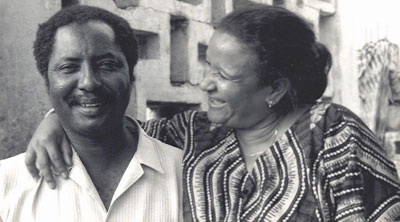
Deyda Hydara and his wife Maria circa 1989 (Hydara family)

In the eight years since unidentified assailants shot and killed Deyda Hydara of the Gambia, no one has been held to account. The late 2004 murder of Hydara, an immensely respected editor, columnist, and press freedom advocate known for his criticism of President Yahya Jammeh's repressive media policies, became a rallying point for Gambian journalists and the human rights community--a symbol of the violent means by which activists and journalists are silenced and of the impunity that envelops acts of intimidation, ranging from arson to torture and murder. 

(CNN)

The imprisonment of journalists hit a record high in 2012, driven by the growing use of anti-terrorism charges to silence critical voices. This video, a centerpiece of CPJ's new Free the Press campaign, details the plight of imprisoned journalists worldwide and describes how international advocacy can make a difference in winning the freedom of jailed reporters, editors, photojournalists, and bloggers. (4:40)

Read our special report "Number of jailed journalists sets global record" and view our database of journalists in prison.

Saidati Mukakibib, left, and Agnes Uwimana Nkusi sit in Rwandan Supreme Court in January 2012. (AFP/Steve Terrill)

Among the 232 journalists imprisoned around the world are Rwandan editors Agnès Uwimana and Saidati Mukakibibi, who are serving years-long terms on charges they defamed the president, Paul Kagame, and incited violence. Their crime? The women had published a series of stories in 2010 on several sensitive issues the Kagame government doesn't want scrutinized. The articles criticized government agricultural policy, examined the July 2010 murder of journalist Jean-Léonard Rugambage, described the falling-out between Kagame and two now-exiled military leaders, probed divisions within the army, and pushed for justice for ethnic Hutus killed in the 1994 genocide. The editors have exhausted domestic appeals, but now a team of defense lawyers is pursuing a complaint with the African Commission on Human and People's Rights on grounds that Rwanda violated its obligations to ensure freedom of expression and the right to fair trial.

In 1950, the United Nations General Assembly declared December 10 Human Rights Day in commemoration of the adoption and proclamation two years earlier of the Universal Declaration of Human Rights. Every year, on this day, the U.N. chooses one right to highlight and advocate. This year, Human Rights Day is focused on the right of all people to make their voices heard. This is not possible when journalists worldwide are being murdered.

The tortured and decapitated body of 39-year-old María Elizabeth Macías Castro was found on a Saturday evening in September 2011. It had been dumped by the side of a road in Nuevo Laredo, a Mexican border town ravaged by the war on drugs. Macías, a freelance journalist, wrote about organized crime on social media under the pseudonym "The Girl from Laredo." Her murder, according to the Committee to Protect Journalists, was the first in which a journalist was killed in direct relation for reporting published on social media. It remains unsolved.

Friends and relatives carry the body of Abdisatar Daher Sabriye, a  journalist with state-run television who died in a September 20 suicide bomb attack. (AP/Mohamed Sheikh Nor)

In October, two gunmen shot Shabelle Media Network reporter Mohamed Mohamud as he left a mosque one evening; he died from the gunshot wounds less than one week later. Several members of the Somali armed forces who happened to be at the scene opened fire on his assailants, local journalists said, but Mohamed's killers have still not been identified.

Three years ago, on November 23, 2009, 30 journalists and two media workers were brutally killed in the southern Philippine city of Maguindanao while travelling in a convoy with the family and supporters of a local politician. To this day, not a single suspect has been convicted, though local authorities have identified close to 200. The botched trial has been stalled with procedural hurdles. Victims' families have been threatened and key witnesses have been slain.

Mauri König (Michael Nagle/Getty Images for CPJ)

The battle for a free press sometimes feels like a war between indignation and intimidation. Journalists learn of abuses of power, crime, or corruption, and--indignant--they speak out. In response, the perpetrators of those abuses--be they government officials or criminals--try to intimidate the journalists into silence with threats, lawsuits, jail, or even murder. Last night, the Committee to Protect Journalists paid tribute to a handful of journalists for whom indignation is a driving force, no matter the scale of intimidation.

Approximately 30 journalists are targeted and murdered every year, and on average, in only three of these crimes are the killers ever brought to justice. Other attacks on freedom of expression occur daily: bloggers are threatened, photographers beaten, writers kidnapped. And in those instances, justice is even more rare. Today, the Committee to Protect Journalists joins freedom of expression advocates worldwide in a 23-day campaign to dismantle one case at a time a culture of impunity that allows perpetrators to gag journalists, bloggers, photographers and writers, while keeping the rest of us uninformed.

Alf Kumalo being arrested at a boxing match in Johannesburg in May 1976. (Alf Kumalo Foundation and Photographic Museum)

Photojournalist Alf Kumalo, whose career chronicled the inception, injustice, and demise of apartheid in South Africa, passed away on Sunday in a Johannesburg hospital at the age of 82.

Blog | CPJ, UK
The London symposium brought together, from left, International Press Institute's Galina Sidorova; BBC's Peter Horrocks; William Horsley of Centre for Freedom of the Media; Guy Berger, UNESCO; and Rodney Pinder, International News Safety Institute. (Centre for Freedom of the Media)

More than 40 media organizations worldwide are demanding urgent action by governments, the United Nations, and the industry to stop violence against journalists and end impunity in attacks on the press. They made their position known in a joint statement delivered today to the U.N. Educational, Scientific, and Cultural Organization (UNESCO).

(Desmond Utomwen)

"If a journalist can't fight for his own right, then he has no responsibility to fight for others," Desmond Utomwen, a senior correspondent with TheNews Magazine/PM News, told me after a High Court judge on October 4 awarded him 100 million naira (US$637,000) in special damages from the Nigeria Police Force and Guarantee Trust Bank Plc.

Utomwen's victory represents the largest award for any journalist in Nigeria's 52-year history as an independent nation and sets a clear precedent for the country's beleaguered press.

A protest against the Protection of Information Bill outside parliament in Cape Town, November 22, 2011. (Reuters/Mike Hutchings)

South African journalists and civil society groups were uneasy this month amid rumors that the Protection of State Information Bill, commonly known as the Secrecy Bill, would pass the Upper House of parliament, the last step before a presidential signature. Since 2008, journalists and civil society have lobbied against the bill, which many fear would spell the end of investigative journalism. A number of these fears have been alleviated by nearly 200 amendments to the draft since its inception, according to the communications director of the ruling African National Congress's (ANC) parliamentary caucus, Moloto Mothapo.

People gather at a candlelight vigil to commemorate the first anniversary of the arrest of imprisoned blogger Eskinder Nega. (George Newcomb)

Writer, journalist, blogger, and free speech activist Eskinder Nega, the 2012 recipient of PEN American Center's Freedom to Write Award, lived in Washington, D.C., before returning to his native Ethiopia to start one of the country's first-ever independent newspapers. On Friday, Eskinder was back in D.C.--not physically, but as the subject of a candlelight vigil at the African American Civil War Memorial that commemorated the first anniversary of the blogger's arrest and sent the message that those jailed for peacefully exercising their right to freedom of speech are never forgotten.

Benedict Uwalaka after his attack. (Premium Times)

Hardly ever do Nigerian journalists get justice for assaults suffered in the line of duty. But things may be set to change with the case of Benedict Uwalaka, a photojournalist with Leadership Newspapers, who on August 9 was brutally assaulted at a government hospital in Lagos State. The first step toward justice came 22 days later, when Bayo Ogunsola, one of the assailants identified by Uwalaka, was arraigned in court on August 31 on a two-count charge of assault and destruction of the journalist's camera. Ogunsola pleaded not guilty on both counts.

The late Ethiopian Prime Minister Meles Zenawi, shown here in 2010. (AFP/Simon Maina)

Ethiopians awakened this morning to state media reports that Prime Minister Meles Zenawi, 57, the country's leader for 21 years, had died late Monday in an overseas hospital of an undisclosed disease. Within seconds, Ethiopians spread the news on social media; within minutes, international news media were issuing bulletins. Finally, after weeks of government silence and obfuscation over Meles' health, there was clarity for Ethiopians anxious for word about their leader. Still, it was left to unnamed sources to fill in even the basic details. Meles died in a Brussels hospital of liver cancer, these sources told international news organizations, and he had been ill for many months.

"Death of yet another African leader highlights secrecy & lack of transparency when it comes to ailing leaders," CNN's Faith Karimi noted on Twitter, where the hashtag #MelesZenawi was trending globally.

Alan Boswell (Courtesy Boswell)

A day before U.S. Secretary of State Hillary Rodham Clinton visited South Sudan this month, McClatchy correspondent Alan Boswell reported that President Salva Kiir had finally acknowledged his government's support for a Nuba Mountains-based group that had been skirmishing with Sudanese forces. In a letter to his U.S. counterpart, the story said, Kiir apologized for his previous denials, which came in the face of U.S. intelligence to the contrary. The story, which exposed an important element in the tense relations between the two once-joined nations, put Boswell in the cross-hairs.

From left: Anas al-Tarsha, 17, Syria; Ahmed Addow Anshur, 24, Somalia; Mahad Salad Adan, 20, Somalia; Hassan Osman Abdi, 24, Somalia; Mazhar Tayyara, 24, Syria.

The 17-year-old videographer Anas al-Tarsha regularly filmed clashes and military movements in the city of Homs in Syria, and posted the footage on YouTube. On February 24, he was killed by a mortar round while filming the bombardment of the city's Qarabees district, according to news reports. The central city had been under attack for more than three weeks as Syrian forces stepped up their assault on opposition strongholds.

Abdi Jeylani Malaq (Hiiran Online)

All the radio stations wanted him, and for good reason--Abdi Jeylani Malaq was one of the most famous comedians in Mogadishu, and it was the holy month of Ramadan when the radio broadcasters hold quiz shows. Abdi had been in the business since 1989 and was in hot demand as a commentator for the competitions. He had just finished one such quiz show Tuesday evening at Radio Kulmiye, in the capital's central region, and had left the station for home when two gunmen shot him five times in the chest and head, local journalists told me. He was pronounced dead from blood loss at Medani Hospital and was buried Thursday. "He was a great friend for me and for all Somali journalists," recounted Abdalla Ahmed, a reporter for the private Mogadishu station Radio Risaale. 

Since I published a blog last week on the lack of information about the health and whereabouts of Ethiopian Prime Minister Meles Zenawi, readers have deluged it with comments (over 175 as of today), reflecting the pent-up interest in the premier's status and deeply divided views of his leadership.

Rumors abound about the health and whereabouts of Ethiopian Prime Minister Meles Zenawi. (AFP/Simon Maina)

If you search for the name of Ethiopia's prime minister, Meles Zenawi, on Twitter these days, you'll see a flurry of incongruent postings: Meles is hospitalized in critical condition; he's fine and returning to work; he died two weeks ago; he's on holiday. Journalists for international news outlets have tried to sort out fact from rumor, but they've gotten no help from Ethiopian government officials who offered only vague assurances that the country's longtime leader was ill but recovering. In Ethiopia, where the government has imposed increasingly repressive measures on the domestic press corps, news coverage has been minimal and contradictory.

International news outlets, such as ReutersThe Associated Press, and the BBC, reported last week that Meles was hospitalized for an undisclosed condition. Reuters, citing diplomatic sources, said he was being treated in Brussels, although even that scant nugget of information was not officially confirmed.

CPJ Deputy Director Robert Mahoney testified before the Tom Lantos Human Rights Commission in Washington on Wednesday, highlighting global attacks on press freedom and, in particular, assaults on the press in Honduras, Russia, and Turkey.

Police confront Daily Monitor journalist Yusufu Muziransa. (Daily Monitor)

With a medical drip attached to his hand, camped outside police headquarters along Parliamentary Avenue in Uganda' capital, Kampala, William Ntege was determined to get his video cameras back. Police had beaten Ntege, a journalist with the private broadcaster WBS, and damaged two of his cameras as he covered elections last year, according to local reports.  "I am here for my two cameras that were destroyed by the Ugandan police. We are fed up," read a placard Ntege held up to passing police and the public last week before being invited in by the police for negotiations, according to local journalists. 

Four East African journalists who were forced to flee their countries tell about their experiences, difficulties, and hopes for the future. (3:43)

Read CPJ's report, "Journalists in exile: Crisis in East Africa," for more information about journalists forced to go into exile.

The border between Sudan and Eritrea is heavily patrolled. (AFP/Thomas Goisque)

With the launch of CPJ's most recent exile report, I will have worked exactly three years for our Journalist Assistance program. More than 500 cases later, I have helped journalists who have gone into hiding or exile to escape threats; those in need of medicine and other support while in prison, and journalists injured after violent attacks. The most harrowing accounts of all, however, come from those crossing from Eritrea into Sudan. And things seem to be getting worse, not better.

The success of a U.S. partnership with Ethiopia on food security depends in large part on a free press in the Horn of Africa nation, a senator argued yesterday. Above, Obama and Meles at the G8 summit in 2010. (White House)

On Wednesday, the same day the White House announced a strategic plan committing the United States to elevating its efforts in "challenging leaders whose actions threaten the credibility of democratic processes" in sub-Saharan Africa, a senior member of the U.S. Congress challenged the erosion of press freedom in a key U.S. strategic partner in the Horn of Africa: Ethiopia.

Abdiweli Farah and Mohamed Abdi Jama, chief editors of Ogaal and Waheen, respectively, say the government has not lived up to its promises. (CPJ/Tom Rhodes)

"I'm free but I don't feel free," said Mohamed Abdi Urad, chief editor of Yool, a critical weekly published in the semi-autonomous republic of Somaliland. Mohamed had just been released on May 22 after a week in detention at Hargeisa Central Police Station. His crime? "I have no idea," he said. Mohamed had attempted to cover a deadly skirmish between civilians and a military unit over a land dispute in the eastern part of the capital, Hargeisa. "The Interior Minister just saw me walking towards the scene and ordered his men to arrest me," he said. A few days later, police released Mohamed unconditionally and without charge.

Ugandan journalists protest on World Press Freedom Day in 2011. (Edward Echwalu)

Joseph Mutebi, a photojournalist for the popular vernacular state-owned daily Bukedde, spent his afternoon trying to file a complaint with the police in the capital, Kampala. "First they told me the officer who assaulted me was based at another station, so I went there and now they are telling me he is based at the police station where I originally went. So I am confused. I think they are just playing with me." Mutebi's case is not uncommon--both in terms of the constant threat journalists face from Uganda's police force and the challenges they encounter trying to file a complaint.

Talking about genocide prevention in the shadow of the Auschwitz-Birkenau extermination camps brings an intense and unique gravity to the discussions. The academic presentations cannot extract themselves from the looming presence of the barbed wires and grim towers surrounding the Nazis' most infamous death factory.

A screen shot of a graphic released by City Press' parent company that samples tweets from around the country. (Media24/Andrew Trench)

South African journalist and arts critic Charl Blignaut made what turned out to be an excellent prediction. "Of all the work on show, it's this depiction of the president that will set the most tongues wagging and most likely generate some howls of disapproval," he wrote on May 13 in a review of an art exhibition in Johannesburg.

Selma Lomax. (FrontPage Africa)

A private university in Liberia has suspended a journalist studying there for publishing a newspaper story critical of the institution's management.

On May 8, private Cuttington University in Suacoco in central Liberia suspended Selma Lomax, a reporter with independent newspaper FrontPage Africa and a third-year student in agriculture at the institution, for four months over an April 26 story analyzing the financial struggles of the university. FrontPage Africa had previously reported on constraints plaguing the university since its founder and leading donor, the Episcopal Church of the United States, withdrew a major portion of funding. Based on interviews with university employees, Lomax's story discussed controversy over university President Henrique Tokpa, who has been accused of mismanagement and nepotism.

Sebastian Junger, left, introduces fellow journalist Jeffrey Gettleman at the Half King. (Nicole Schilit)

Jeffrey Gettleman, the Pulitzer Prize-winning New York Times correspondent, says he travels with "a small militia" whenever he reports from Somalia, the East African country afflicted by armed insurgency, poverty, and hunger. As intrusive as the security detail might be, he feels far more fortunate than the local reporters who face sustained and often deadly risks, or the freelance journalists who don't have the extensive support system the Times can provide.

Gettleman spoke to a crowd of about 100 at the Half King pub in Manhattan on Tuesday in the first event in the new CPJ discussion series, "CPJ Debrief." Gettleman, the East Africa bureau chief for the Times, has worked in the region for six years. With East Africa's needs so acute, and the volume of international reporting on the decline, the assignment has given him a chance to have a profound impact.

Police try to restrain Ethiopian demonstrators protesting near the G8 Summit at Camp David over the weekend. (AP/Timothy Jacobsen)

Two members of the U.S. Congress, a Republican and a Democrat, have publicly voiced indignation at Ethiopia's persecution of journalists under the leadership of Prime Minister Meles Zenawi, with both declaring that stability and security are enhanced by press freedom.

Freelance photographer Anton Hammerl was killed in Libya on April 5, 2011. Friends of Hammerl are holding an auction May 15 to raise funds for his three children. James Foley elaborates.

Police shielded parliamentarian and former state governor Bukola Saraki, left, from journalists after he was questioned by a police fraud unit. (247nigerianewsupdate.com)

On World Press Freedom Day last week, Nigeria's Information Minister, Labaran Maku, publicly asserted that the country's media "is one of the freest in the universe." On paper, Nigeria's 1999 Constitution guarantees the freedom of the press to "uphold...the responsibility and accountability of the government to the people." But seven journalists who attempted to put this principle to practice on World Press Freedom Day experienced a different reality -- one all too common for independent journalists working in Africa's most populated nation.

CCTV's East Africa operations are headquartered in Nairobi, Kenya. (CCTV)

Will China's quickly expanding media presence in Africa result in a fresh, alternative, and balanced perspective on the continent--much as Al-Jazeera altered the broadcast landscape with the launch of its English service in 2006--or will it be essentially an exercise in propaganda?

Equatorial Guinea President
Teodoro Obiang (Reuters/James Akena)

To commemorate World Press Freedom Day on May 3, CPJ published a list of the 10 most censored countries, citing Equatorial Guinea as the fifth worst offender. In response, the Minister of Information and government spokesperson, Jerónimo Osa Osa Ecoro, dismissed the analysis of the country's press situation as biased.

"We are going to communicate with those international media organizations who are out to destroy the image of the country," Ecoro told me last week. "They have a biased opinion of the situation in the country."

Chinese official Jia Qinglin, fifth from left, hands over keys to the China-built African Union headquarters to AU Chairman and Equatorial Guinea President Theodoro Obiang. (AFP/Tony Karumba)

China didn't make the cut for our 10 most censored countries. While the Chinese Communist Party's censorship apparatus is notorious, journalists and Internet users work hard to overcome the restrictions. Nations like Eritrea and North Korea lack that dynamism.

Javad Moghimi Parsa is one of many Iranian journalists forced to flee his heavily censored country. (Javad Moghimi Parsa)

CPJ's Journalist Assistance Program supports journalists who cannot be helped by advocacy alone. In 2011, we assisted 171 journalists worldwide. Almost a fourth came from countries that made CPJ's Most Censored list. Eight journalists from Eritrea, five from Syria, six from Cuba, and a whopping 20 from Iran sought our help after being forced to leave their countries, having suffered the consequences of defying censorship at home.

Mae Azango compared going into a hiding with hanging in a bat cave. (CPJ/Sheryl Mendez)

Mae Azango was not surprised when the Liberian police failed to help when she began receiving threats of violence in response to an article she had written about female genital cutting that was published on in FrontPage Africa on March 8. She had previously reported critically on the police, including a case of police brutality against the mother of a rape victim. "I was doing hot stories on them so they were not happy with me," Azango proudly states.

Blog | CPJ

Journalists and bloggers in authoritarian countries have their work cut out thwarting governments that try to restrict their writing and reporting. The last thing they need to worry about is the provider of their publication platform helping authorities with censorship or surveillance. Cue the Global Network Initiative (GNI), a voluntary grouping of Internet companies, freedom of expression groups, progressive investors, and academics. 

People walk near a portrait of Equatorial Guinea's President Teodoro Obiang along a street in Malabo. (Reuters/Luc Gnago)

While Mali remains in global headlines with a March 22 military coup and rebel claims of an independent state, citizens in Equatorial Guinea are kept in the dark about the crisis unless they have access to international media, CPJ has gathered from interviews with journalists and a government spokesman.

The story that ignited controversy, generated threats, and forced a government to take a stand.

Liberian journalist Mae Azango's courageous reporting on female genital mutilation, which made her the target of threats and ignited international controversy, has forced her government to finally take a public position on the dangerous ritual. For the first time, Liberian officials have declared they want to stop female genital mutilation, a traditional practice passed down for generations. Involving the total or partial removal of the clitoris, the ritual is practiced by the Sande secret women's society. As many as two out of every three Liberian girls in ten out of Liberia's 16 tribes are subjected to the practice, according to news accounts. 

U.S. Secretary of State Hillary Clinton meets Ethiopian Prime Minister Meles Zenawi at a conference in London in February. Western governments are hesitant to press Ethiopia on human rights abuses. (AP/Jason Reed)

Last week in the Ethiopian capital, Addis Ababa, while Prime Minister Meles Zenawi was making a speech about Africa's growth potential at an African Union forum, a journalist who his administration has locked away since September on bogus terrorism charges was presenting his defense before a judge. Eskinder Nega has been one of the most outspoken critics of Meles' domestic leadership over the past two decades and has suffered imprisonment, intimidation, and censorship for it.

Political violence in Senegal from Committee to Protect Journalists on Vimeo.

Last week's unexpected coup d'etat in Mali somewhat overshadowed, in the international news cycle, a relatively peaceful transition of power in the neighboring democracy of Senegal. In a second-round vote, opposition leader Macky Sall on Sunday defeated his former mentor, 85-year-old incumbent President Abdoulaye Wade; and while European Union observers deplored some irregularities, they largely praised the election and the Senegalese news media for a "positive role" in informing voters. 

Pagan Amum, secretary-general of South Sudan's ruling party, was awarded defamation damages from two newspapers who reported on a corruption case. (CPJ)

Last week, South Sudan's ruling party secretary-general, Pagan Amum, won an important court battle, absolving him of allegations that he received a $30 million corrupt payment in 2006. The accusations came from former Finance Minister Arthur Akuien Chol, who alleged earlier this year that he had received orders from "above" to transfer the public money, according to local reports. The court acquitted Amum based on insufficient evidence. The money, however, remains unaccounted for, according to local reports. And the odds of any journalist in South Sudan investigating the matter further are slim.

Mali junta leader Captain Amadou Sanogo, center, poses surrounded by fellow soldiers in Bamako Thursday. (AFP/Habibou Kouyate)

Yesterday, while reporting on breaking news in Mali from studios in Atlanta, CNN Wire Newsdesk Editor Faith Karimi made an ominous observation that presaged the outcome of developments unfolding 5,000 miles away. "#Mali president @PresidenceMali has not tweeted in 10 hours after reports of gunfire and a coup attempt," she tweeted.

Hassan Mohamed in 2011 (CPJ)

Veteran Somali radio journalist Hassan Mohamed, 45, died early yesterday morning in Eastleigh, a Nairobi suburb. He had fled Mogadishu in 2010, having been threatened, kidnapped, and shot twice. One of hundreds of Somali refugees in Kenya, many of them journalists, Hassan struggled to support himself and survive worsening diabetes-related ailments, despite relentless support from Somali colleagues and friends, including CPJ. His death highlights the plight of exiled journalists in East Africa.

Police officers indicted for the murder of prominent human rights figure Floribert Chebeya attend their trial. (AFP)

Who killed Floribert Chebeya, the president of the leading DRC human rights group La Voix des Sans Voix, and his driver, Fidèle Bazana, in June 2010 in Kinshasa? A few runaway police officers, according to the military tribunal that judged the case and issued its sentences one year later. A few bad apples, who acted on their own, without any order from their hierarchy.

Lalla Cissokho (Courtesy of Cissokho)

Last week, a judge in Senegal convicted a man of assaulting three journalists outside their newspaper's office in the capital Dakar last month. The attack was not related to journalism, but the quick arrest and prosecution of the perpetrator serves as an instructive contrast between the handling of an ordinary crime and the handling of abuses against journalists in the line of duty - cases which are usually politicized, stalled, or both.

The government of Malawian President Bingu Wa Mutharika, pictured, has threatened journalists with fines and arrests for disrespecting him. (AFP/Alexander Joe)

No media outlet critical of President Bingu Wa Mutharika or the ruling Democratic Progressive Party was spared by the government this past weekend -- whether print, broadcast, or online. The broadside included a public campaign to discredit the media as well as threats of fines and arrests of critical journalists.

Lamu town on Lamu island, which will be home to a major port project. (Lamu Studios)

Freelance photographer Abdalla Bargash had accompanied Kenya's permanent secretary for transport, Cyrus Njiru, to cover a meeting with Lamu community members over the newly constructed Lamu port. The Kililana Farmers' Association are concerned that the major construction on the once-sleepy island of Lamu off Kenya's coast could encroach on their farmland. 

Gasasira in exile. (Gasasira)

I must have received at least a dozen communications from worried friends and colleagues, asking the whereabouts of the chief editor of the highly critical Rwandan website, Umuvugizi. By mid-January, no one had heard from John Bosco Gasasira, nothing new had been published on Umuvugizi since January 11, and his cell phones were switched off. Last week, concerned colleagues wrote a public letter expressing concern over their missing colleague.

Mading Ngor says his ejection from parliament is receiving unwarranted attention given the number of journalist assaults in South Sudan. (AP)

February is the hottest month in Juba, the capital of South Sudan, and Mading Ngor, a reporter and presenter for the Catholic-owned Bakhita FM, trudged his way through the heat to cover parliament proceedings last week--only to be thrown unceremoniously out of the assembly. "Before I had time to argue, four security guards pinned me to the ground and dragged me across the floor, tearing up my trousers," Ngor, a hard-hitting, critical journalist, told me.

Gambian President Yahya Jammeh has reportedly asked for U.N. assistance to investigate the case of a missing journalist. (AFP/Seyllou)

Good news for Gambia's beleaguered independent press has been rare during President Yahya Jammeh's 17-year rule, but last week brought three potentially positive developments. It's unclear whether they mark a real change in the status quo, but they may at least increase the resolve of advocacy groups to seek improvements.

Solange Lusiku Nsimire is honored by the Université catholique de Louvain for her courage as a journalist and women's rights defender. (Anne-Marie Impe)

Seated near the fireplace in a historical home in Tournai, a medieval town 70 miles from Brussels and a stone's throw from the French border, while snow fell outside, Solange Lusiku Nsimire was enjoying not only the company of friends, but the chance to live for a few days without fearing suspicious noises in the garden or ominous knocks on the door.

Former Minister Kabakumba Masiko resigned after her private radio station was found to have been illegally using UBC equipment. (CPJ)

Ugandan police have shuttered 13 broadcasters since December, accusing them of misusing power supplies and equipment belonging to the state-run Uganda Broadcasting Corporation (UBC). The widespread allegations of corrupt deals between the state broadcaster and ostensibly private stations reveal more than illicit transactions--they expose a lack of independence within Uganda's broadcast sector.

Nigerians have been protesting for five days over the removal of a fuel subsidy. (AP/Sunday Alamba)

Protesters in Nigeria are not only angry at their government's New Year's Day decision to eliminate a fuel subsidy -- they are also upset about news media coverage of the citizens' movement, dubbed "Occupy Nigeria," and have taken their protests to local media outlets.

Eskinder Nega (Lennart Kjörling)

It would be hard to find a better symbol of media repression in Africa than Eskinder Nega. The veteran Ethiopian journalist and dissident blogger has been detained at least seven times by Prime Minister Meles Zenawi's government over the past two decades, and was put back in jail on September 14, 2011, after he published a column calling for the government to respect freedom of speech and freedom of assembly and to end torture in prisons.

South African President Jacob Zuma, center, and other members of the ANC cut a cake celebrating the 100th year of the party. (EPA/Elmond Jiyane)

On January 8, 1912, South African intellectuals--including pioneering black newspaper publishers Pixley ka Isaka Seme, editor of Abantu-Batho, and John Langalibalele Dube, editor of Ilanga lase Natal--formed Africa's oldest liberation movement, the African National Congress (ANC), in the Wesleyan Church in Bloemfontein.

Samuel Kiendrebeogo (Courtesy Voice of America)

The African media community lost a central voice this week with the passing of Samuel Kiendrebeogo, the veteran host of weekly media magazine Médias d'Afrique et D'Ailleurs on Voice of America's French service. Sam, as he was known, died while vacationing in his native Burkina Faso. He was 63.

Henry Nxumalo in 1953. (Jurgen Schadeberg)

Just over 55 years ago, on New Year's Eve 1957, trailblazing South African journalist Henry Nxumalo was murdered while investigating suspicious deaths at an abortion clinic in Sophiatown, a suburb west of Johannesburg.

« Previous Year: 2011 | Next Year: 2013 »

  Go »
Text Size
A   A   A
Attacks on the Press 2012

217 Journalists in exile, 2007-12

Country summary, global, and regional analysis »

Contact

Africa

Program Coordinator:
Sue Valentine

Advocacy Coordinator:
Mohamed Keita

East Africa Consultant:
Tom Rhodes

svalentine@cpj.org
mkeita@cpj.org
trhodes@cpj.org

Tel: 212-465-1004
ext. 117
Fax: 212-465-9568

330 7th Avenue, 11th Floor
New York, NY, 10001 USA

Twitter: @africamedia_CPJ

Blog: Mohamed Keita
Blog: Tom Rhodes