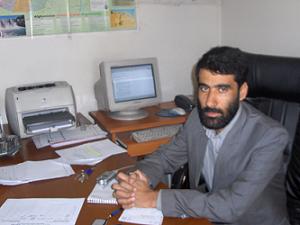
I spent Sunday morning in Kabul catching up with Danish Karokhel, at left, director of Pajhwok Afghan News and (along with deputy Farida Nekzad) a 2008 CPJ International Press Freedom Awardee. Pajhwok moved since the last time I was here, and with income from subscribers to its news service and grant money from NGOs, it seems stronger than ever. More than 120 staff members are now spread around the country, with new online efforts and an expanded photo service in the works. With a presidential election scheduled for August, Karokhel is in the middle of planning a training seminar on campaign coverage for his teams in Kabul and the provinces.
We covered a lot of ground, but one of the topics I found really interesting was how Pajhwok handled the kidnapping of Tahir Ludin and David Rohde, The New York Times reporting team that was taken in November last year outside of Kabul and held for more than seven months before they escaped.
News of the kidnapping was suppressed worldwide at the request of The Times (which cited safety concerns), a decision that spawned much debate in the U.S. media. (Here is CPJ’s statement on the issue.) Karokhel said it’s the sort of decision he has to make several times a week: Disappearances of NGO officials, workers who sweep the countryside for undetonated mines, wealthy business people, and journalists make it seem like kidnapping is a growth industry in Afghanistan.
Karokhel said he has to sit on a lot of stories for fear of angering powerful figures and, thus, endangering his reporters. But then, he said, has to deal with complaints from local people who want their story told and want to know why it’s not being reported. “As a reporter in this country what are we supposed to cover? Every story has to anger someone; that’s what makes it news.”
Case in point: The managing director of Ariana TV, Ehsanullah Arianzai, was grabbed in July by a local Taliban group from his hometown of Syedabad in the central Maidan Wardak province. Karokhel said the family (many of them live in the Netherlands) asked that the story not be reported, so Karokhel had Pajhwok sit on the information.
A few days into the kidnapping, he received a call from Arianzai saying his captors were angry that the story wasn’t being reported. They wanted their grievances (unfair aid distribution, among other things) made public. So Karokhel ran the story of the kidnapping. Then came a phone call from senior Taliban leaders in Quetta, the rear-guard headquarters in Pakistan for Taliban operating in Afghanistan and Pakistan, angry that Pajhwok was reporting the story because the kidnapping had been carried out without their approval.
“How are we supposed to weigh a situation like that,” he asked me. “Editors shouldn’t have to face questions like that, but what can I do?”
Arianzai was freed a few days later, unharmed. I checked with him this morning in his office at Ariana. He is a wealthy businessman with broadcast and publishing interests, and Ariana TV is a sprawling, bustling place. He confirmed the story and showed me the scars on his wrists from the handcuffs that had been used to keep his hands behind his back. In the end, he said, it wasn’t the media coverage or lack of it that resulted in his release. It was the local leaders working for his release, with calls to Taliban in Quetta and Saudi Arabia that finally did the trick.
(Reporting from Kabul)