Go »
  Go »

Pakistan

2010


Six stories: Online journalists killed in 2010

Greek blogger Giolias (AP)

This week, CPJ published its year-end analysis of work-related fatalities among journalists. Six of the 42 victims worked online. While you can read the full statistics and our special report elsewhere, I want to highlight the stories of these six journalists who worked on the Web.

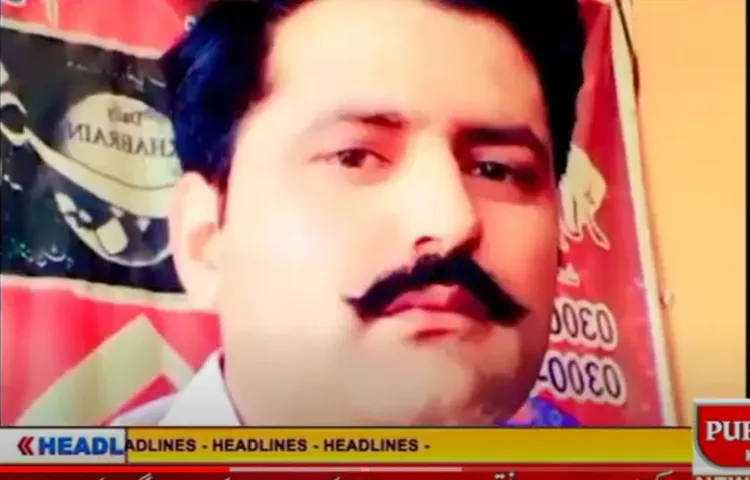
Umar Cheema

On Wednesday, we identified Pakistan as the country where the most journalists--eight--have been killed for their work in the past year. Six of them were on the job when they were killed in crossfire or a suicide bombing. Two others were assassinated.

I've been posting reports on one journalist--Umar Cheema--who wasn't killed, but whose case represents the other ugly reality, that the killings and abductions of journalists go uninvestigated in Pakistan. We rank Pakistan as 10th worst in the world when it comes to investigating journalists' deaths. The other pieces on Cheema can be found here.

At least 42 journalists are killed in 2010 as two trends emerge. Suicide attacks and violent street protests cause an unusually high proportion of deaths. And online journalists are increasingly prominent among the victims. A CPJ special report

A December suicide attack in Pakistan's Mohmand tribal district claimed the lives of two journalists. (Reuters/Umar Qayyum)

As CPJ reports today, eight of the 42 journalists killed this year were on the job in Pakistan. It's accurate to say the Pakistani victims were like most journalists killed worldwide: They were local journalists covering stories in their communities. But with Pakistan's political and sectarian unrest aggravated by a decade-long war in neighboring Afghanistan, these journalists are covering a local story of global significance. 

New York, December 6, 2010--Authorities in Sindh province must fully investigate Sunday's shooting death of Pakistani journalist Mehmood Chandio, president of the Mirpurkhas press club and bureau chief for the Sindhi-language television Awaz, the Committee to Protect Journalists said today.

New York, December 6, 2010--At least two journalists were among approximately 50 people killed in a double suicide attack today in Pakistan's Mohmand tribal district, according to international news reports.
New York, November 22, 2010--The Committee to Protect Journalists is investigating the circumstances surrounding the murder of Pakistani journalist Lala Hameed Baloch. His body was found with gunshot wounds on Thursday outside of Turbat, in western Pakistan's Baluchistan province.
Gilani, right, with U.S. special representative Richard Holbrooke and Secretary of State Hillary Rodham Clinton in July. (Reuters)

Sen. Richard Lugar, ranking member of the U.S. Senate Committee on Foreign Relations, wrote to Pakistani Prime Minster Yousuf Raza Gilani on September 22 to express concern about the brutal attack on Umar Cheema. The journalist was abducted on the weekend of September 4-5 by men in black commando-style uniforms, who beat and humiliated him. It's a case I've written about repeatedly (you can find links here, here, here, here, here, and here). But the prime minister has not yet responded to Lugar's letter, which was delivered through the U.S. Embassy in Islamabad.

Pakistani journalists pushed back against Musharraf's clampdown on the media in 2007. (AP)

November 3, 2007, was a dark day in the history of Pakistan's media. Former military dictator General Pervez Musharraf banned all private news channels, and some entertainment and sports channels, through an "oral order." He said he made the move to stop "irresponsible journalism." Many of the staff in the president's office who dealt with the media were unaware of his decision; intelligence agencies were used to tell the cable operators to pull the channels off air. Media reacted strongly. After 80 days of struggle, jailings, and legal battles, including sedition cases brought against some journalists, the government backed down from its decision and allowed the channels back on air.  

CPJ has always been careful to avoid making accusations when journalists are abducted or killed in Pakistan. Our tactic is to call for full investigations either by the police, the courts or special investigative bodies. In many such cases, the local journalists' community blames government security agencies, including the powerful Inter Services Intelligence group (ISI), as we noted a few days ago in an alert. Umar Cheema, who was abducted and humiliated over the weekend of September 4 and 5 near Islamabad, has specifically accused the ISI of being involved in his case and has stuck with those accusations.

New York, October 25, 2010--Pakistan must take immediate steps to rein in police and government agencies that threaten reporters. Two cases in recent days--those of journalists Hafiz Imran and Umar Cheema--demonstrate how reporting on stories that are critical of the authorities can bring officials' wrath down on reporters.

The University of Toronto's Citizen Lab has announced a research project to analyze the global infrastructure of Research In Motion, maker of the BlackBerry. It's looking for BlackBerry users from any country to take part--especially those in the United Arab Emirates, Saudi Arabia, India, Indonesia, Russia and China.

All of these countries have at some point demanded that RIM make their BlackBerry network more surveillance-friendly. Some have threatened to ban BlackBerry services outright if their demands are not met. Other reports suggest that RIM has made concessions to some of these countries' demands.

One possible concession RIM might make is to move its Blackberry Internet Service (BIS) servers to locations within those countries' jurisdictions. BIS servers are the bridges between the internal BlackBerry network and the wider Internet. A locally-hosted BIS server would make it easier for domestic security services to monitor BlackBerry users' general Web traffic.

RIM has kept quiet about what agreements, if any, it has made with any government. Nevertheless, it is theoretically possible to work out the location of these BIS servers externally. If you're a journalist who uses a BlackBerry, all you have to do to help with this project is to visit the RimCheck website using your BlackBerry device and fill out a short form. The site will record the IP address of the machine your request comes from, and will attempt to determine where in the world that server could be located.

The conclusions that the RIM Check project draws from this study will be published when the group has collected enough data. Concrete statistics like this will mean we'll finally be able to see if BlackBerry's send their data exclusively through Canadian servers as some believe or whether RIM has distributed these servers globally--potentially allowing users' unencrypted Net traffic to be as monitorable as that sent through a local Internet service provider.

I've been closely following the aftermath of Umar Cheema's abduction on September 4 and 5, thanks largely to regular updates from Cheema himself. He messaged Thursday with news of what has happened since I posted about him on September 16.

Pakistani residents stand on their property which is surrounded by flood waters in Sindh province. (AP)

As most of the nation lay paralyzed and submerged in flood water, Pakistani journalists traveled in four-wheel drives and rickety boats to bring tidings from some of the hardest hit areas of the country. The Pakistani Federal Union of Journalists (PFUJ) compiled a list of journalists directly affected by the flood, many of whom had had their homes washed away, while journalists who were still on their feet faced a host of other challenges. 

New York, September 20, 2010--Authorities in Khyber-Pakhtunkhwa must thoroughly investigate Thursday's murder of Mujeebur Rehman Siddique, the second killing of a journalist in the province in one week, the Committee to Protect Journalists said today.

Umar CheemaJust in case you were one of the few people in Pakistan or any other part of the world, for that matter, who thought that the six-hour abduction of Umar Cheema over the weekend of September 4 and 5 in Islamabad was going to be investigated and the culprits--men "dressed in police uniform"--brought to justice, here is a reality check:
New York, September 14, 2010--The Committee to Protect Journalists calls for an immediate investigation into today's shooting death of Misri Khan, president of the Hangu Union of Journalists in Pakistan's Khyber-Pakhtunkhwa Province (formerly known as the North West Frontier Province).
Today we will report another murder of a journalist. This one was in Argentina. The last one we documented was a couple days ago--Alberto Graves Chakussanga was shot in the back in Angola. These tragedies are part of our daily work at CPJ, but this week was different. There have been eight killings of journalists around the globe since September 3, an unusually high number during my three years as an editor here.
With all the problems in Pakistan--the flooding in the country that might be the worst ever; the increasingly devastating sectarian and separatist violence that has taken the lives of hundreds of Pakistanis and at least four journalists--focusing on what happened to Umar Cheema, a reporter for The News, might seem almost a sidebar story. But it's not. It's something much larger.
New York, September 9, 2010--The Committee to Protect Journalists welcomed the release of British journalist Asad Qureshi from captivity in Pakistan. He was held for more than five months in a tribal area bordering Afghanistan.
New York, September 8, 2010--The Committee to Protect Journalists calls on the Pakistani government to thoroughly investigate the kidnapping and beating of Umar Cheema, a correspondent of the English-language daily The News in Islamabad. Men in police uniforms seized Cheema while he was driving in a suburb of Islamabad on Saturday, according to local and international media reports.
Mayhem follows a suicide bombing in Quetta. (AP/Arshad Butt)New York, September 7, 2010--The Committee to Protect Journalists mourns the deaths of a cameraman and media support worker who suffered fatal injuries during violence on Friday in Quetta, the capital of Pakistan's restive Baluchistan province. 

A mother and her daughter stand in flood waters in Badin district, northeast of Karachi (AP /Pervez Anjum)
The Pakistani Federal Union of Journalists (PFUJ) is appealing to the international community, media workers, and human rights organizations to support journalists affected by the worst flooding in Pakistan's history. PFUJ has compiles a list of some 230 affected journalists, citing at least 213 who have had their homes washed away in the floodwaters, and journalist Asma Anwar of Khyber Pakhtunkhwa province, who lost her life.
New York, August 10, 2010--Pakistan's major news broadcasters ARY TV and GEO TV are off the air in Karachi and Sindh province for a third day since supporters of the Pakistan Peoples Party (PPP) of President Asif Ali Zardari have reportedly severed cable connections of the distributors that carry them. Demonstrations at the offices of the distributors and the stations, sometimes violent, continued today. Originally, the two stations were pulled off the air by the cable companies under pressure from party supporters on Saturday night.
Flood victims await rescue in Pakistan's Punjab province today. (Reuters/Adrees Latif)
New York, August 9, 2010—The Committee to Protect Journalists calls for the Pakistani government to allow GEO TV and ARY News stations back on the air. The shutdown, coupled with demonstrations by government supporters outside the cable companies’ facilities Saturday night came soon after the stations aired news about a protester throwing shoes at Pakistan’s President Asif Ali Zardari during a speech in England.

According to ARY News’ correspondent Jamal Khan Baluch: “On Saturday evening in Karachi, the staff of President Zardari called cable operators and ordered them to block ARY News transmissions all over Pakistan. When some cable operators refused to do so they started threatening and sent their armed people to different cable operators’ locations, where they started firing towards their offices and their staff.”

In an alert on Monday, we reported on an attack that left at least six women and children seriously injured at the home of local television journalist Zafarullah Bonari along the Pakistan-Afghanistan border. A group of unidentified attackers threw grenades and opened fire on Bonari’s house. The information was scant when we first heard about the attack in a rushed e-mail message from a member of the Bajaur chapter of the Tribal Union of Journalists. 

New York, July 26, 2010At least six women and children were seriously injured late today after a group of unidentified attackers threw grenades and opened fire on a home connected to television correspondent Zafarullah Bonari, according to Pakistani journalists. 

Pakistan's spirited press is once again caught up in arms over the latest and most absurd attempt to discredit its voice. On Sunday, various journalist organizations in Larkana, Sindh province, followed in the recent footsteps of their colleagues in LahoreIslamabad, and Karachi and observed a “black day” of protest, according to Pakistan's The News.

It’s not the first time the Pakistani government has tried to restrict broadcast coverage of extremist activities—and it probably won’t be the last. On Monday, a legislative committee forwarded a bill to the National Assembly that would restrict coverage “of suicide bombers, terrorists, bodies of victims of terrorism, statements and pronouncements of militants and extremist elements and other acts which, may, in any way, promote, aid or abet terrorists or terrorism.” 

Global Media Forum cites risks of environmental reporting

Fishermen on the Nile, where chemical dumping has been reported. (AP/Ben Curtis) He's young,
unemployed and carries himself with the innocence of a man who hasn't spent
much time outside his own village. But Egyptian blogger Tamer
Mabrouk
is the real deal. Appearing at an international media conference in Bonn, Mabrouk's description of chemical dumping into a
brackish lagoon on the northern Nile Delta near the Mediterranean Sea was
punctuated by photos of unmistakable filth. He won over the audience when, in
response to a question on how one travels with sensitive material, Tamer deftly
removed a memory card secreted in an electronic device and held it in the air.
That, he said, is where he had carried documents for this trip.

In Pakistan, a censor's hand in Facebook, Twitter woes?

Last week, users of Facebook and Twitter in Pakistan began reporting a strange security problem. When they visited those sites, they found they were logged in--but with the accounts and privileges of complete strangers. Private Facebook information and Twitter direct messages belonging to other users were viewable, and the surprised Pakistani users had complete control over these accounts. Soon after the problem was noticed, Facebook and Twitter themselves blocked anyone attempting to log in from Pakistan. Eventually the problem went away.

Firsthand accounts from reporters who were on the flotilla of humanitarian activists raided by Israeli forces on Monday are finally coming out as the journalists are released from custody. These early reports indicate that soldiers harassed international journalists—at least six had their equipment either confiscated or destroyed, according to CPJ interviews and news reports. Media accounts have indicated that 60 journalists or more were aboard the ships; on Tuesday, CPJ independently verified the names and affiliations of 20 journalists who had been taken into custody.

Members of the Sindh National Party (SNP) violently demonstrated outside the offices of the Jang Group of Newspapers and Geo TV in Karachi, the financial capital of Pakistan on May 23, 2010, according to local news reports.

The murder of a journalist such as Ghulam Rasool Birhamani might tend to be quickly forgotten. After all, he was a local reporter for a small newspaper, the Daily Sindhu Hyderabad, in a country where violence is routine. But hundreds of his fellow journalists turned out on Wednesday for a march to protest his killing and push for justice, Dawn newspaper reported.

New York, May 12, 2010—The Committee to Protect Journalists joins the Pakistan Federal Union of Journalists (PFUJ) and the Pakistan Press Foundation (PPF) in calling for a thorough investigation into the killing of Sindh-based journalist Ghulam Rasool Birhamani. His body was found Monday morning, outside the village of Wahi Pandhi in Sindh province. Both organizations reported that the journalist was kidnapped the evening before his body was discovered.

Last week, I attended an unusual event called the Courage Forum at which half a dozen speakers, from tightrope artist Philippe Petit and Sudanese rapper Emmanuel Jal to Virgin founder and chairman Richard Branson, talked about about overcoming fear.

Adnkronos International

New York, May 11, 2010—The Committee to Protect Journalists is concerned by new demands made by a militant group calling itself the Asian Tigers, the captors of freelance journalist Asad Qureshi, left, who has been held in Pakistan since March 26. In a video sent to the Rome-based news agency Adnkronos International today, the kidnappers insisted that Pakistan release at least 160 Islamic militants in exchange for his freedom, according to international news reports. The journalist is being held in Pakistan’s tribal region near the border with Afghanistan.

New York, May 3, 2010—The Committee to Protect Journalists expressed concern today after a militant group executed a former Pakistani intelligence official who was abducted along with documentary filmmaker Asad Qureshi.   

With valuable help from her interpreter, the author recently reported from Bukavu on women's rights and sexual violence. A hospital in Bukavu, above, treats victims of violence. (AFP/Adia Tshipuku)

Today, May 3, is World Press Freedom Day. But on this day, this year, I am not thinking about the dangers for the many journalists whose bylines I’ve come to associate with places like Mogadishu or Manila, Kabul or Islamabad. It’s not because I don’t have immense respect for them and for the risks they take to bring their readers essential reports from some of the most dangerous corners of the world. I do.

CPJ challenges authorities in 10 nations
to bring justice and reverse culture of impunity

Protesters in Manila seek justice in the Maguindanao massacre. (Reuters/Romeo Ranoco) New York, April 29, 2010—In the Philippines, political clan members slaughter more than 30 news media workers and dump their bodies in mass graves. In Sri Lanka, a prominent editor who has criticized authorities is so sure of retaliation that he predicts his own murder. In Pakistan, a reporter who embarrassed the government is abducted and slain. In these and hundreds of other journalist killings worldwide, no one has been convicted.


In our special report, “Ten Journalist Murder Cases to Solve,” CPJ challenges authorities to solve these news media slayings and reverse the culture of impunity. Here, CPJ's Robert Mahoney explains why each of these cases can be solved if governments demonstrate political will. Listen to the mp3 on the player above, or right click here to download. (2:59)

Read “Getting Away With Murder.”
Over the last few days, several papers in Pakistan reported that a Taliban organization in North Waziristan gave a “last warning” to Pakistani media. The story was widely reported, quoting an e-mail message from Muhammad Umar, a “spokesman for the Taliban Media Center,” the papers said. The group is angry about the way it is being portrayed on Pakistani television. The message, sent to many Pakistani media outlets, asked “Why is the media only conveying the army’s point of view? Is this proof that the media is also working as an ally for the government and the army? Or they are being forced to hide the truth?” according to translations in Pakistani English-language papers.

María Teresa Ronderos and Sergei Sokolov at CPJ's Impunity Summit at Columbia. (CPJ)

Every day at CPJ, we count numbers: 18 journalists killed in Russia since 2000, 32 journalists and media workers slaughtered in the Maguindanao massacre, 88 journalists murdered over the last 10 years in Iraq. But on Tuesday night at CPJ’s Impunity Summit at Columbia University, CPJ Executive Director Joel Simon clarified why we were gathered: “At the end of the day, it’s not about numbers,” he said. “It’s about people.”

CPJ’s 2010 Impunity Index spotlights countries
where journalists are slain and killers go free


New York, April 20, 2010—Deadly, unpunished violence against the press has soared in the Philippines and Somalia, the Committee to Protect Journalists has found in its newly updated Impunity Index, a list of countries where journalists are killed regularly and governments fail to solve the crimes. Impunity in journalist murders also rose significantly in Russia and Mexico, two countries with long records of entrenched, anti-press violence.

New York, April 19, 2009—The Committee to Protect Journalists is saddened by the death of Azamat Ali Bangash, a correspondent for Saama TV. According to the Pakistan Federal Union of Journalists (PFUJ), Bangash was killed in an April 17 suicide bombing while covering food distribution in a refugee camp near Orakzai, in the Federally Administered Tribal Areas near the border with Afghanistan. Ali was the second Saama journalists killed in a suicide bombing in two days.

New York, April 16, 2010--At least one Pakistani journalist was killed and others were injured in a suicide bombing at a hospital in Quetta today, according to international news reports. Details are still emerging, and some of the injured are reported to be in critical condition, but Pakistani colleagues tell CPJ that a senior Samaa TV cameraman, Malik Arif, died in the attack. Five other journalists--Noor Elahi Bugti of Samaa TV, Salman Ashraf of Geo TV, Fareed Ahmed of Dunya TV, Khalil Ahmed of Express TV, and Malik Sohail of Aaj TV--were injured.

New York, April 8, 2010—Reports that freelance documentary filmmaker Asad Qureshi has gone missing on a reporting trip in a tribal area of Pakistan are deeply concerning, the Committee to Protect Journalists said today. 

A bomb explosion injured three local journalists who were accompanying a convoy of security forces in the Lower Dir district of northwestern Pakistan on February 3, 2010, according to a statement by the Karachi-based Pakistan Press Foundation and international news reports.

Three unidentified men attacked the residence of an investigative reporter for the private news channel DawnNews TV, in the Pakistani capital city of Islamabad, on January 19, 2010 according to local news reports.
New York, February 19, 2010—Authorities in Pakistan should move swiftly to investigate Wednesday’s shooting murder of journalist Ashiq Ali Mangi in the southern province of Sind, the Committee to Protect Journalists said today.
An Afghan police officer aims his weapon at two photographers covering pre-election violence in Kabul. (AFP/Pedro Ugarte)By Bob Dietz

As the United States redeploys forces to Afghanistan, and the Pakistani military moves into the country’s tribal areas, the media face enormous challenges in covering a multifaceted conflict straddling two volatile countries. Pakistani reporters cannot move freely in areas controlled by militants. International reporters in Afghanistan, at risk from kidnappers and suicide bombers, encounter daunting security challenges. And front-line reporters in both countries face pressure from all sides.
Top Developments
• Press has very limited access during two military offensives.
• Reporters face attacks, threats from all sides. Four are killed.

Key Statistic
6: Homes of journalists destroyed by militants in retaliatory attacks.

As Pakistan’s military launched two major offensives within its borders, officials pressured news media to report favorably on the conflicts while the Taliban and other militants threatened and attacked critical reporters. Reporters for Urdu- and Pashto-language news outlets came under the greatest pressure because of their wider influence among Pakistanis. Journalists who opted to embed with the military said they were forced to comply with heavy-handed restrictions on what they were allowed to see and report.

I’ve been writing a lot recently about the urgent need to protect journalists in Afghanistan and Pakistan (a string of links is at the bottom of this entry). While neither country has become as dangerous as, say, Iraq at the height of the conflict, conditions are getting more dangerous for reporters. And very often, it is local journalists who need the most protection.

(Reuters)On February 5, I blogged about three vicious bomb blasts in Pakistan in the previous two days—“one in Lower Dir that wounded three reporters on Thursday, and Friday’s double attack in Karachi that we’re still investigating.” I argued that media companies in Pakistan must start taking responsibility for protecting their employees in the field. I had trouble rounding up names and numbers of those hurt in the second Karachi blast, at Jinnah Hospital, left, but the Pakistan Press Foundation (PPF), which is based in Karachi, has come up with a tally of 12 journalists and media workers injured. PPF is a go-to organization for us, a place where I always check in when I’m in Karachi. If you’re a Pakistan media watcher, it’s a fundamental, extremely reliable source to have bookmarked. 

The blast in Lower Dir, seen here, was just one of many recent deadly explosions in Pakistan's North West Frontier Province. (Reuters)Three vicious bomb blasts in Pakistan in the last two days—one in Lower Dir that wounded three reporters on Thursday, and Friday’s double attack in Karachi that we’re still investigating—highlight just how dangerous it has become for journalists, particularly TV camera crews and photographers, but certainly any journalist assigned to cover a public event or military operations in the country.
Following reports today of a double-bombing in Karachi targeting Shiite worshipers in a bus riding to a religious festival and later at a hospital, we issued this statement...

In November 2009, I received this e-mail message from a few people in Pakistan:

TOP NEWS MANAGERS AGREE ON TV COVERAGE GUIDELINES

ISLAMABAD—Top news managers from Pakistan’s eight television channels have evolved a first-of-its-kind voluntary framework to standardize professional guidelines governing terrorism coverage. [A PDF of November’s message is here.]

Since then there hasn’t been much more news about the issue, and I thought that might be a good thing. I’m always wary when I see words like “guidelines” or “rules” or “regulations” for news coverage, terrorism-related or not. But the November announcement seemed to have broad industry support, and the guidelines were being called “voluntary”—always better than having them mandated by the government. 

« Previous Year: 2009 | Next Year: 2011 »

  Go »
Text Size
A   A   A
Killed in Pakistan

52 journalists killed since 1992

28 journalists murdered

27 murdered with impunity

Attacks on the Press 2012

7 Killed in 2012, making Pakistan the world's third deadliest nation.

Country data, analysis »

Contact

Asia

Program Coordinator:
Bob Dietz

bdietz@cpj.org

Tel: 212-465-1004
ext. 140, 115
Fax: 212-465-9568

330 7th Avenue, 11th Floor
New York, NY, 10001 USA

Twitter: @cpjasia
Facebook: CPJ Asia Desk

Blog: Bob Dietz