Senegal
2009
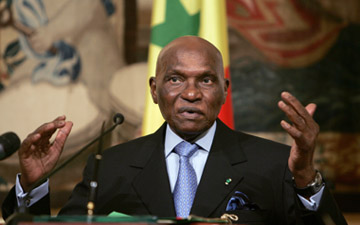
Senegalese president responds to CPJ
Senegalese President Abdoulaye Wade has written a response to a recent CPJ protest letter. While we welcome his attention to the issues we raised about press freedom last month, we note with great concern the president’s comments about the ongoing criminal case of two journalists assaulted by police in 2008.
CPJ urges Senegal to decriminalize press offenses
Dear Mr. President: The Committee to Protect Journalists is heartened by your recent directive to the prime minister to renew consultations with the press on the decriminalization of press offenses in Senegal. Yet your directive came on the same day a judge in the central town of Kaolack imprisoned two journalists who reported allegations of local government corruption in the distribution of seeds—a reminder of the urgent need for press law reform.
A year later, impunity in attacks on Senegalese media
A year ago last week in Senegal, two reporters covering a soccer match were assaulted with tasers, handcuffed, and abused by police officers after the reporters refused to halt a post-game interview at Léopold Sédar Senghor Stadium in the capital, Dakar. A year on, Senegalese law enforcement has fallen short in bringing to account those…
Journalist El Malick Seck freed by Senegal presidential pardon
On April 24, 2009, journalist El Malick Seck, who was serving a three-year prison sentence over an editorial implicating President Abdoulaye Wade and his son in an alleged money laundering scandal, was released on presidential pardon, according to local journalists and news reports. The sentence had been upheld in February. He was first imprisoned on…
Court rejects jailed Senegalese journalist’s appeal
An appeals court in the Senegalese capital of Dakar upheld a three-year prison sentence against imprisoned editor El Malick Seck on February 23, 2009, according to international and local news reports. The case involved an editorial implicating President Abdoulaye Wade and his son Karim in an alleged money-laundering scandal.
Attacks on the Press in 2008: Senegal
Conditions deteriorated in Senegal, once considered a haven for press freedom. With contemptuous rhetoric, threats, physical violence, and criminal prosecutions, supporters of President Abdoulaye Wade and members of his government retaliated against critical journalists. The June 21 beating of two sports journalists covering a World Cup qualifying match in Dakar symbolized the tensions and ignited…