Nigeria
2011
Defending the middle ground of online journalism
It’s easy to use polarizing descriptions of online news-gathering. It’s the domain of citizen journalists, blogging without pay and institutional support, or it’s a sector filled with the digital works of “mainstream media” facing financial worries and struggling to offer employees the protection they once provided. But there is a growing middle ground: trained reporters…
Nigerian journalist killed; Islamists claim responsibility
New York, October 24, 2011–Authorities in northeastern Nigeria must urgently take steps to ensure the safety of media workers, the Committee to Protect Journalists said today following Saturday’s assassination of a journalist in a shooting claimed by Islamist militants.

Nigeria police arrest six journalists
New York, October 12, 2011–Police in Nigeria arrested six journalists and one staff member from independent daily The Nation on Tuesday concerning the publication of a purported private letter from former head of state Olusegun Obasanjo to President Goodluck Jonathan about administrators of government agencies, local journalists reported.On the front page of its October 4…
Nigeria’s new FOI law brings celebration, challenges
There is a deserved celebration in the Nigerian media over the recently passed Freedom of Information Act, which provides citizens with broad access to public records and information held by a public official or institution. It is the climax of an 11-year struggle to pass such a law in the Nigerian parliament. Indeed, the call…
Attacks on the Press 2010: Africa Analysis
Across Continent, Governments Criminalize Investigative Reporting By Mohamed Keita Across the continent, the emergence of in-depth reporting and the absence of effective access-to-information laws have set a collision course in which public officials, intent on shielding their activities, are moving aggressively to unmask confidential sources, criminalize the possession of government documents, and retaliate against probing…
Attacks on the Press 2010: Nigeria
Top Developments • Two journalists murdered, another assaulted in ethnic violence. • Secrecy surrounds death of President Yar’Adua. Key Statistic 7: Journalists kidnapped in restive southern region. All are freed. Official secrecy surrounded the heart ailment that eventually claimed the life of President Umaru Musa Yar’Adua, sparking a debate over what constituted public information. Nigeria…
Another Nigerian journalist dies in strife-torn Jos
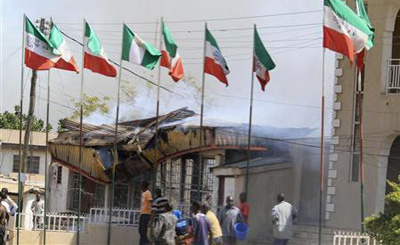
Augustine Sindyi, a veteran photographer for the state-owned weekly Standard newspaper in Plateau State, was walking home from work on Christmas Eve when a nearby bomb explosion killed him instantly. Sindyi resided in a busy Nigerian neighborhood near the local government offices in the center of Jos. The assailants targeted an area that would receive…